
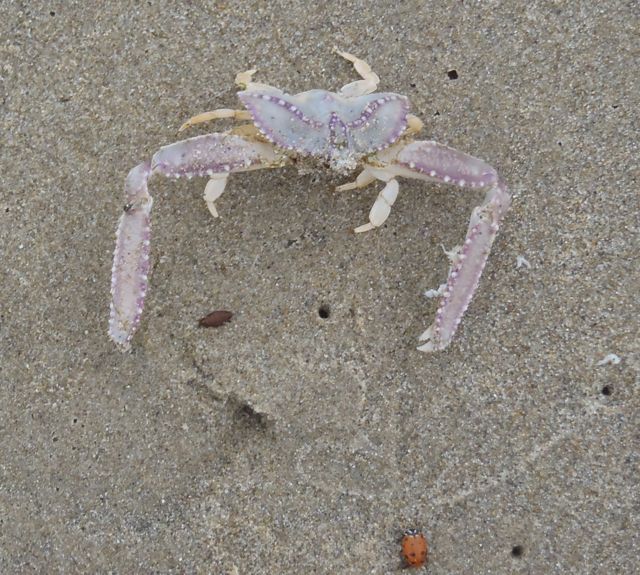
Elbow crab and ladybug
I thrill at finding new Monterey Bay creatures (new to me) and learning about them. 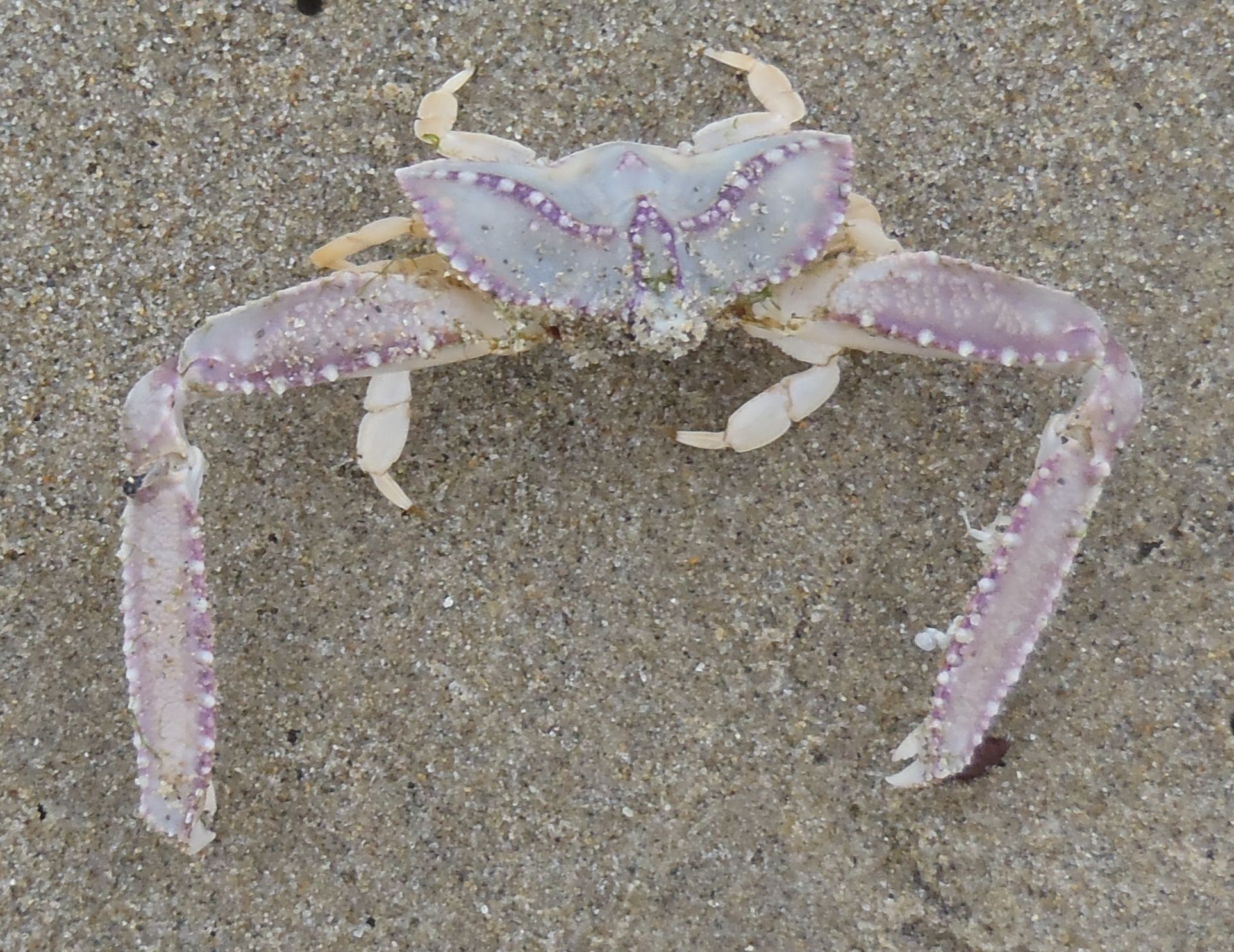 This morning I found this beauty on the beach. While taking photos, I spotted what looked like a dead crab or carapace. When I flipped it over, I was amazed by the purple and white details of a live sandflat elbow crab (Heterocrypta occidentalis), a species I had never seen before. Elbow crabs aren’t just new to me, they’re also relative newcomers to the bay.
In his 1969 book Seashore Life of Southern California, Sam Hinton wrote about the elbow crab, “It is mainly a tropical form, with Southern California representing the northernmost part of its range.” And, a 1995-1996 survey off Hopkins Marine Station by UC-Santa Cruz students, who were repeating a Pearse 1971-72 survey, found that elbow crabs, which had been rare or absent in the early 1970s, were common by 1996. It appears that the species has been moving northward.
These days we often see climate change reports of spring arriving earlier and terrestrial species moving north or to higher elevations. We’re less exposed (physically and via media) to species in our oceans making similar shifts. Less than 1% of the synthesis information on climate change on natural systems has come from marine life (Richardson et al 2012). Why has the elbow crab move into and become more common in the bay? What’s the impact of its expanding range? I couldn’t find answers — maybe no one knows. But we do know our world is changing and we need to pay attention to both the obvious and the subtle shifts. Have you noticed changes near you?
 I carefully picked up the elbow crab (not being sure about it little pincers) and tossed it into the wash. With each successive wave, it slowly crawled sideways into the ocean.
As I was reviewing the photos later, I saw that the elbow crab wasn’t alone (and I consider myself observant). Near it was a ladybug beetle — a subtle reminder to slow down and look more carefully in the future.
~~~~~~~~~~~~~~
Sources
Hinton, S. (1969). Seashore Life of Southern California. Berkeley, CA: University of California Press.
Lucas, S. S., Lonhart, S. I., Bernardi, G., et al. (1997). Comparative species survey of a coastal California marine refuge. Poster presented at the Sanctuary Currents Symposium, Monterey, CA. Abstract.
Richardson, A. J. et al. (2012). Climate change and marine life. Biology Letters 8(6): 907-909.
Seal pups arrive
The Monterey Bay Aquarium hosted its 12th annual Día del Niño/Day of the Child celebration today, and it seemed fitting that families walking to the aquarium witnessed another annual event — seal moms training new pups.  On sheltered beaches throughout the bay during this time of year, harbor seals give birth. This morning on my walk, along with families going to the aquarium, we watched mothers and new pups on the beach of Hopkins Marine Station and a small cove to the west, both in Pacific Grove, California.
These pups have very short “puphoods.” Mothers feed and fatten them for 4 to 6 weeks, then wean them. In that short time, pups must learn to swim, dive and fend for themselves. This morning, I watched new pups comforted by mothers (photos), a pup while it nursed (see video), and a squealing pup get a swimming lesson (see video). I could have stayed all day.
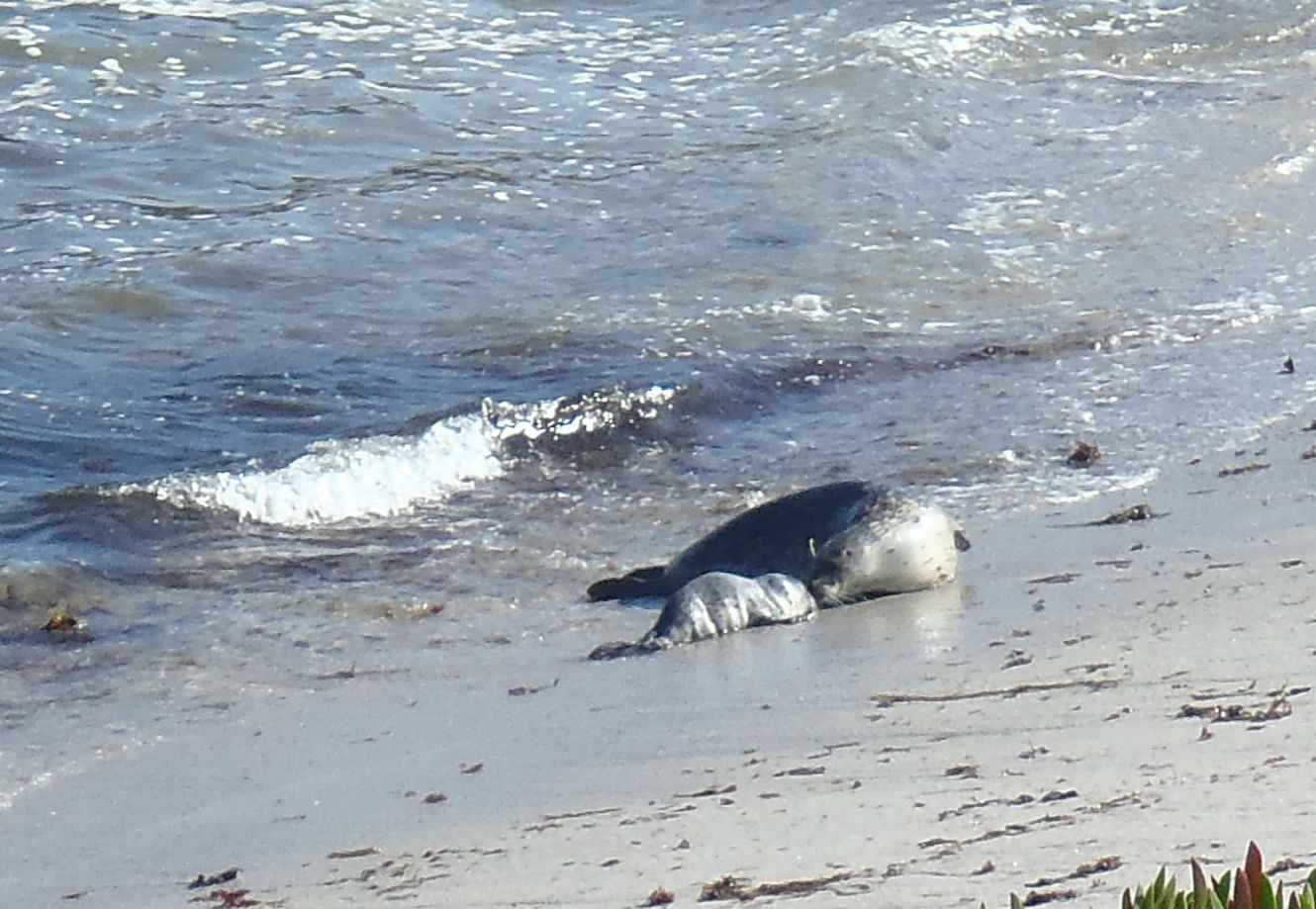 The pups look so helpless at this stage and yet they’ll be on their own soon. Knowing that, it’s sometimes hard to watch them, but they’re so adorable. I know that in June I’ll have new curious harbor seals following my kayak as I paddle these shores.
Color on the dunes

Blue bush lupine
Lupinus chamissonis
Despite the sometimes cold wind, springtime is gentle and subtle along Monterey Bay’s edge.
You have to look closely for it. Here’s a dunes spring sampler.

California poppy
Eschscholzia californica
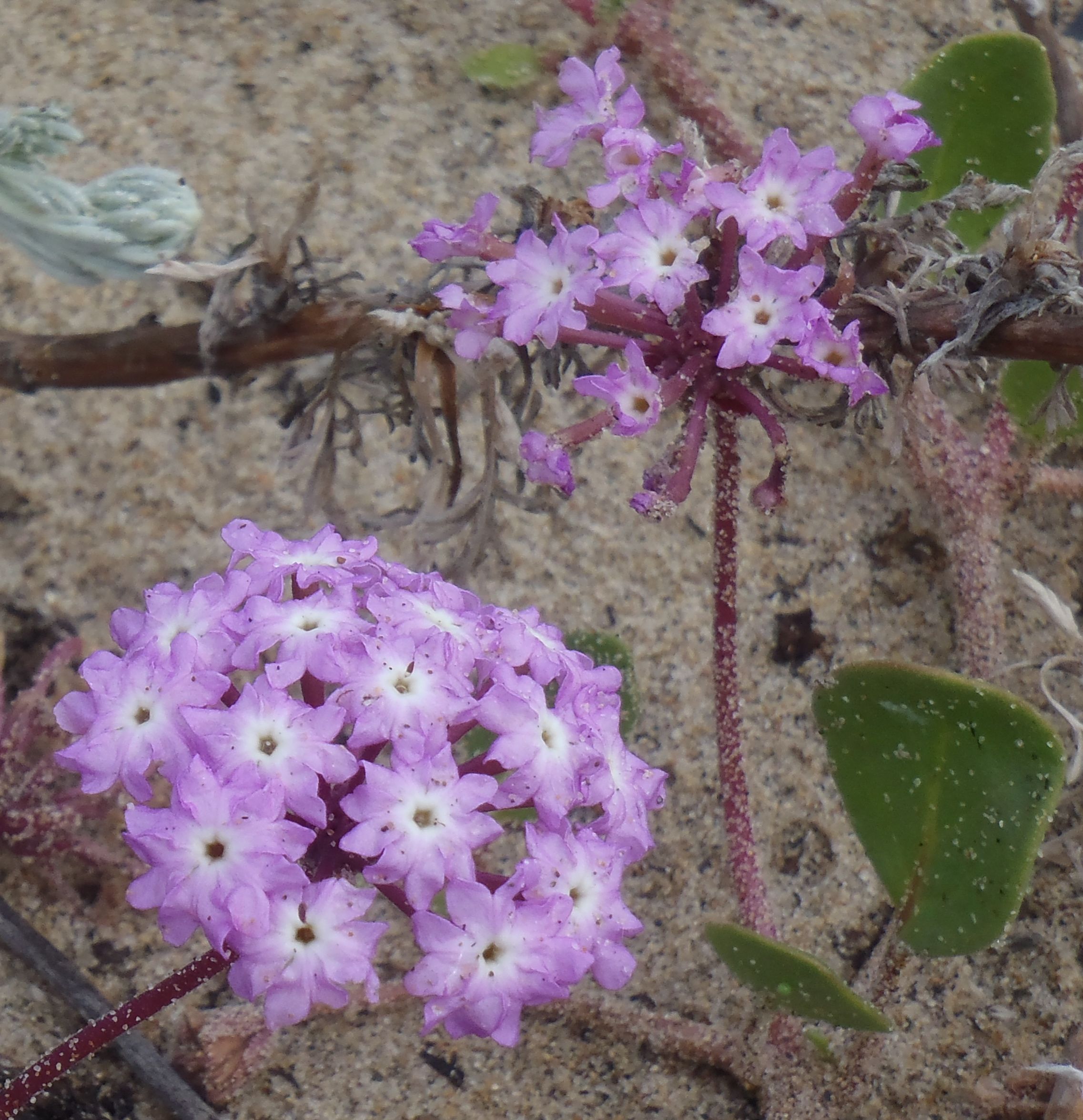
Pink sand verbena
Abronia umbellata
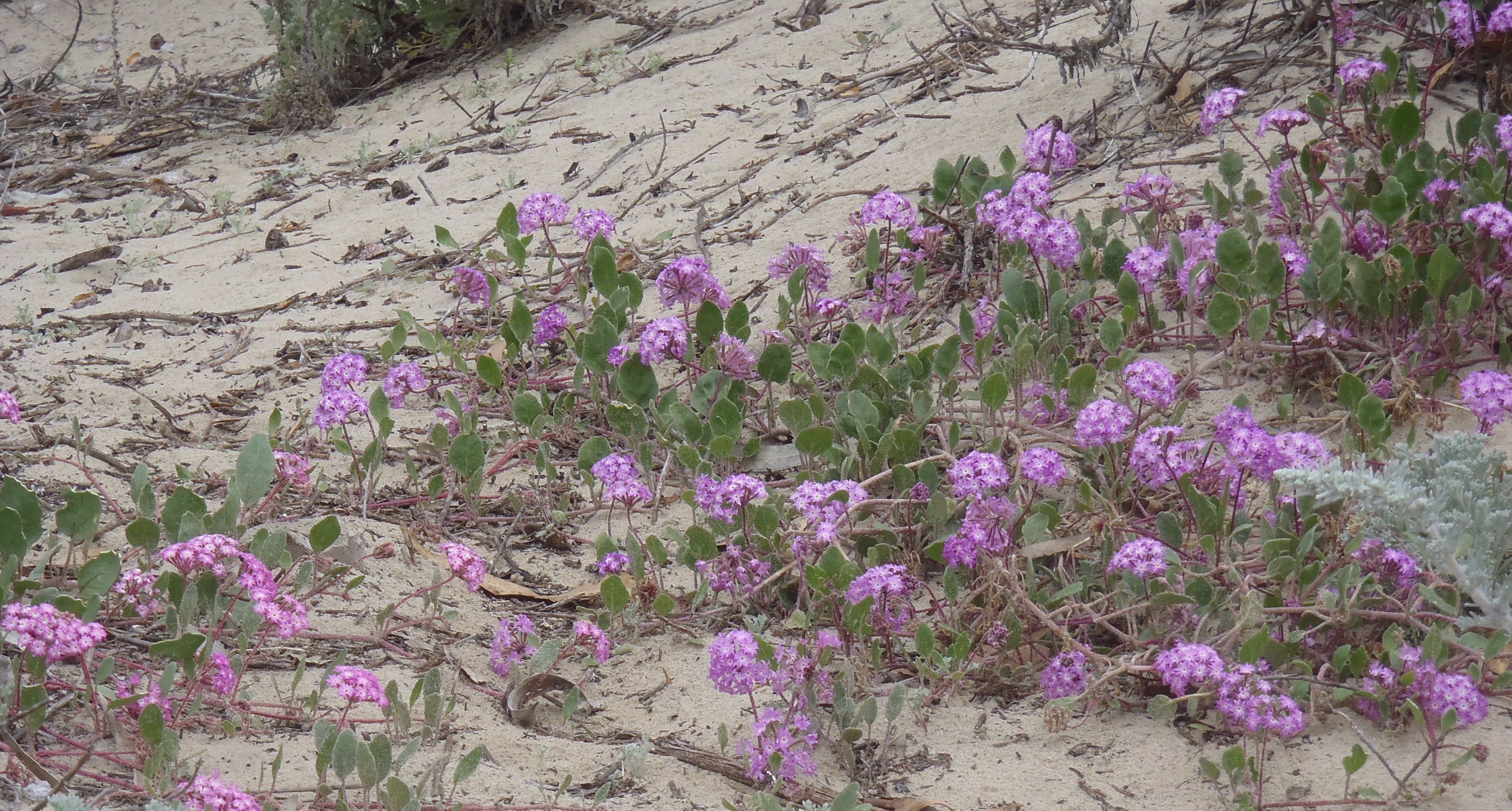
Pink sand verbena
Abronia umbellata
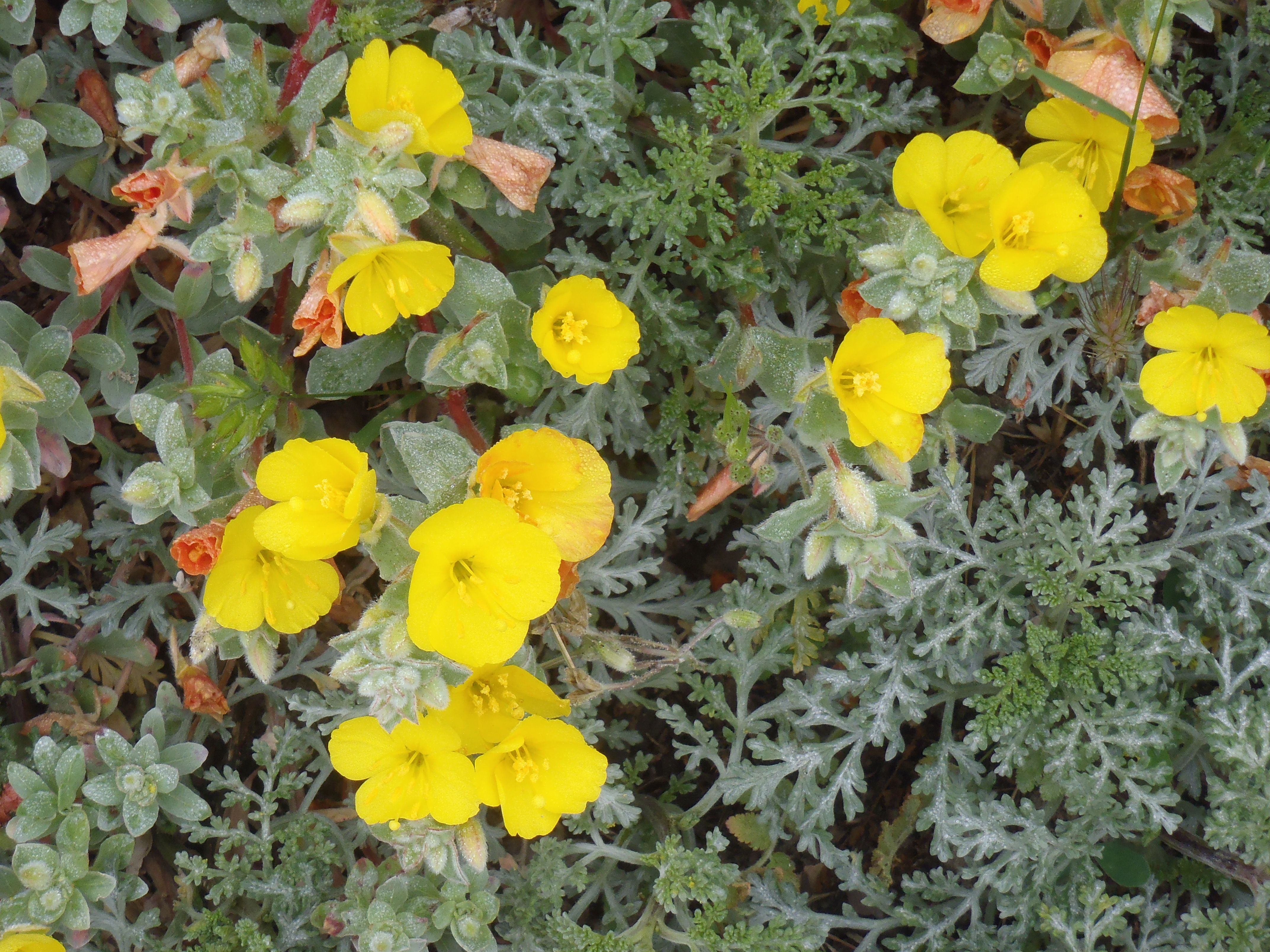
Beach primrose
Camissoniopsis cheiranthifolia
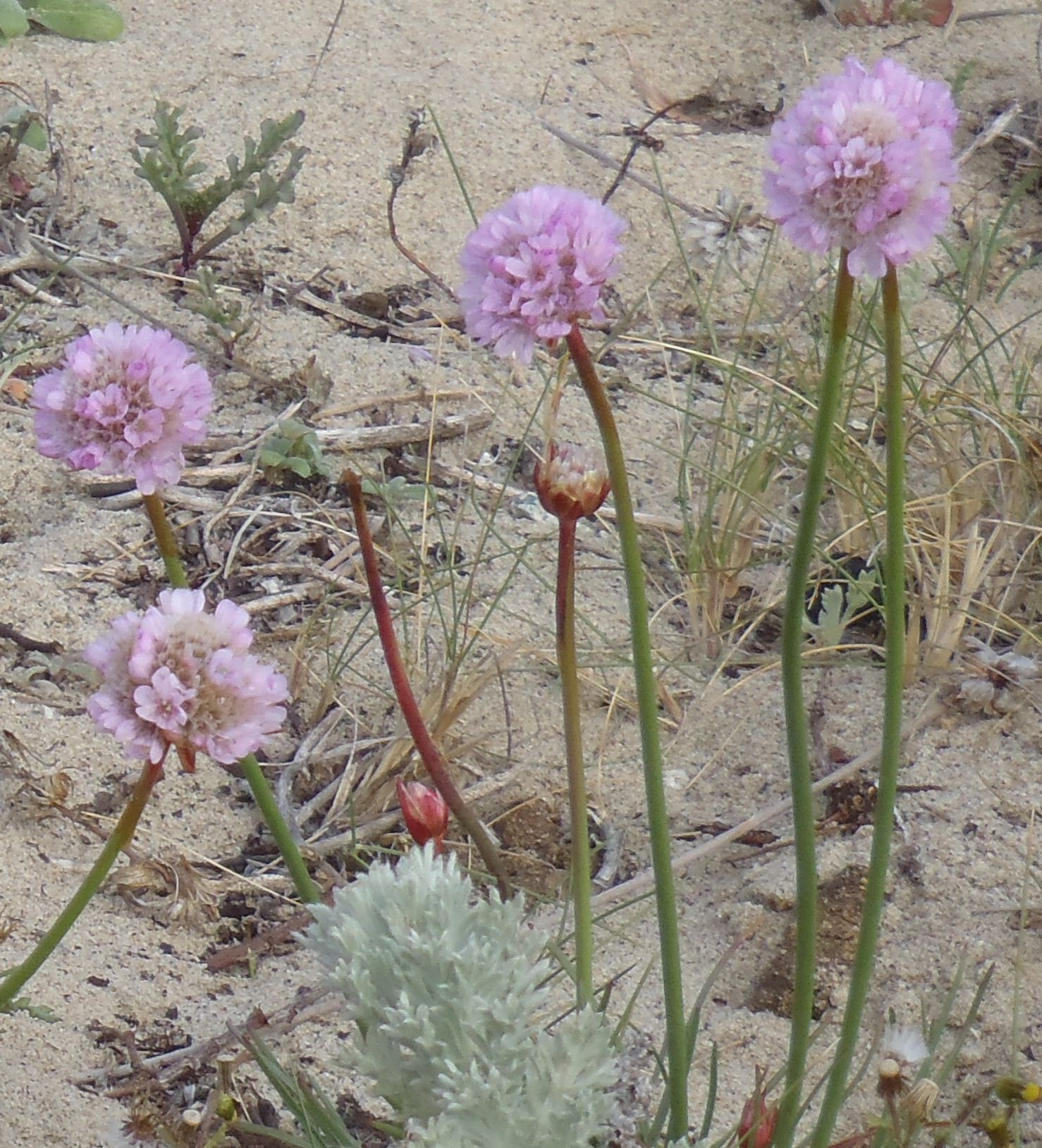
Sea pink
Armeria meritima

Monterey paintbrush
Castilleja latifolia
~~~~~~~~~~~~~~
References & Resources
Calflora Monterey Coastal Strand Native Taxon List (with photos and info)
California Native Plant Society website
Wildflowers of the Central California Coast website
My thanks to my friend Patti at Sunset Coast Nursery for her help identifying these (and any errors are mine).
Another odd goose
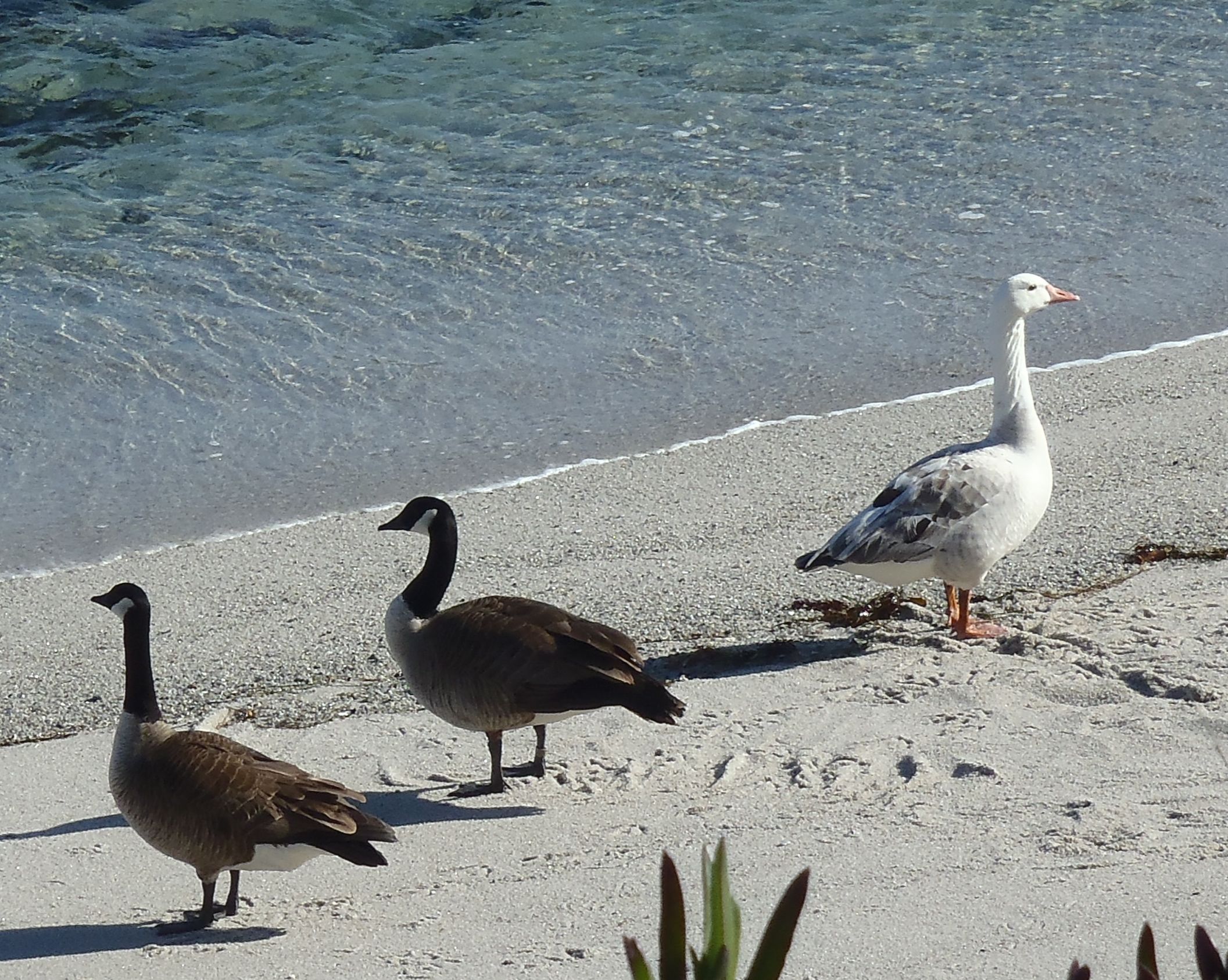 This is the second goose in a week that has tested by fledgling bird identification skills. I took this shot at the Hopkins Marine Station beach while watching the snoozing harbor seals. This goose, as you can see, is about the size of the Canada geese, but is more white than those birds or the one I showed you in my Carmel Bay walk post. Another Canada goose hybrid maybe, or an escaped domestic?
A long walk at low tide
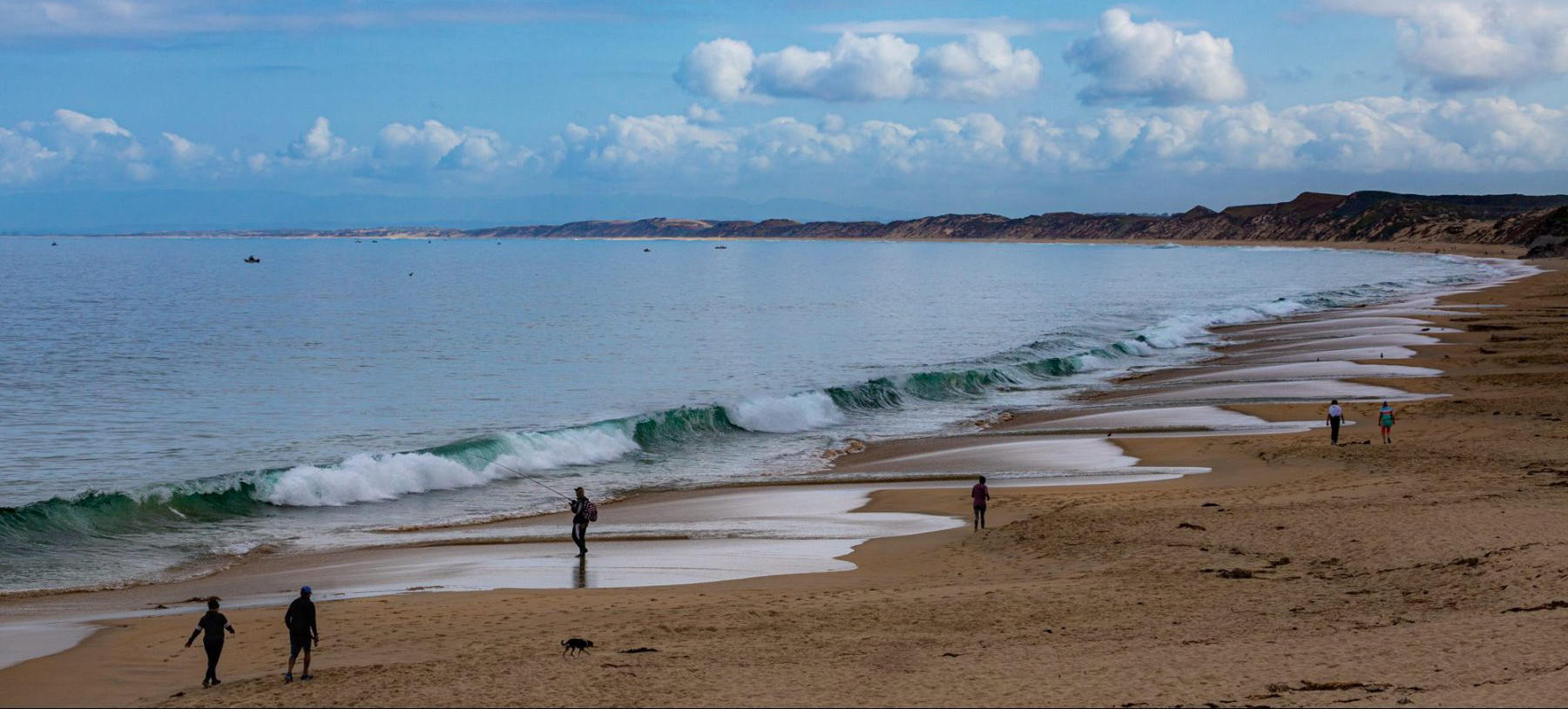
Rain is on its way (winter has barely visited this year) and so I took a long walk to enjoy a pre-stormy bay and this week’s daytime low tides. It was cool, and the sky and ocean were soft gray (not unusual here). 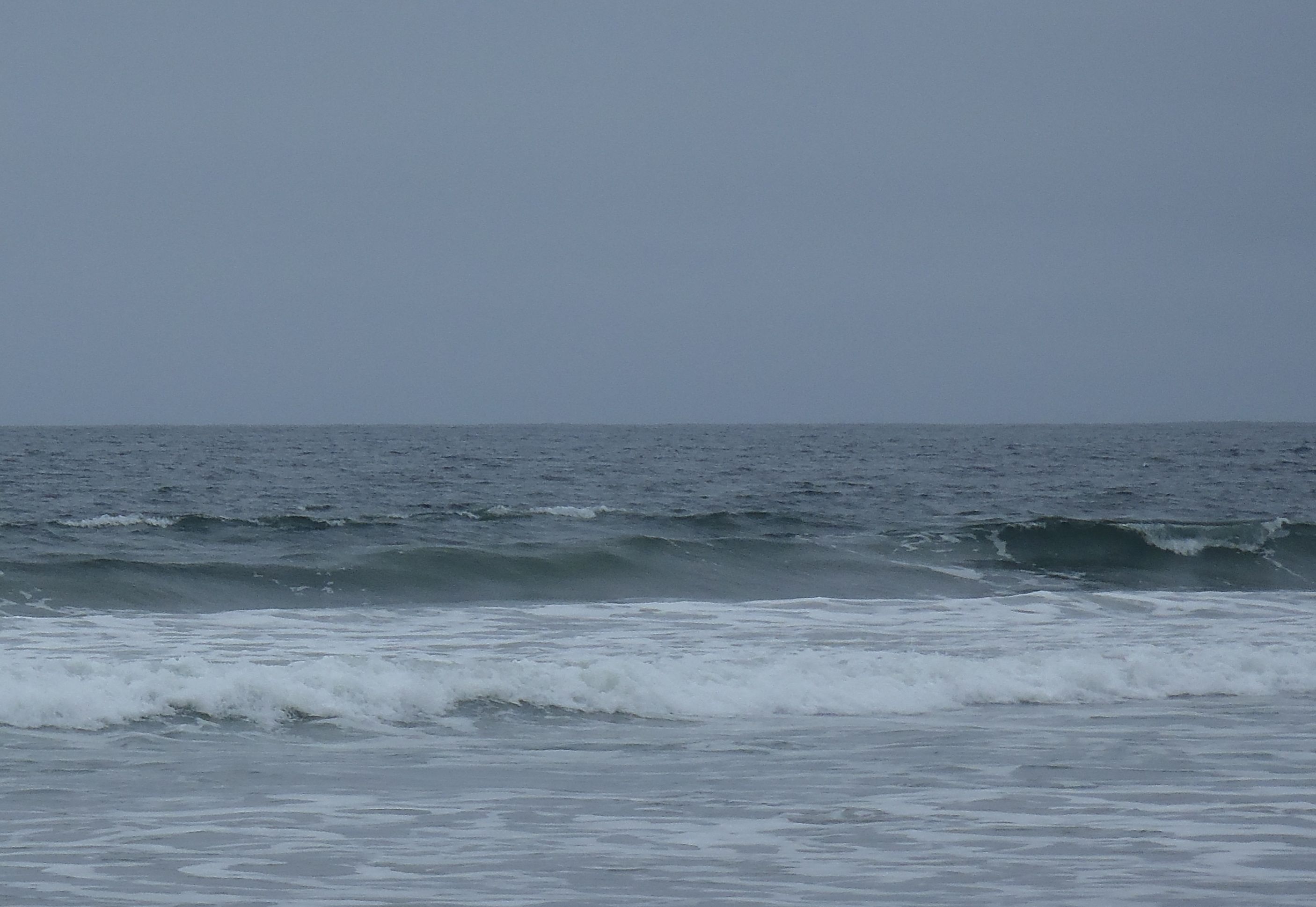 My walk started on the sandy beach below Del Monte Dunes in Monterey and ended on Moss Beach (where Asilomar State Beach meets Spanish Bay) in Pebble Beach — a lovely, easy 10-mile trek. Between the two stretches of beach are the rugged, rocky shorelines of Monterey and Pacific Grove.
The joy of a cloudy Monday in March is that the beaches and shoreline paths are mostly devoid of people. When bay beaches are deserted, turkey vultures are busy inspecting the coastline for a meal. Today was no exception. I happened upon one vulture working on a seal carcass and I stopped to watch it for a while. (Visit an earlier post for more about vultures.) I’m fascinated by such a scene because of its tenuous thread to a time when large animals frequented these beaches, when condors and bears scavenged beached whales. Not that I’d want to encounter a bear on the beach, but I feel the loss of such scenes forever gone. The mood was soon broken when a jogger bounced by, oblivious to the interruption, and the vulture took flight.
At the Monterey Harbor I walked down the Coast Guard pier and breakwater (see an earlier post for more about the harbor) to check on the sea lions and cormorants. 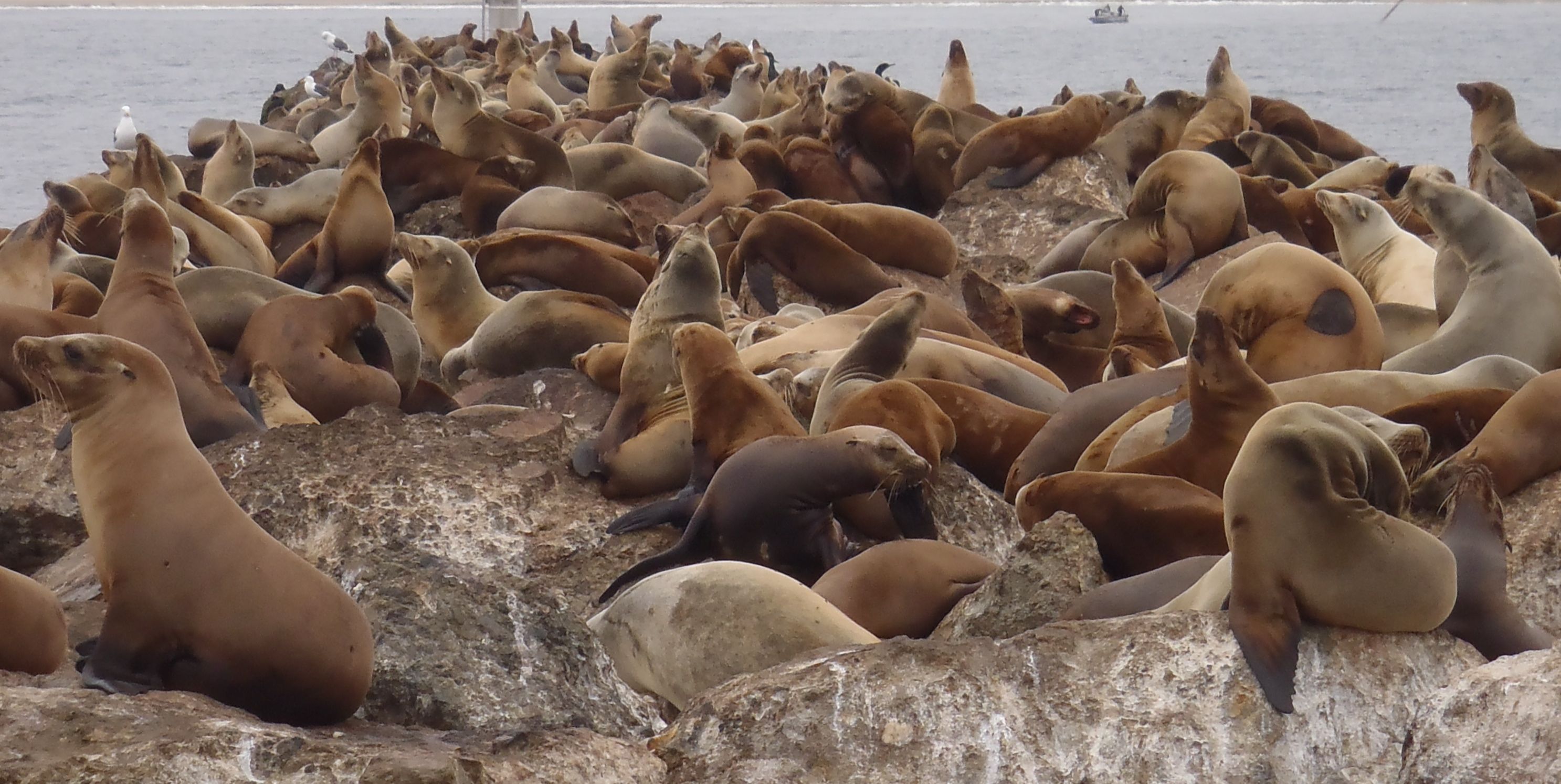 As usual, there was a roiling sea of sea lions, edgily jockeying for space and position. Unlike past weeks though, the rocks sported more gulls than cormorants. This was true for my entire walk and I’m still wondering were the cormorants had gone.
As the tide ebbed all along Monterey’s rocky shoreline, birds searched among rocks for tidbits —  turnstones and surfbirds along the breakwater, snowy egrets in harbor shallows, gulls and crows everywhere. With predators afoot and life-supporting water temporarily gone, sea anemones had collapsed, muscles shut tight, and snails and barnacles closed their doors. It would be a few hours before the invertebrates would be free of the pesky, poking birds. But it offered me great glimpses into the rough and tumble world that I seldom see on the wave-washed rocks.
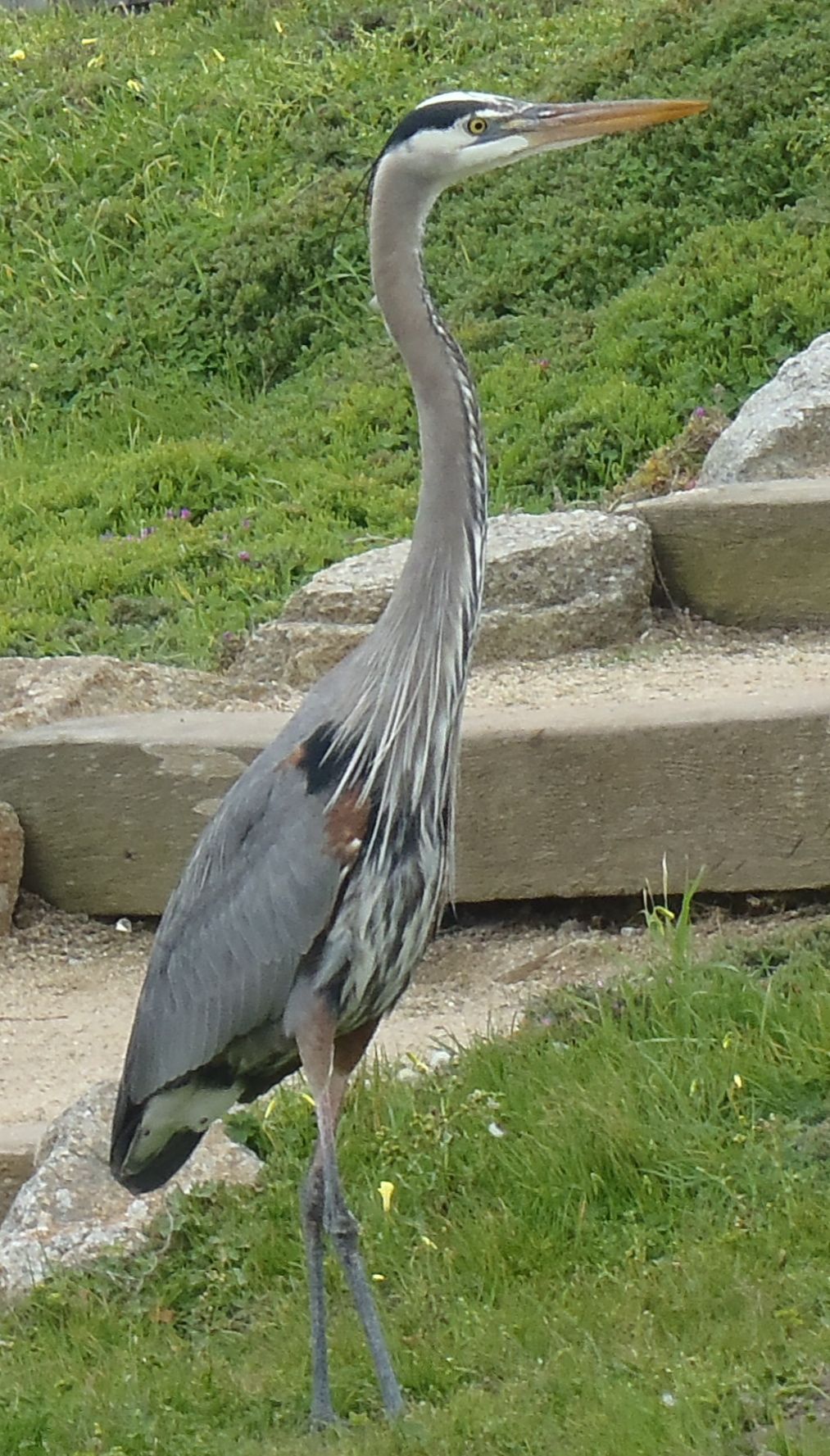 Farther along in Pacific grove, while watching the waves crashing on the rocks to my right, I was surprised by a great blue heron between my path and the coastal road on my left. It strolled majestically, noticing me, but showing no alarm. Cars stopped and took photos. I stopped and took photos. It didn’t seem to mind any of us, as if this was an everyday occurrence. I was delighted to have such a large stately bird beside me. They’re surprisingly tall — growing to 46 inches (117 cm). Normally when I see one, its neck is pulled in and it’s flying away after I’ve interrupted a hunt or disturbed a resting spot.
  The other impressive bird that I encountered was at the Pacific Grove Golf Links, which has a freshwater pond (Crespi Pond) at Hole 17. The pond is normally a haven for American coots, but today a graceful great egret stood at the pond’s edge. I often see them fishing atop the kelp beds as I paddle past in my kayak. Getting this close was a treat. This walk was becoming a great one for sighting wading birds.
Just past the golf course, I officially walked out of Monterey Bay. Point Pinos marks the southern end of our “sheltered” bay (although much of the bay isn’t very sheltered) and the start of a shoreline exposed to the full force of the Pacific.  On a hill overlooking the point is the Point Pinos Lighthouse, the oldest operating lighthouse in California, which began warning seafarers in 1855 and is still working. Around the point and past a few amazingly expensive houses, I picked up a great coast walk trail, part of Asilomar State Beach, that meanders along one of the most beautiful sections of the Monterey Peninsula’s coastline. At low tide, the coves and pools are delightful; at high tide, the winter surf is spectacular. At the end of the trail I was tiring and a chilling wind started to blow, and so, on Moss Beach I ended my walk.
I encourage you, wherever you are, to go out and get to know all that lives around you. Take a short or long walk and a long look. 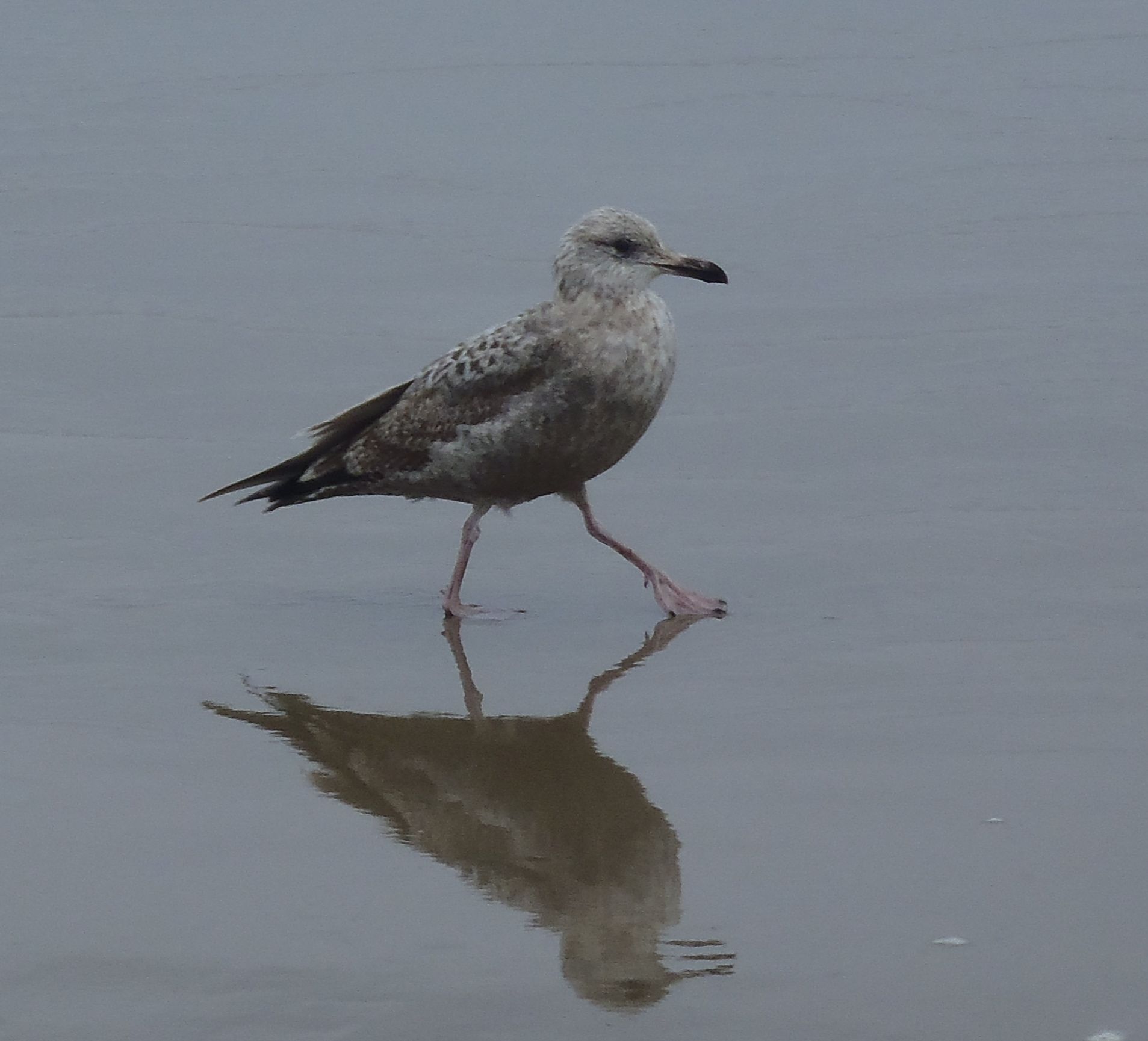 I’ve lived here for nearly 30 years, but with each walk and paddle, I see animals and interactions that are new to me. That’s exciting. Although it’s great to learn about wildlife via books, images, lectures and blogs, it’s not the same as having a heron stand before me, a baby sea otter cry for mom next to me, or a seal catch a fish in front of me. Cherishing our wild neighbors (whether we like them or not) and protecting their homes (which is also our home) is the best hope we have for our future on this planet.


 WordCraft.NatureFocus