
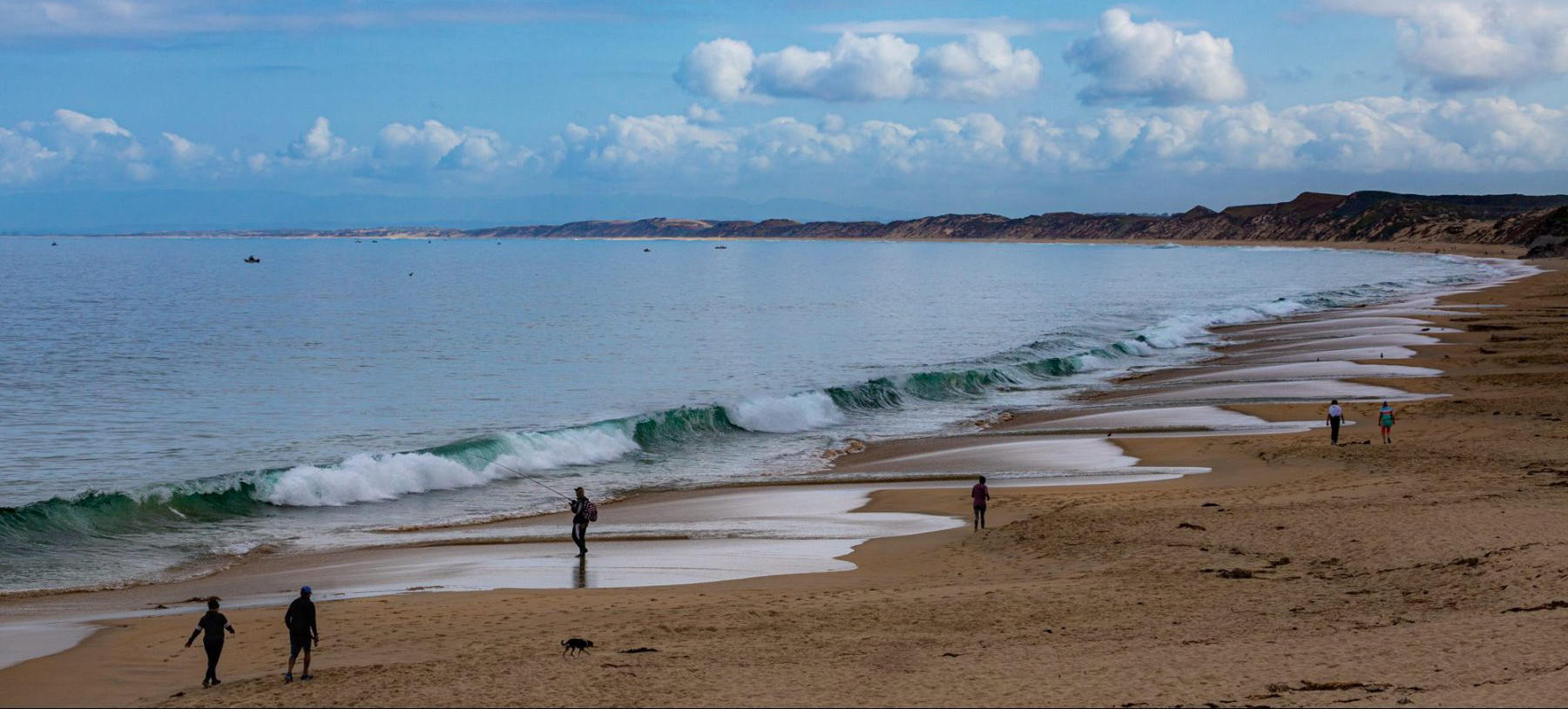
Caspian tern aerobatics
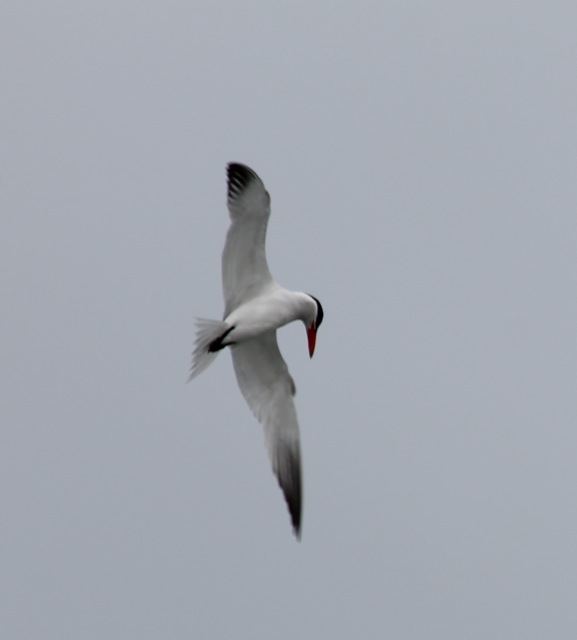
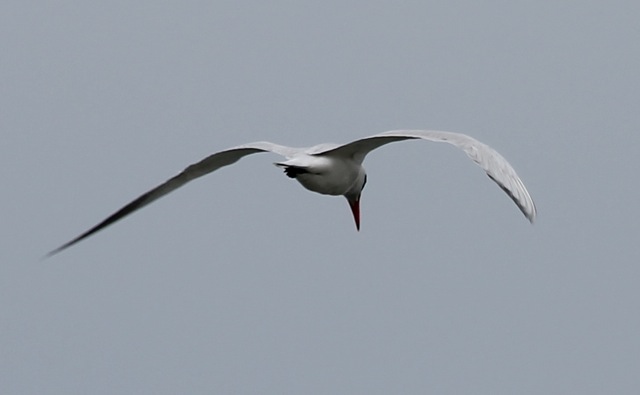
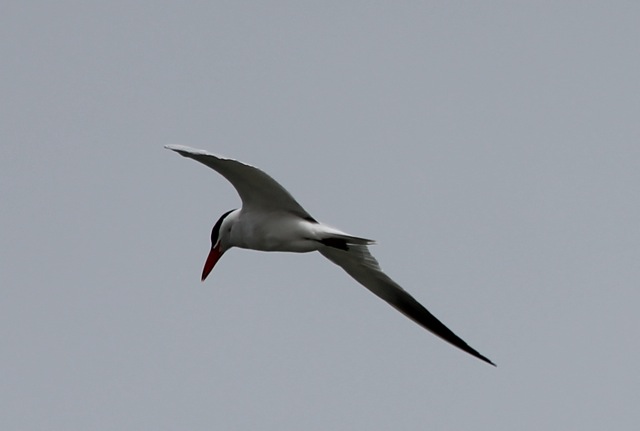
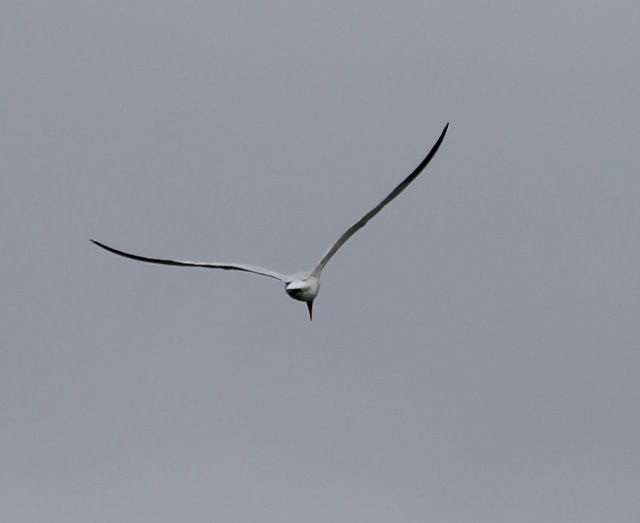
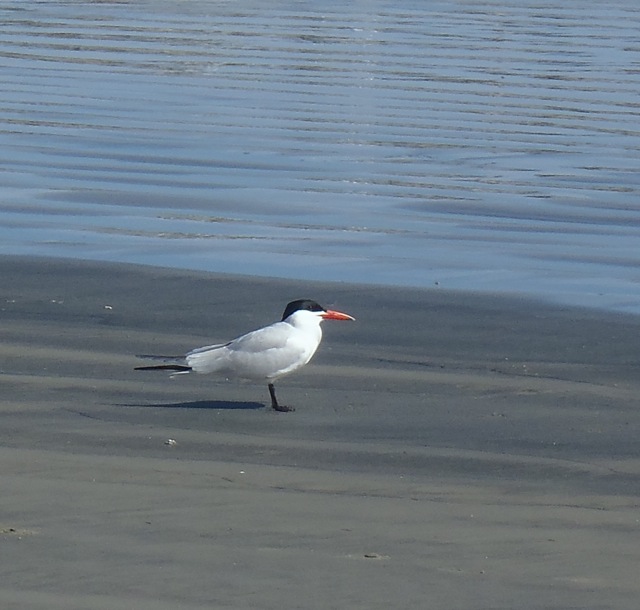 A Caspian tern (Sterna caspia) has been gracing Del Monte Beach for the past week or two. I typically see them around Monterey Bay this time of year. This is a stately bird, about the size of a gull, with a beautiful black cap, black legs and heavy orange bill. So far I’ve seen only the single bird and she/he has spent most of the time standing on the shore, taking flight only when people and dogs approach.
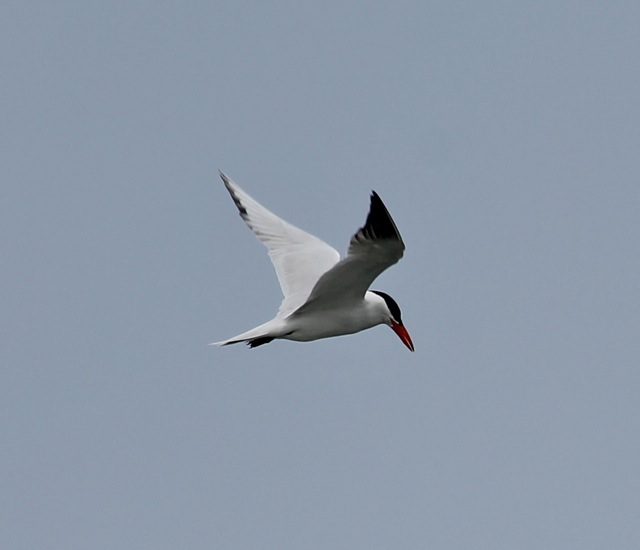
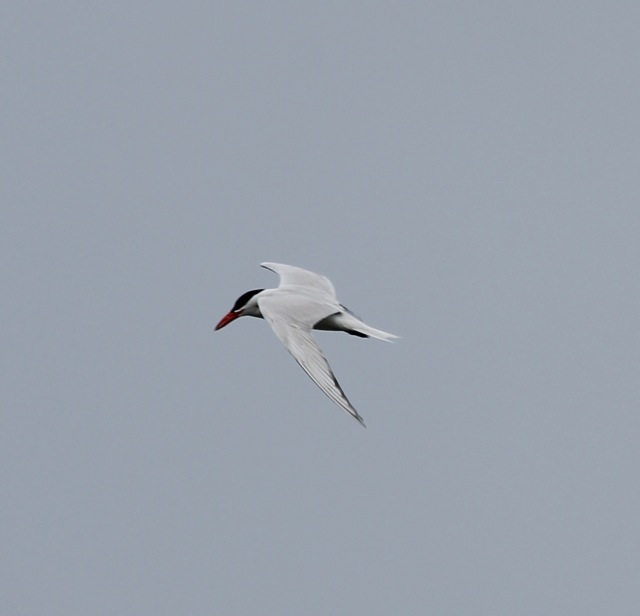
Today was different. When I stepped onto the sand, the tern was already in the air. For nearly a half-hour, I watched its aerobatic maneuvers as it scanned the sea surface for fish (we’ve had shoals of anchovies in the bay lately). The tern’s performance was grand and graceful, a display of aerial mastery that I had to share with you. During your next beach walk, keep an eye on the sky (as well as on the water).
Jelly blobs
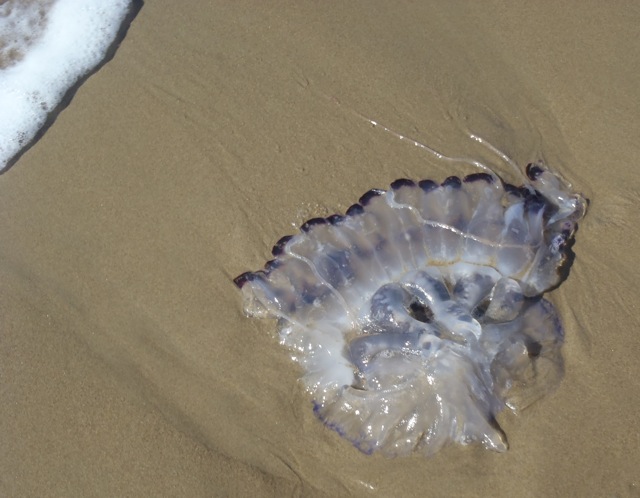
Purple-striped jelly
I’ve written quite a bit about beached jelly blobs (mostly jellyfishes, but also sea slugs, sea butterflies and salps). I never planned to write so much about gelatinous animals, although they’re fascinating. However, new ones keep washing ashore and the postings are popular, so here are links to all of my jellies postings from oldest to newest. I hope this makes them easier for you to find.
Enjoy.

Scrippsia bell jelly
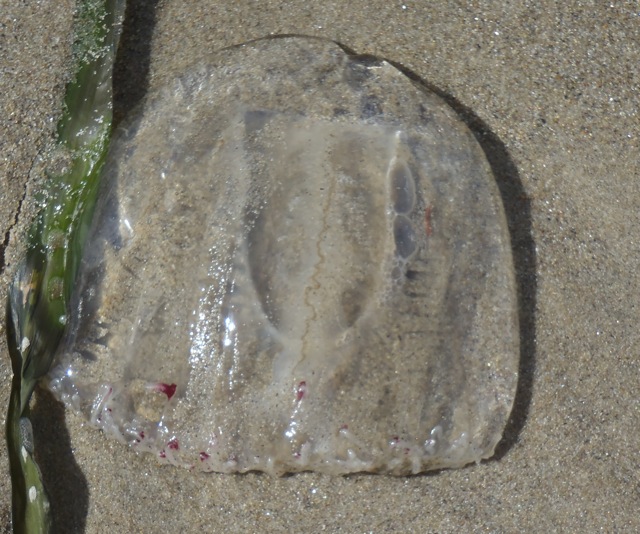 Jelly blobs on the beach are a travesty,
like this one I found recently among wave-tossed seagrasses on Del Monte Beach. Lifeless on the sand, such jellies are void of their pulsating grace, intricate structures and delicate colors. Yet I always watch for them. For a beachwalker, they’re a window into what’s beyond the waves. This new jelly species (for me) is Scrippsia pacifica, or the
giant bell jelly.
The jelly’s bell can grow to 4 inches (10 cm) long, about the size of this one. The purplish-red dots you see are ocelli (simple eyes!). Missing were the bell’s frilly lips and its more than 200 trailing tentacles. Not too much is known about this secretive species. Their tentacles carry nematocysts (stinging cells) and it’s an active predator, but I couldn’t find much detail on how it feeds. Related species (Polyorchis spp.) swim toward the surface and then sink, collecting plankton as they drop. They may also rest on or near the bottom and collect tiny animals with the stinging tentacles. The life cycle is also a mystery. Scrippsia is known from only the medusa (bell) life phase and not its polyp or larval stages (there’s a research project).
This jelly’s lovely scientific name was provided in 1909 by Harry Beal Torrey (1873 – 1970). He was a zoologist and a medical doctor working for a while at the Marine Biological Association of San Diego. During his long life, he published quite extensively on Coelenterata, the animal group at the time that included comb jellies along with true jellies and their relatives (these days that group is two phyla: Ctenophora and Cnidaria). He spent much of his later career in Berkeley and Oakland working in public health, even spending time as the director of Children’s Hospital of East Bay (he had a diverse career).
My picture certainly doesn’t do this giant bell jelly justice. For a full-figure shot and to learn more, visit The JelliesZone, or follow one drifting through a kelp forest off San Diego in this short YouTube video. And, next time you find a jelly blob on the beach, look to the water and think about the real life of the amazing creature at your feet and how little we know about so many.
~~~~~~~~~~
Sources
Calder, D.R. (2013). Harry Beal Torrey (1873–1970) of California, USA, and his research on hydroids and other coelenterates. Zootaxa 3599: 549-563.
Wrobel, D. & Mills, C. (1998). Pacific Coast Pelagic Invertebrates: A guide to the common gelatinous animals. Monterey, CA: Sea Challengers and Monterey Bay Aquarium.
Sea lions stranded
 A lone sea lion on a busy Monterey Bay beach is in serious, and potentially dangerous, trouble. It’s also a sad sight. When they’re sick, malnourished or injured, sea lions will haul out onto land to rest, recouperate or die. When one chooses a beach traversed by humans and dogs on a sunny Saturday, it’s seriously sick and faces overheating in the sun and the danger of human harassment. Unaware people can be in danger, too. (Last summer I had to stop a young boy from reaching out to touch the nose of a beached sea lion while his parents were watching!) If it can, a sea lion will bite. It’s a nasty wound for people or pets.
If you encounter a sea lion stranded on the beach, as I did this morning, please do not get close, keep dogs away and do not touch or try to assist the animal (a well-meaning but misguided person had piled kelp on this young sea lion to shade or cool it). Call for help!
Along the Northern and Central California coast we’re fortunate to have The Marine Mammal Center, which rescues and rehabilitates stranded marine mammals. They also will, if absolutely necessary, humanely euthanize. The website lists tips for what to do when you find a stranded animal. When you call — available 24/7 — they’ll ask for details about the animal, its condition and location.
From Mendocino thru San Mateo counties, call (415) 289-SEAL (7325).
In Monterey and Santa Cruz counties, call (831) 633-6298.
In San Luis Obispo County, call (805) 771-6298.
 Wait until rescuers arrive, if possible. This make take a while. The Marine Mammal Center is staffed mostly by volunteers, the need is never-ending and resources are always limited. You can also help by donating to this great group even if you don’t find a stranded animal on the beach.
A final note: It’s harbor seal pupping season around the bay. If you find a harbor seal pup on the beach (they’re shaped like fat sausages and have no external ear flaps like the one you see on this sea lion), leave the pup alone. Its mother is probably close by. If you’re unsure, your first action is to call The Marine Mammal Center.
Other Monterey Bay rescue centers
For sea otters, contact the Monterey Bay Aquarium at (831) 648-4800.
For birds and other wildlife emergencies, contact the SPCA for Monterey County at (831) 264-5427 during business hours and (831) 646-5534 after hours, or Native Animal Rescue of Santa Cruz at (831) 462-0726.


 WordCraft.NatureFocus