All winter I’ve been working on learning to identify our local gulls. So far I’ve learned that it’s really challenging!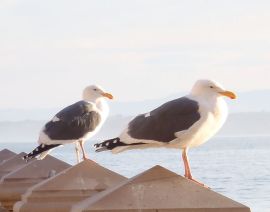 The difficulty comes from not only recognizing different species (15+ commonly visit our area), but also different year classes within a species (there are 3 or 4 four classes each with different plumage, bill and leg colors). In addition, individuals vary and gulls crossbreed (mixed species really confuse matters). But like all challenges, I’m taking fledgling steps and tackling one gull at a time. (I’ve always called these birds seagulls, but it’s more correct to use the term gulls because not all live near the sea, so I’m using gull/gulls in this post.)
To identify a gull, according to local birding instructor Brian Weed, start by identifying the age of the bird — Is it an adult or immature, and if immature, of what age class? (This isn’t intuitive. I want to start with what it is, not how old it is.) Once the age is pinpointed, then work on identifying the species (all before the bird flies off). Brian provided a simple illustrated guide showing the characteristics of age classes of species that mature over four years — years 1, 2 and 3 are immature and year 4 is an adult. (Of course, some species mature over 3 years instead of 4, a complication I’m ignoring here.)
And now show-and-tell time. 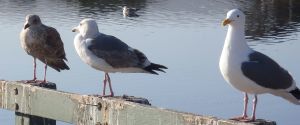 Along this railing are three gulls that look different. They are, in fact, birds of different ages. The farthest is a year 1 gull: It’s all brown from head to wing covers (coverts) to underside. The rump (which you can’t see) is the same color as the back, and the wingtips are a solid brown. The bill and eyes are dark. The closest gull is a mature (year 4+) gull: Its head, neck and underside are all white (no dark streaks or smudges). The tail and rump are also white (easier to see in the photo at the start of this post). The back and wing coverts are dark gray. The bill is yellow and legs pink. The bird in the middle is of an age class between the other two birds (nice of them to line up this way for me). It’s head, neck and underside are mostly white. The back is dark gray, but the coverts are brown. The bill is pale with a darkish tip and legs pink. This middle bird is between the ages of the other two, either a year 2 or year 3 bird (I know, not exact, but this isn’t rocket science). It’s probably closer to year 2 because the back and coverts are different colors.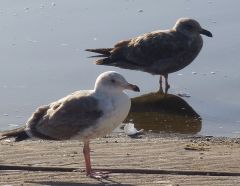
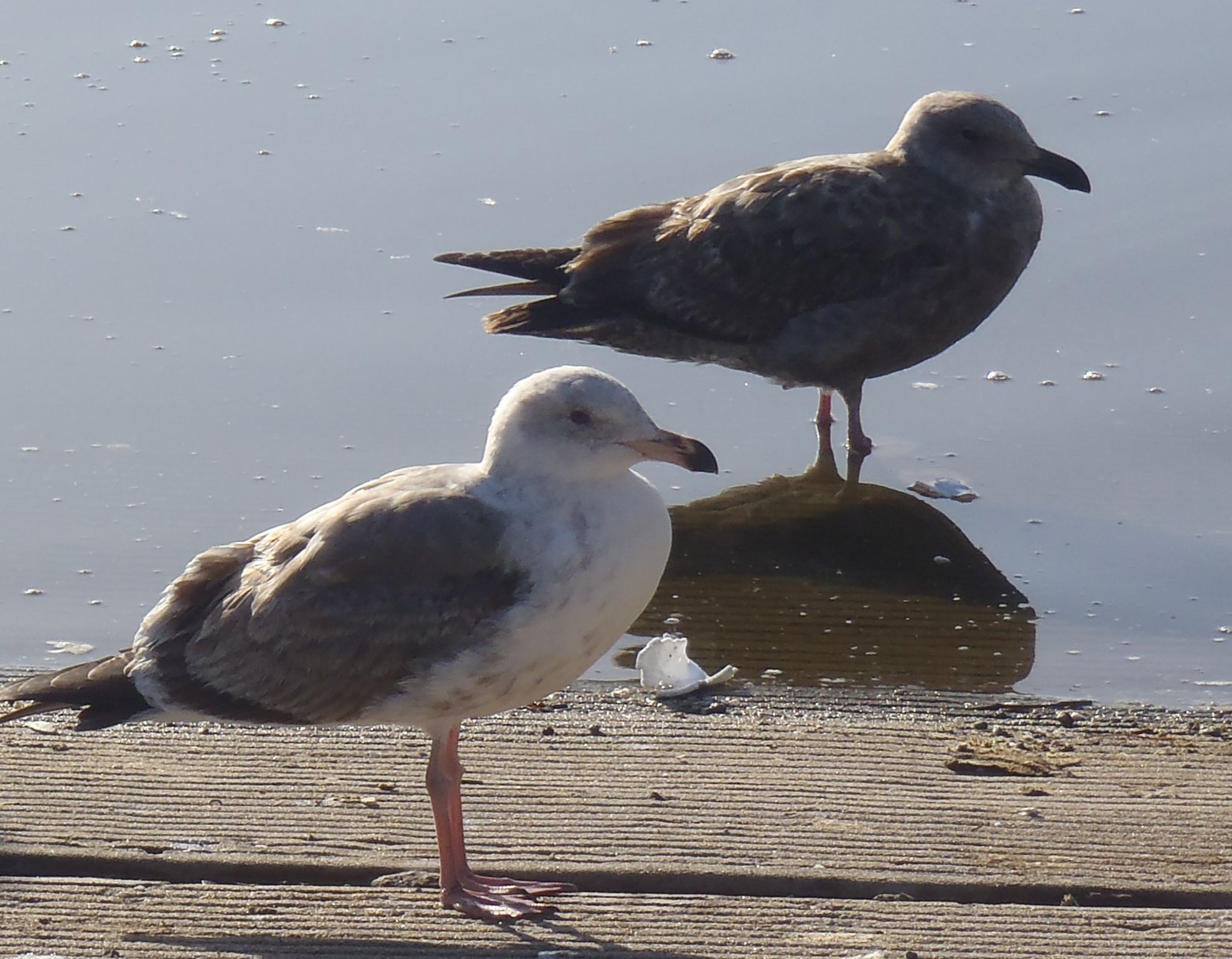
Here’s another shot of two immature birds at the same location. The farthest is a year 1 bird. The closest has the back and coverts characteristic of a year 2 bird. (Making an ID is so much easier when they’re standing than when on the fly.)
If you haven’t guessed already, all of the birds shown so far are western gulls. The giveaway for me was the similar size of the adults and youngsters in this group, and the adults’ white head, yellow bill, dark gray back and pink legs. Also, they’re the most abundant gulls here.
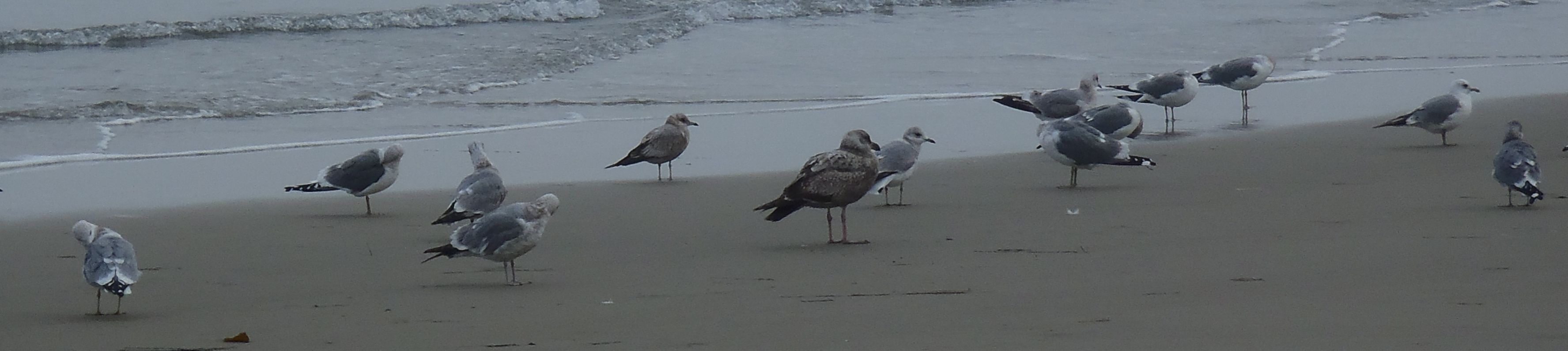
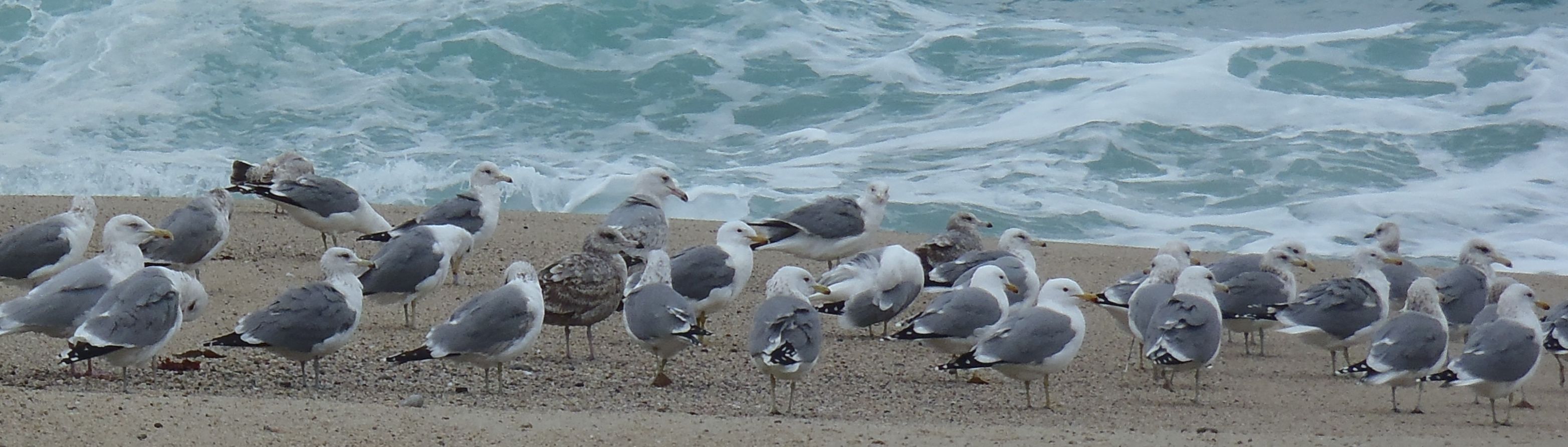
Now it’s your turn (if you want to join my challenge). Remember: Age first, then species. Can you distinguish between the adult and immature birds in these shots? Click on them to get a closer look. (Unfortunately, they didn’t cooperatively line up by age.) To help you focus on age, I’ll divulge that there are California gulls, western gulls and mew gulls in these shots.
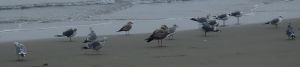
As you can see, this challenge will keep me busy on my walks for quite some time.
~~~~~~~~~~~~~~
Resources
Don Roberson’s Creagrus website: Gull Subfamily
Also, Creagrus California List (with photos): California gulls


 In this photo of a Brandt’s cormorant, you can see the algae at the bird’s feet — the beginnings of a nest. All along the waterfront, cormorants are flying busily to and fro with wads of algae and seagrasses in their mouths for building nests.








 WordCraft.NatureFocus