WordCraft.NatureFocus

Bay-to-Beach Life Blog

Precious Point Lobos

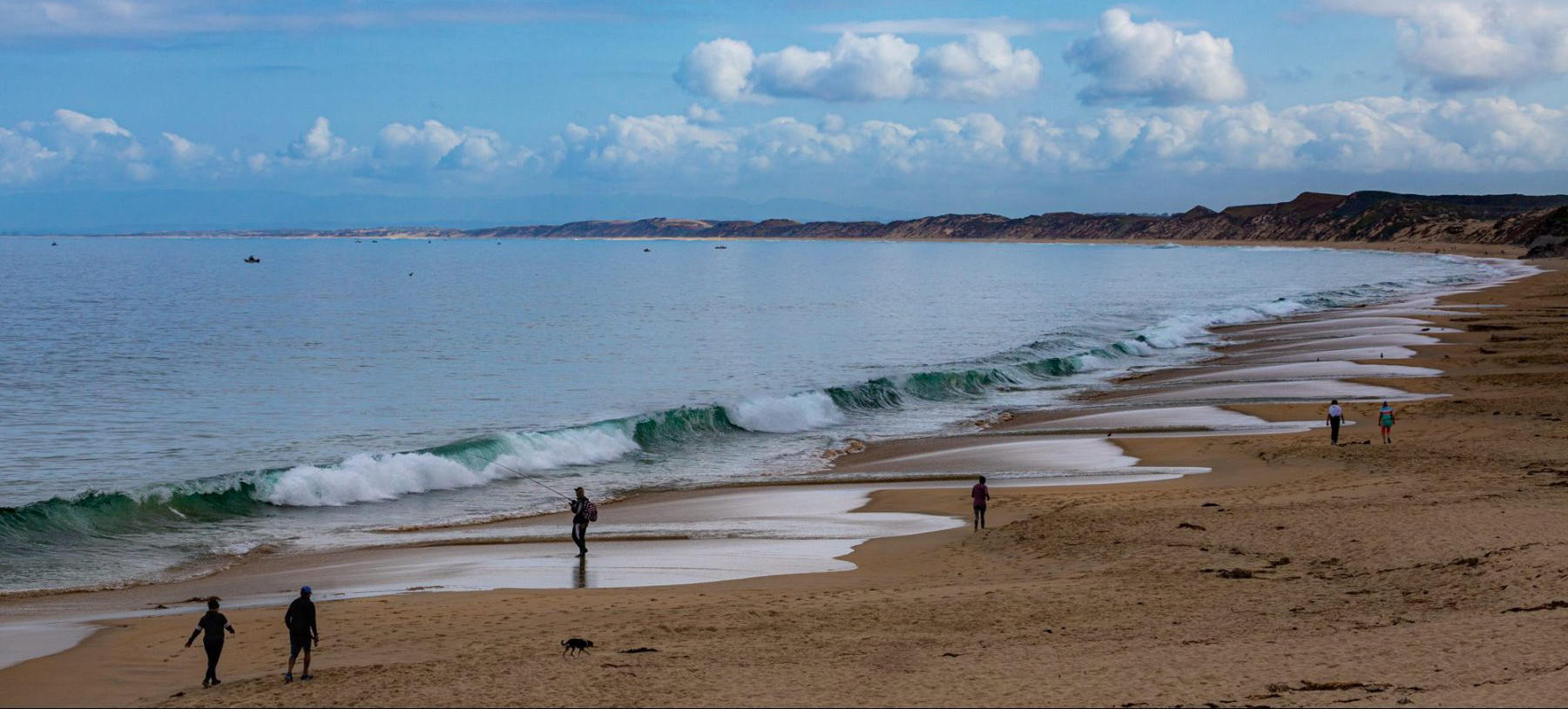
Point Lobos South View by C. ParsonsAlthough not considered part of Monterey Bay (unless you’re a geologist), Point Lobos is a short drive to the south and on most days too gorgeous to ignore. I met my friend Deborah at the park and on this slightly cloudy, windy May morning, we walked, talked and snapped photos (despite both of us suffering from spring allergies). The dynamic interaction of ocean and rocks, wind and waves provided spectacular sights.

Iris Point Lobos by C. ParsonsAlong South Shore Trail and Lace Lichen Trail, small colorful flowers dotted the rough Monkeyflower Point Lobos by CM. Parsonslike jewels, each discovery a delight.

On Hidden Beach, we spotted mother-pup harbor seal pairs, some snoozing on the warm sand and others engaged in swimming lessons.

Cormorants Point Lobos by CM. ParsonsOn Bird Island and other granite outcroppings, determined cormorants were constructing nests despite the day’s building winds. We watched bustling colonies of Brandt’s and a few solitary pairs of pelagics. While we walked, a duet of pounding surf and wind-rocked trees accompanied us.

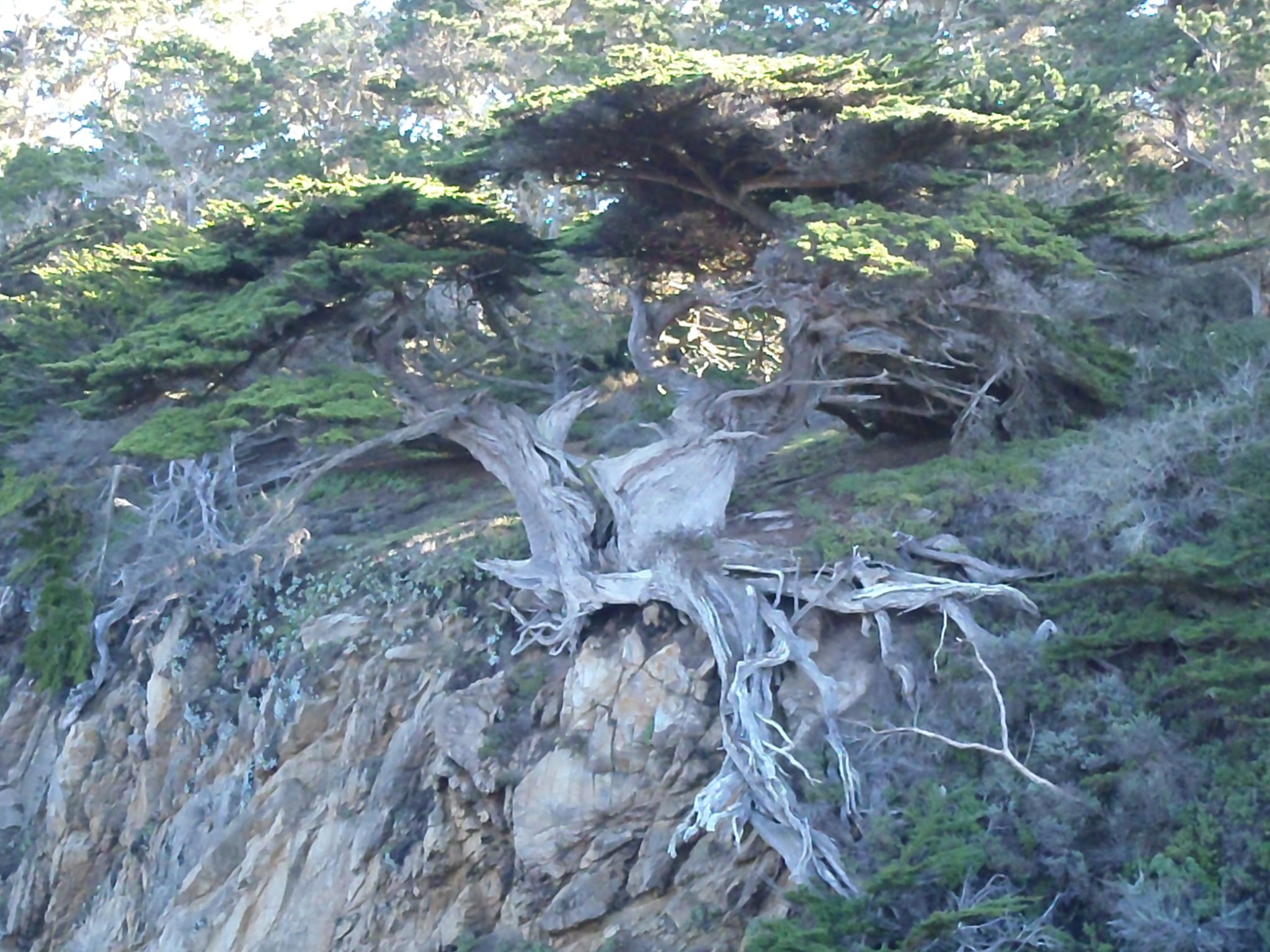
The spray of ocean saltwater and ceaseless buffeting by winds gnarl cypress trees along the shoreline and some appear as forest characters. Cypress Point Lobos by CM ParsonsOn the cliffs above Cypress Cove, we encountered a stunning rust-colored growth that blankets the trees and rocks. Algae on Cypress
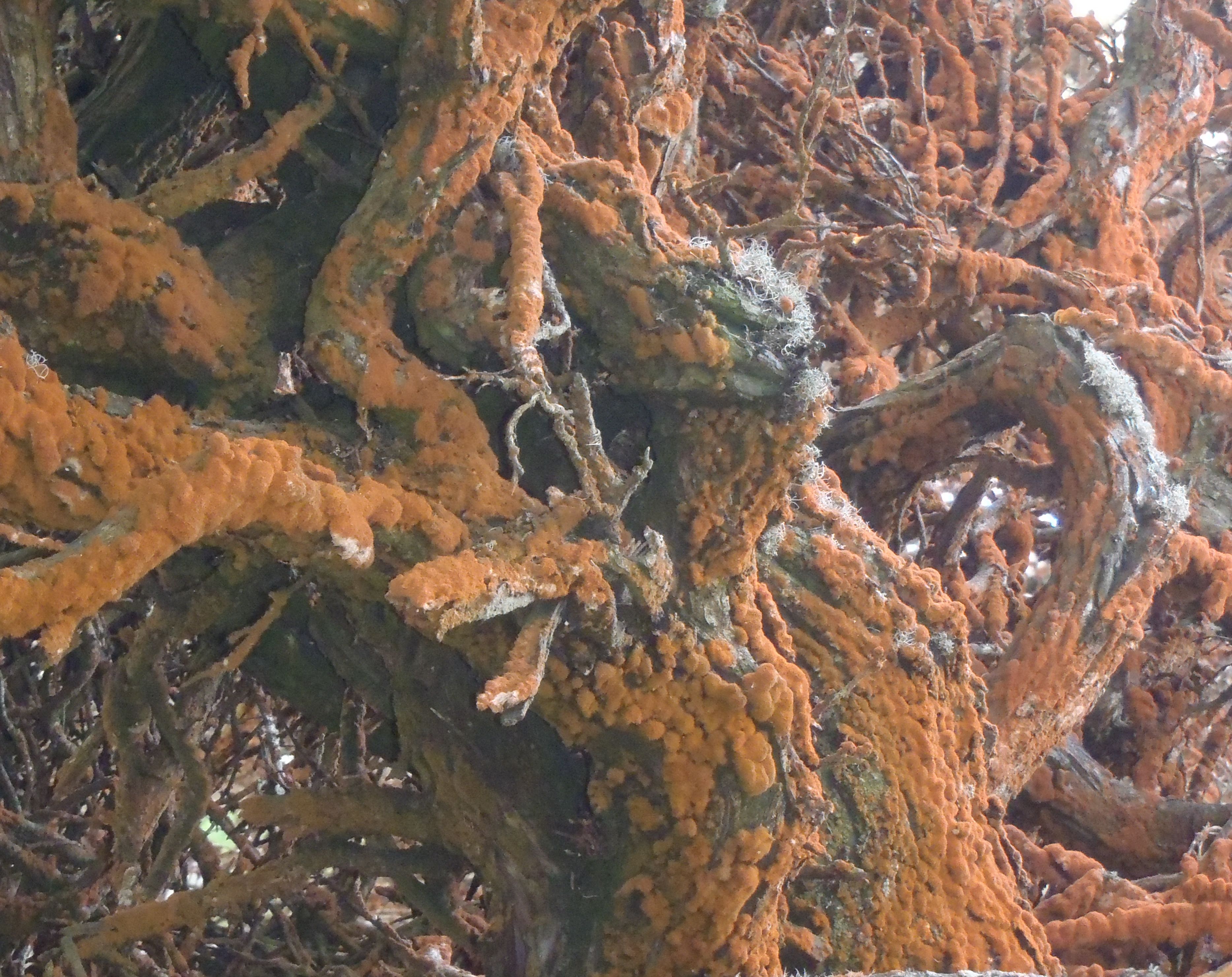
I was surprised when I learned that the orange fuzz is a green alga. It is rust orange instead of chlorophyll green because of beta carotene (which gives carrots their color) and other carotenoids. One study (Mukherjee et al. 2010) found that the total carotenoid concentration is higher in winter (hence a brighter color) than in summer. This alga (Trentepohlia aurea var. polycarpa) is an epiphyte, that is, it uses cypress trees (Cupressus macrocarpa) only as a growing surface and causes no harm, unlike a parasite. From my reading, it appears the species is found worldwide in damp places similar to Point Lobos, but the variety polycarpa is specific to our coast.

It was a beautiful day and great walk. I can’t wait to return to this precious California State Park soon to make more discoveries. Thanks, Deborah.
~~~~~~~~~~~~~~
Sources
Point Lobos State Natural Reserve brochure and website
Mukherjee, R., Borah, S. & Goswami, B. (2010). Biochemical characterization of carotenoids in two species of Trentepohlia (Trentepohliales, Chlorophyta). Journal of Applied Phycology, 22(5), 569-571. doi: 10.1007/s10811-009-9495-9
UBC Botanical Garden and Centre for Plant Research: Trentepohlia aurea (tentative)
 

Hungry sea lion pup

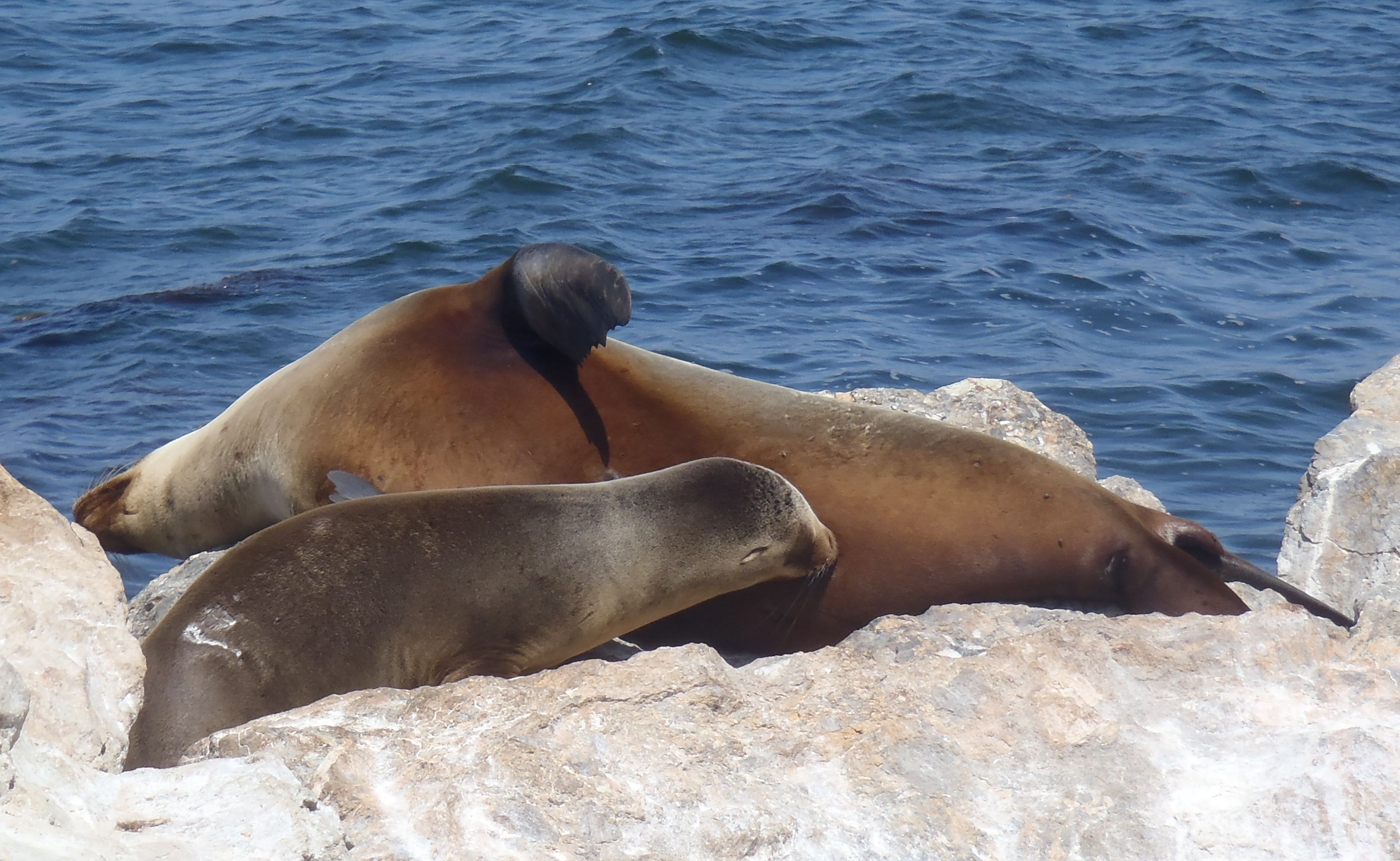
I haven’t seen this too often in Monterey — a nursing sea lion pup. Sea lion pup nursing by C. ParsonsThis afternoon while checking on the Brandt’s cormorants nesting on the breakwater, I heard a wailing plea. On the ocean side of the rocks near the cormorants’ nests was a crying sea lion pup. I caught pictures of it nursing while its mom was snoozing. This is unusual because we see mostly male sea lions in Monterey Bay. Females give birth and raise pups this time of year normally on offshore islands. But this has been an unusual year for sea lions, especially last year’s pups that are now yearlings struggling to survive. This sighting was definitely an unexpected one for me. I hope it doesn’t mean that we’ll be seeing more pups here this year.

Elbow crab and ladybug

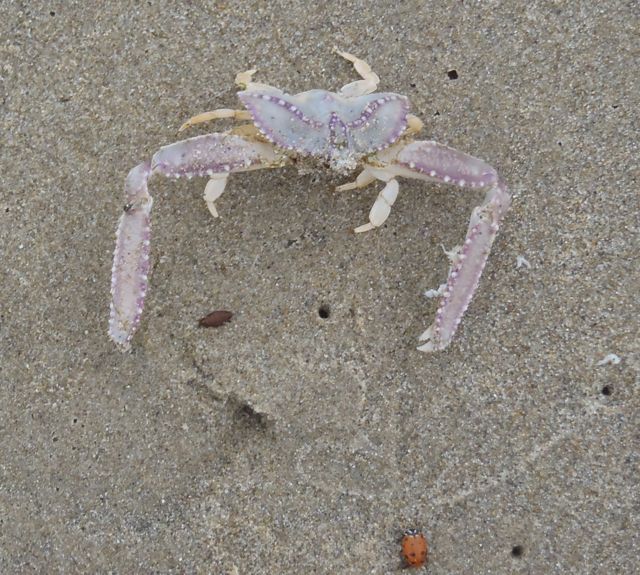
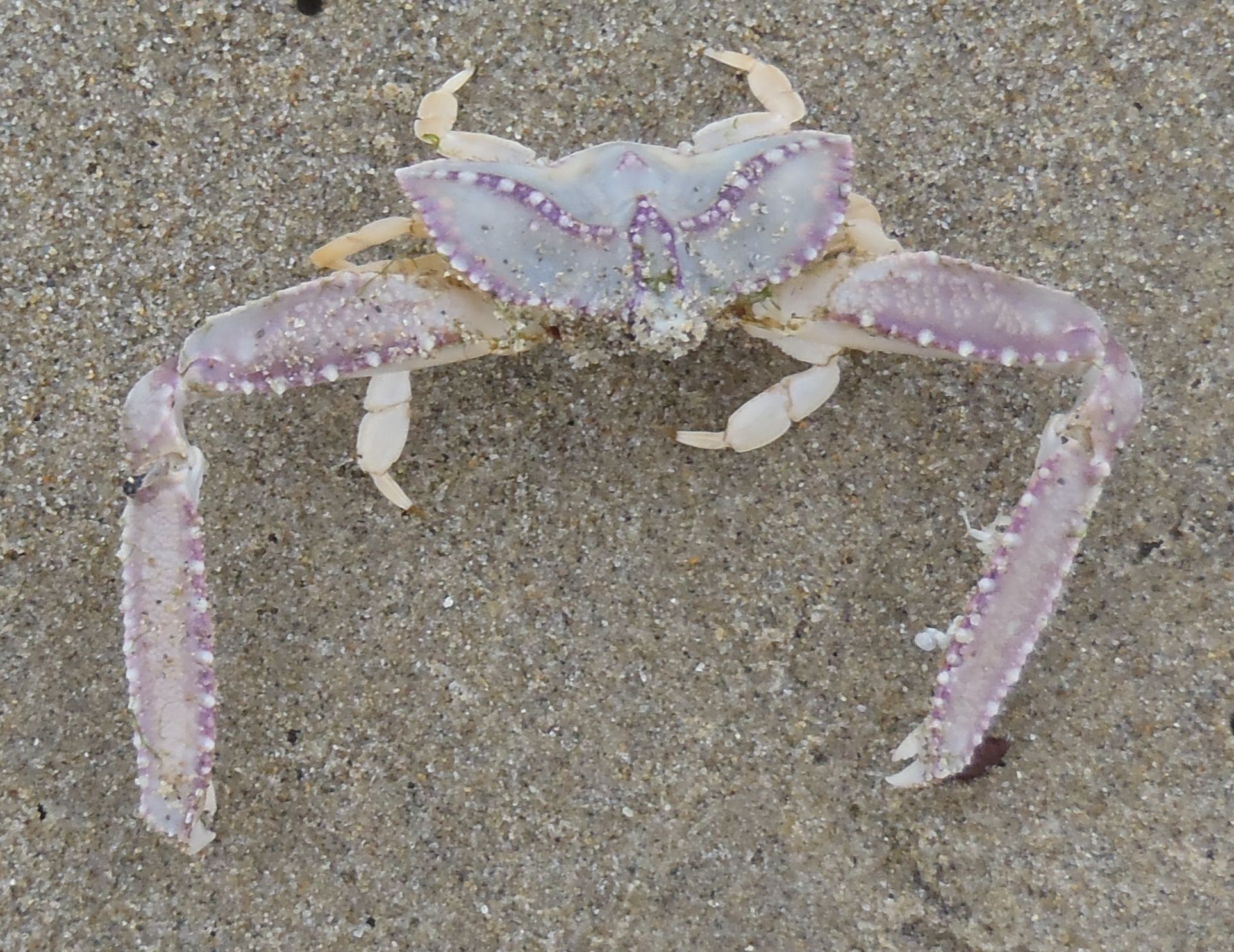
I thrill at finding new Monterey Bay creatures (new to me) and learning about them. Elbow Crab by C.ParsonsThis morning I found this beauty on the beach. While taking photos, I spotted what looked like a dead crab or carapace. When I flipped it over, I was amazed by the purple and white details of a live sandflat elbow crab (Heterocrypta occidentalis), a species I had never seen before. Elbow crabs aren’t just new to me, they’re also relative newcomers to the bay.

In his 1969 book Seashore Life of Southern California, Sam Hinton wrote about the elbow crab, “It is mainly a tropical form, with Southern California representing the northernmost part of its range.” And, a 1995-1996 survey off Hopkins Marine Station by UC-Santa Cruz students, who were repeating a Pearse 1971-72 survey, found that elbow crabs, which had been rare or absent in the early 1970s, were common by 1996. It appears that the species has been moving northward.

These days we often see climate change reports of spring arriving earlier and terrestrial species moving north or to higher elevations. We’re less exposed (physically and via media) to species in our oceans making similar shifts. Less than 1% of the synthesis information on climate change on natural systems has come from marine life (Richardson et al 2012). Why has the elbow crab move into and become more common in the bay? What’s the impact of its expanding range? I couldn’t find answers — maybe no one knows. But we do know our world is changing and we need to pay attention to both the obvious and the subtle shifts. Have you noticed changes near you?

Elbow crab+ladybug by C. ParsonsI carefully picked up the elbow crab (not being sure about it little pincers) and tossed it into the wash. With each successive wave, it slowly crawled sideways into the ocean.

As I was reviewing the photos later, I saw that the elbow crab wasn’t alone (and I consider myself observant). Near it was a ladybug beetle — a subtle reminder to slow down and look more carefully in the future.

~~~~~~~~~~~~~~
Sources
Hinton, S. (1969). Seashore Life of Southern California. Berkeley, CA: University of California Press.
Lucas, S. S., Lonhart, S. I., Bernardi, G., et al. (1997). Comparative species survey of a coastal California marine refuge. Poster presented at the Sanctuary Currents Symposium, Monterey, CA. Abstract.
Richardson, A. J. et al. (2012). Climate change and marine life. Biology Letters 8(6): 907-909.

Seal pups arrive

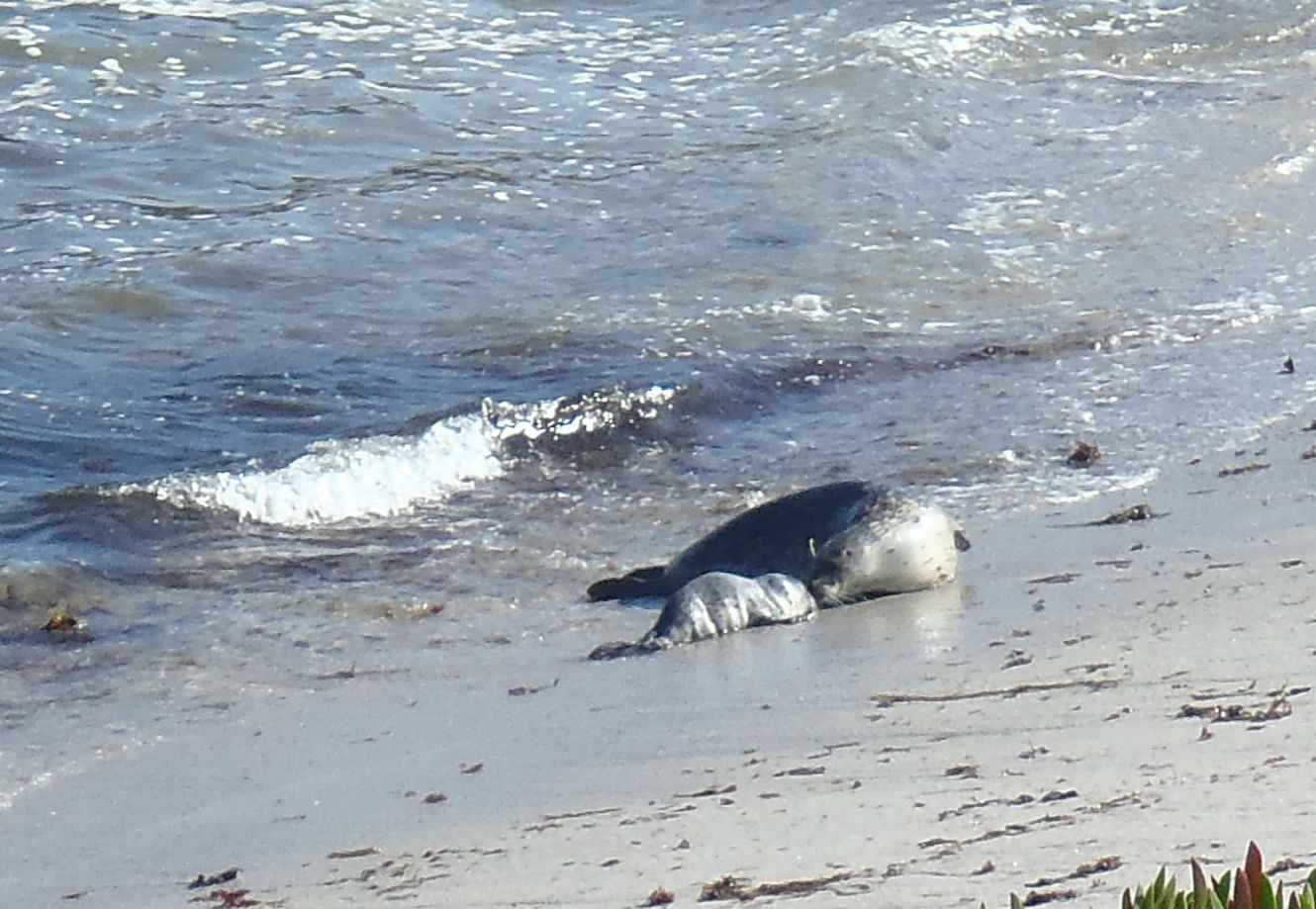
The Monterey Bay Aquarium hosted its 12th annual Día del Niño/Day of the Child celebration today, and it seemed fitting that families walking to the aquarium witnessed another annual event — seal moms training new pups. Seal mom & new pup by C. ParsonsOn sheltered beaches throughout the bay during this time of year, harbor seals give birth. This morning on my walk, along with families going to the aquarium, we watched mothers and new pups on the beach of Hopkins Marine Station and a small cove to the west, both in Pacific Grove, California.

These pups have very short “puphoods.” Mothers feed and fatten them for 4 to 6 weeks, then wean them. In that short time, pups must learn to swim, dive and fend for themselves. This morning, I watched new pups comforted by mothers (photos), a pup while it nursed (see video), and a squealing pup get a swimming lesson (see video). I could have stayed all day.

Seal w swimming pup by C. ParsonsThe pups look so helpless at this stage and yet they’ll be on their own soon. Knowing that, it’s sometimes hard to watch them, but they’re so adorable. I know that in June I’ll have new curious harbor seals following my kayak as I paddle these shores.

Cormorants on nests

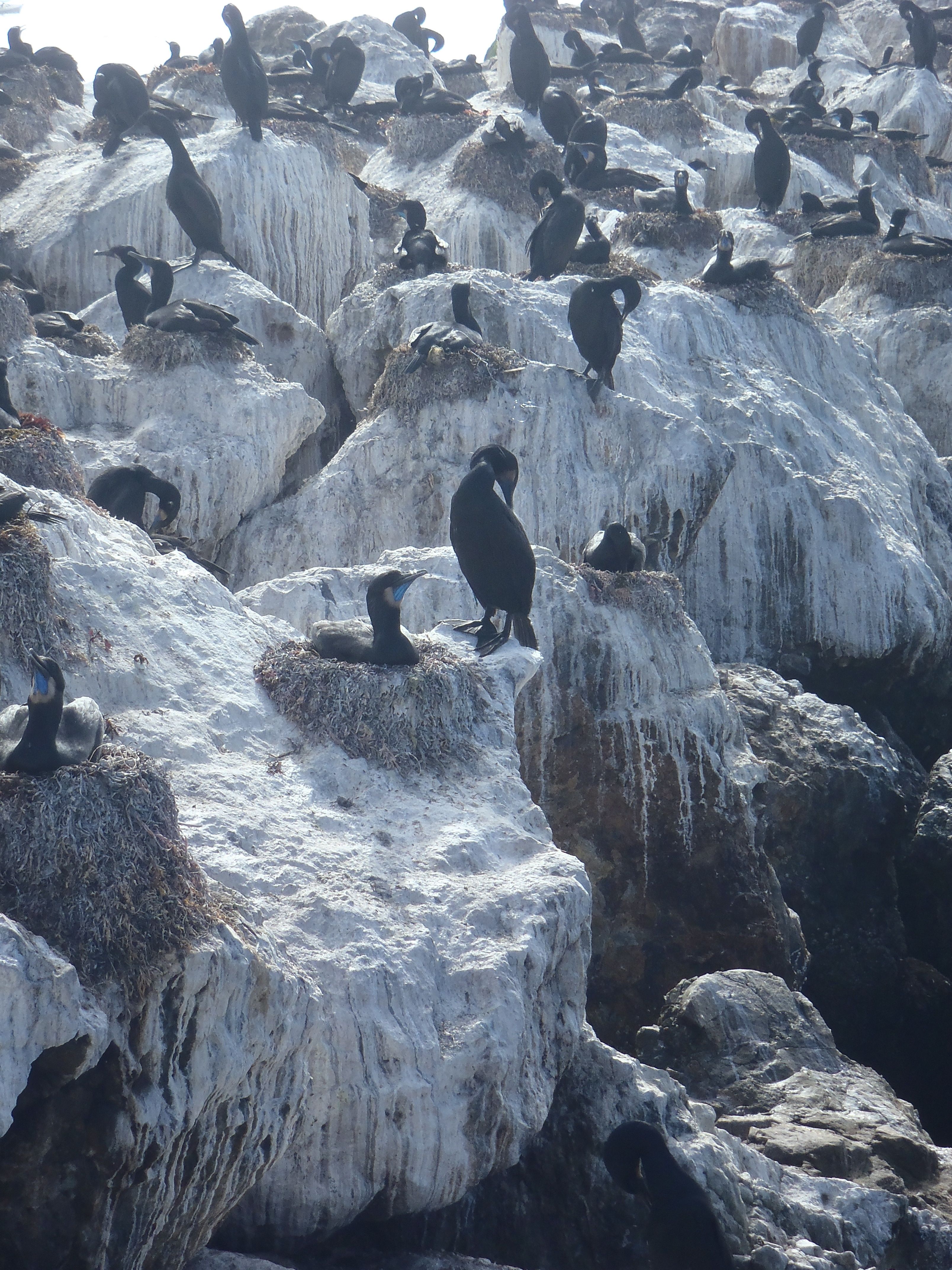
The winds have been wild and ocean rough this month, but the Brandt’s cormorants have managed to build nests on the Monterey Harbor breakwater anyway. BCormorants on Nests by C. ParsonsThe colony was lively this morning — males landing with algae-seagrass wads and cementing the bits together with guano to attract a mate, partners greeting and flashing bright blue throat pouches, and pairs mating. I saw no eggs (females lay 3 to 6), but given today’s activity, those will surely come soon.

PCormorant by C. ParsonsIn addition to the Brandt’s, I spotted pelagic cormorants with nest material flying under the hotels, restaurants and shops along Cannery Row. They’re more solitary than the Brandt’s and, I assume, the pilings offer more privacy or better protection from the elements and predators. I’m glad for the gregarious cormorants on the breakwater where I can spend the next few months watching males maintain nests, females brood eggs and youngsters grow and fledge.

Cormorants on May nests by CM ParsonsMay 19, 2013 update
No sign of youngsters yet, just growing nests and patient parents.