WordCraft.NatureFocus

Bay-to-Beach Life Blog

What kind of seashell is this?

Snail Cluster by CM ParsonsWhen I first saw this, that question popped into my head — What kind of seashell is this? I spotted the colorful object in the sand during a low-tide May-day walk. I knew it was a living thing because I recognized the candy-cane-striped acorn barnacles (Megabalanas californicus). Barnacles, as you may know, are crustaceans (related to crabs and shrimps, not snails). Each is housed in a shell and lives with its head glued to the base. Its feet pop out of the opening and kick to collect plankton drifting in the water around it. It can close the shell to prevent drying when it’s out of the water (you can see most of the openings are shut). But barnacles live attached, and these prefer rocks and pilings (not sand). So, what were these barnacles attached to?
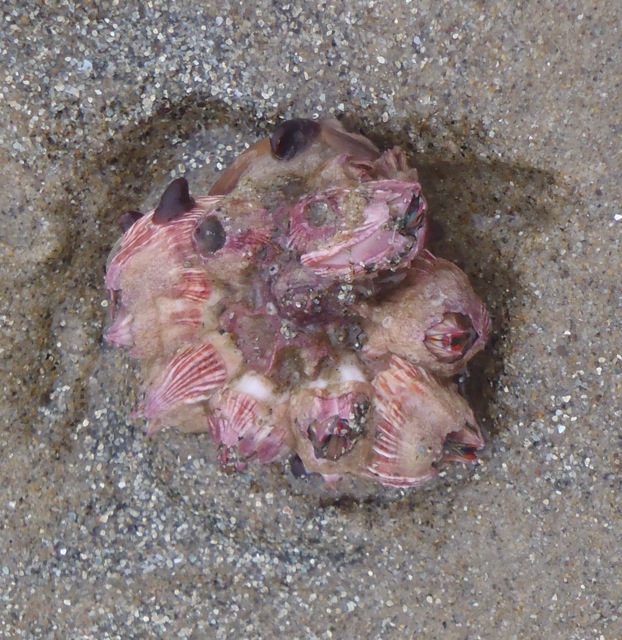
Snail Cluster2 by CM ParsonsI excavated around the cluster to get a better look. On the barnacles were hooked slipper snails or slipper limpets (Garnotia adunca). These animals ride on the shells of sea snails. Like the barnacles, they’re suspension feeders. They use their gills to strain plankton and organic particles from the water around them. Slipper limpets are usually stacked on top of one another (that’s how I’ve seen them). The large bottom snail is a female and the smaller ones are males. These snails are hermaphrodites, that is, they have both male and female organs, and protandric, that is, they start as males and later become females. (Deep Sea News has an interesting post on this lifestyle.) But there were no slipper limpet stacks on my barnacle cluster, and I didn’t have an answer: What were the barnacles attached to?

Snail Cluster3 by CM ParsonsI gently flipped over the cluster to see if I could find the carrier. Obviously more slipper limpets, plus a pearly white shell and a light brown operculum. An operculum is a plate, or door, that a snail has to close and seal its shell when it retracts its body. In this case the door was ajar and part of the snail showing. The acorn barnacles were attached to a living marine mollusc. Great… but what kind? Identifying the covered snail by its operculum and shell opening was a challenge beyond my skills. With the help of my writing partner and go-to marine biologist, Kit Muhs (who studied at Moss Landing Marine Labs), we identified the snail as Chlorostoma montereyi, commonly called the Monterey turban snail or Monterey tegula (the scientific name was Tegula montereyi). You can find pictures of the shell without the clutter at SeaNet or SIMoN. (And, if you think we got the ID wrong, let me know.)

Look again at the photo. Do you see a gray bulge on the right side of the shell. It’s yet another marine animal! But we’re not sure what — a tunicate, salp, anemone? Anyone know? Can you find any other organisms?

This is a crowded shell. Obviously, beachfront space is at a premium. Given the size of the barnacles and the wear on the top of the shell, this commensal group must have thrived for a while. (I’m amazed that the snail was able to live carrying all that baggage. Think of how hard it must have been to move around to graze on algae.) I gently tossed the cluster back into the water. I doubt its survival. Reefs off that sandy beach are in deeper water. But I’m glad I found it — it’s a seashell like none I’ve ever seen before.

Note: This is my opportunity to publicly recognize my longtime writing partner, Kit Muhs, for her wonderful science mind and great writing talents. Word Craft has been a success because of her contributions. Thanks, Kit!  Hope you’re enjoying Hawaii.
~~~~~~~~~~~~~~
Sources
Morris, R., Abbott, D. & Haderlie, E. (1980). Intertidal Invertebrates of California. Stanford, CA: Stanford University Press.
Niesen, T. M. (1994). Beachcomber’s Guide to California Marine Life. Houston: Gulf Publishing Company.
SeaNet: Common Marine Organisms of Monterey Bay, California
Sept, J. D. (2002). The Beachcomber’s Guide to Seashore Life of California. Madeira Park, BC Canada: Harbour Publishing.
SIMoN (Sanctuary Integrated Monitoring Network). Photo Library: Chlorostoma montereyi.
 

Summer beachcomber treasures

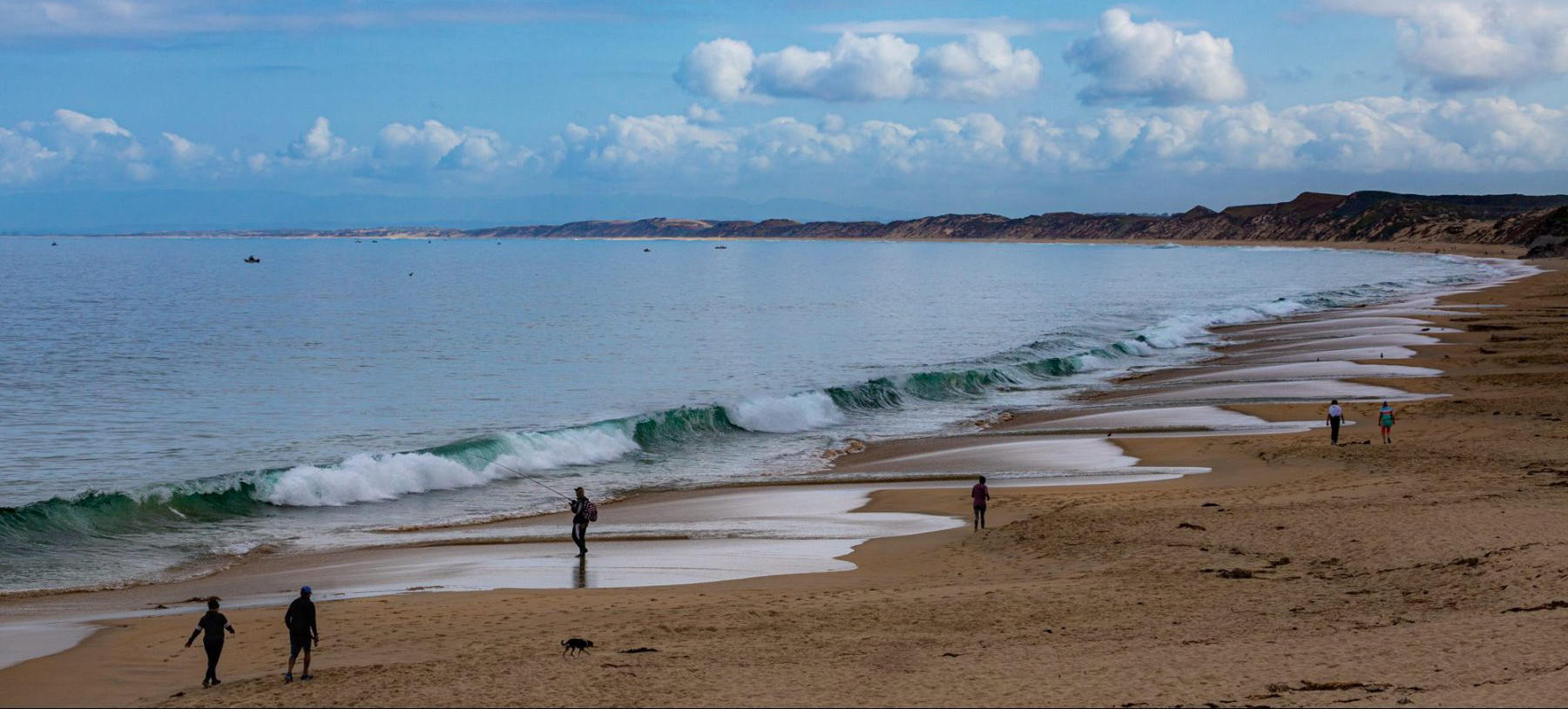
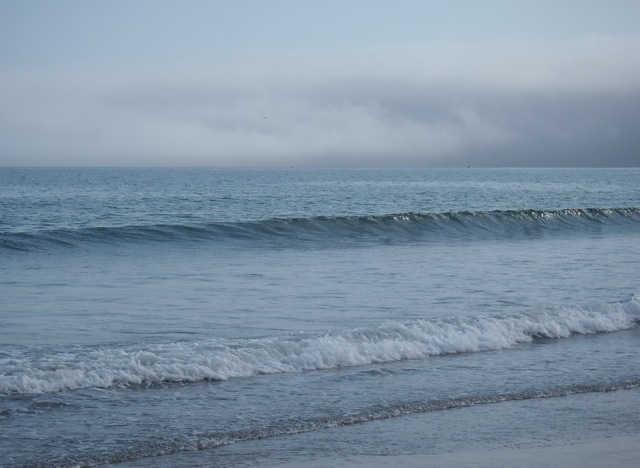
One pleasure of walking the beach is making new discoveries. There’s always something delightful at my feet. Because I walk nearly the same times each day, the beach is never the same. The tide may be high, or low, or somewhere in between. Tides are best imagined as water sloshing back and forth in a bathtub. They’re the natural rise and fall of the ocean’s surface caused by the interaction of the gravitational pull of the moon, and the sun to a smaller extent, and the Earth’s rotation. Monterey Bay typically experiences two sloshes a day.

MBay High Tide by CM Parsons

High tide

MBay Low Tide by CM Parsons

Low tide


Most days the bay has two different high tides and two different low tides — a mixed semi-diurnal pattern — typically there’s a high high, a high low, a low high and a low low tide. The cycle shifts by about 35 minutes each day and sea level changes are between 3 to 6 feet (1 to 2 m). The daily ebb and flow and cycle are what make the beach different for each walk. In addition, the surf may be pounding and washing marine life and debris onto the shore, or lapping and revealing surprises in the sand.

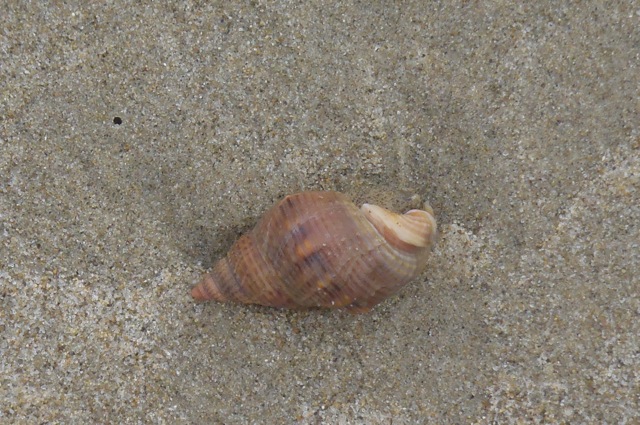
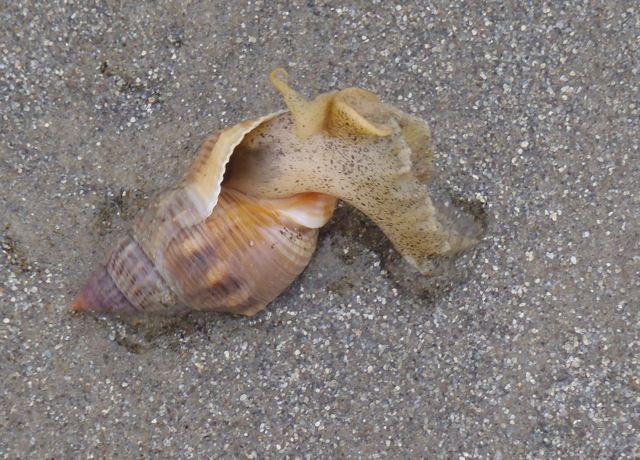
Nassarius fossatus by CM ParsonsMy newest beachcombing discovery has been the Nassarius snail with common names such as channelled basked shell, giant western dog whelk or channelled nassa (Nassarius fossatus). I spotted a lovely shell on the sand and, to my surprise, it was alive. This snail is about 2 inches long (5 cm) and crawls along the surface or buries in the sand. Nassa Snail4 by CM ParsonsIt’s primarily a scavenger and uses its siphon to “sniff” for food, such as dead fish, maybe molting crabs, and even cadavers. It’s also opportunistic and will prey on other invertebrates.

Nassa Snail 3 by CM Parsonsrecent study of benthic (bottom-dwelling) species in Monterey Bay found that while feeding, this snail (and several other species including the fat-innkeeper worm and Emerita sand crabs) pick up the neurotoxin domoic acid from Pseudo-nitzschia australis diatom blooms. Tissue samples showed the toxin at levels exceeding what’s considered safe for the snail’s predators, hence contributing to the poisoning of marine birds, sea lions and the endangered California sea otter. (See more below about the Emerita sand crabs.) 

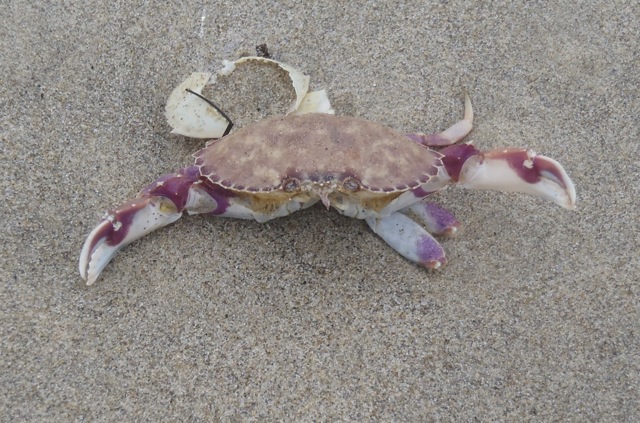
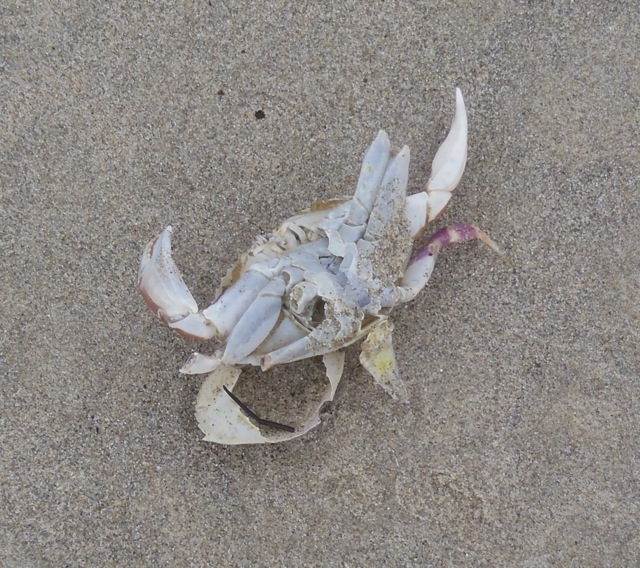
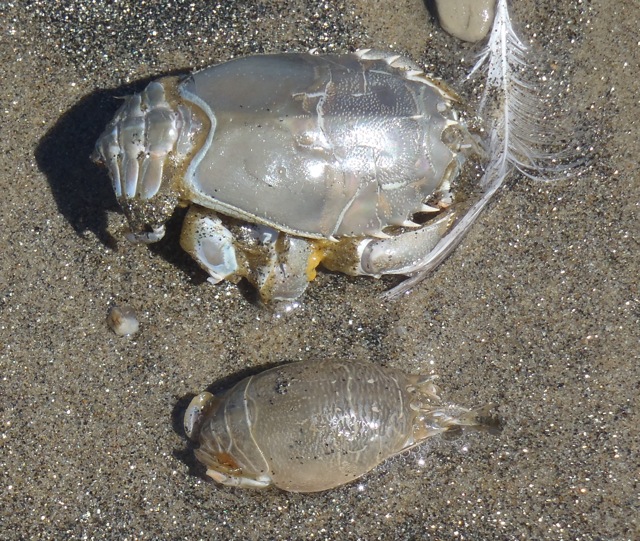
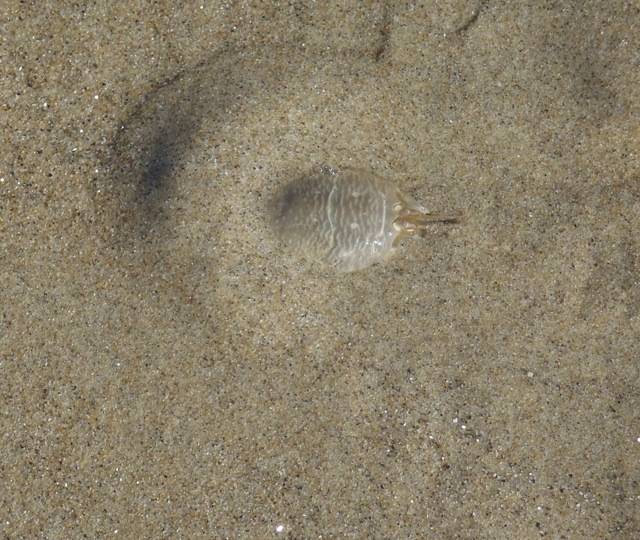
Cancer gracilis molt by CM ParsonsCrabs always catch my attention and can lead to surprises. I thought this little gem (Cancer gracilis) was alive when I first happened upon it, but it didn’t move as I got close. I gently touched it, and nothing happened. When I turned it over, I found it was empty — a discarded molt. Cancer crab molt by CM ParsonsCrabs grow via a chemical and physical process called molting (or ecdysis). During the process, a crab develops a soft new shell inside the hard old one. To crack the hard outer shell, it absorbs water, and then slowly backs out, leaving the molt. In the photo, this graceful crab left a near-perfect ghost of itself. Because the new shell is soft (a tasty treat), the crab hides in a protected spot until its shell hardens.

Beached Dungeness by CM ParsonsIn addition to graceful crab molts, the beaches have been littered lately with Dungeness crabs (Cancer magister) in various stages of molting — from empty shell bits to soft crabs to wriggling stranded hard ones. These young crabs may molt as many as a dozen times before they become adults.

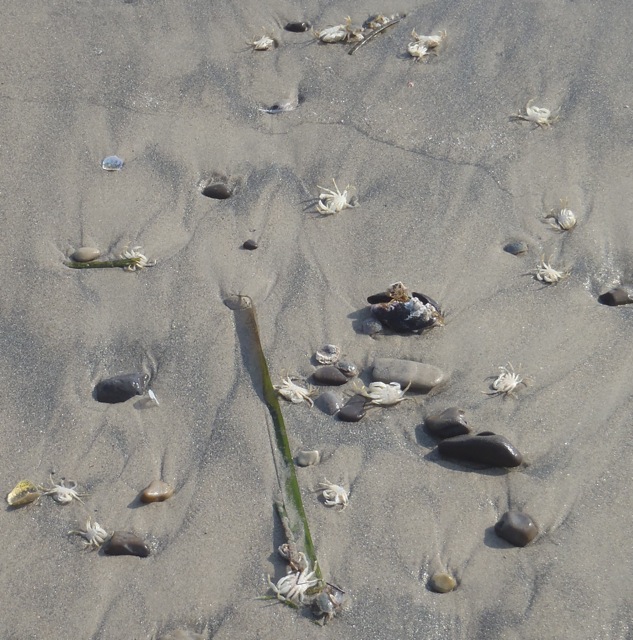
Crabs and their molted shells (carapaces) are the most common items I find on the beach. Sand crabs are by far the most numerous, so much so that I tend to ignore them. But there are two species, and when side by side, the difference is dramatic.Sand crabs by CM Parsons
The sand crab, Emerita analoga, growing to about 1.5 inches (3.5 cm), is the smaller and the mole crab, Blepharipoda occidentalis, growing to 2.5 inches (6 mm), is the larger. They both bury in the sand and feed on plankton they collect with antennae as water washes over them, but when mole crabs become adults they scavenge, mostly on dead sand crabs. Based on the number of sand crabs I see, there’s plenty to eat.

Sand crab by CM ParsonsShorebirds, fishes and sea otters also dine on them. These crabs are indicator species, that is, like canaries in a coal mine, they are useful in determining the quality and health of local waters. They’ve served as indicators of DDT residues and the prevalence of domoic acid. Sand crab species also host parasites that have been implicated in the poor health and deaths of sea otters and surf scoters (SIMoN website) that eat them.

Amazing how small discoveries on the sand can connect to wider ocean and conservation issues.

~~~~~~~~~~~~~~
Sources
California Department of Fish & Wildlife: Dungeness crab of California and its close relatives.
Fishery information is also available on the CDFW site.
Kvitek, R.G. et al. (2008). Domoic acid contamination within eight representative species from the benthic food web of Monterey Bay, California, USA. Mar Ecol Prog Ser 367:35-47. doi:10.3354/meps07569.
Monterey Bay National Marine Sanctuary: Physical Oceanography.
Morris, R., Abbott, D. & Haderlie, E. (1980). Intertidal Invertebrates of California. Stanford, CA: Stanford University Press.
Niesen, T. M. (1994). Beachcomber’s Guide to California Marine Life. Houston: Gulf Publishing Company.
Sept, J. D. (2002). The Beachcomber’s Guide to Seashore Life of California. Madeira Park, BC Canada: Harbour Publishing. 
SIMoN (Sanctuary Integrated Monitoring Network). Long-term monitoring program and experiential training for students (LiMPETS): Summary to date.

More jelly blobs on the beach

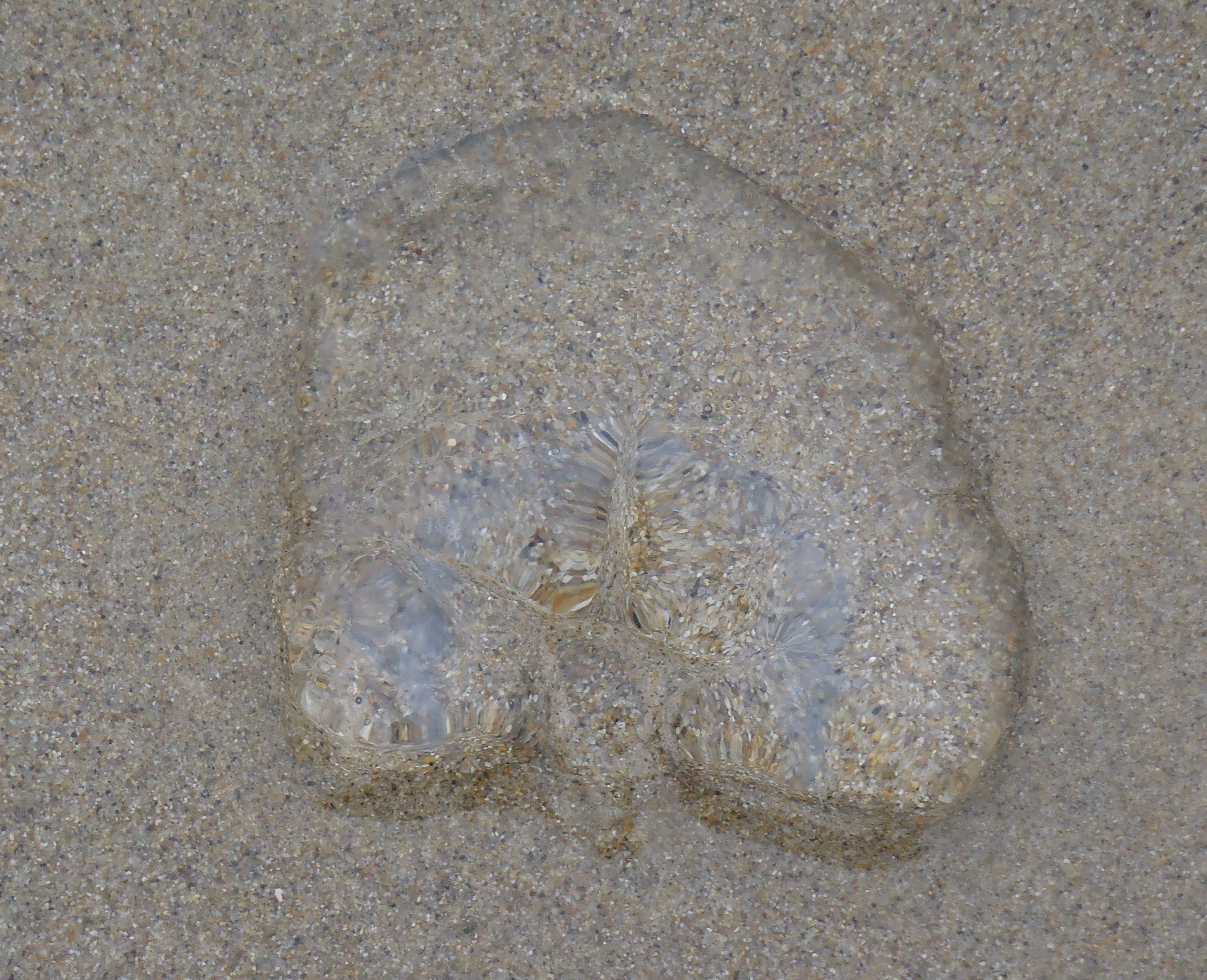
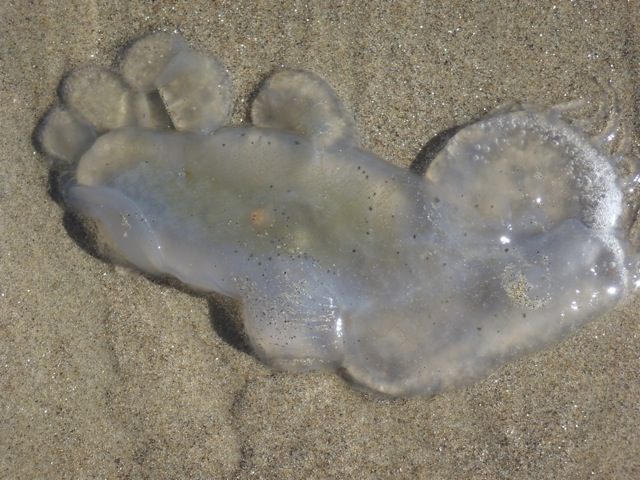
You’ve seen it — a blob of jelly goo glistening on the sand. Jelly on Beach by CM ParsonsIt’s probably not alive, drying in the sun, but you don’t want to touch it. You’re fairly sure it’s a jellyfish and you know jellyfish sting. You’re probably right.

My earlier post — Not all beach blobs are jellies — focused on Melibe, a gelatinous blob that’s not a jellyfish. It’s a non-stinging nudibranch (sea slug). In that post I neglected the real jellyfish blobs on our beaches. This post corrects that omission and shows the jellies (my preferred term for jellyfish) that I encountered as blobs on our beaches in June. Because the blobs don’t do these animals justice, I’ve included links to the lovely living animals, mostly in aquarium exhibits.

Sea Nettle beached by CM ParsonsThis brown blob is a sea nettle (Chrysaora fuscescens). This is the jelly that I see most when I kayak the bay. If you’ve been to the Monterey Bay Aquarium, you probably have pictures of these mesmerizing jellies. The sea nettle grows to 12 inches (30.5 cm) across with 15-foot (4.5-m) trailing tentacles. (By the time jellies hit the sand, tentacles are usually gone.) Sea nettles are stingers and so you don’t want to touch. The stinging cells (nematocysts) can fire even when the jelly is beached. This jelly uses its nematocysts to capture crustaceans, other jellies, fish eggs, fish larvae (baby fish) and other small drifting prey.

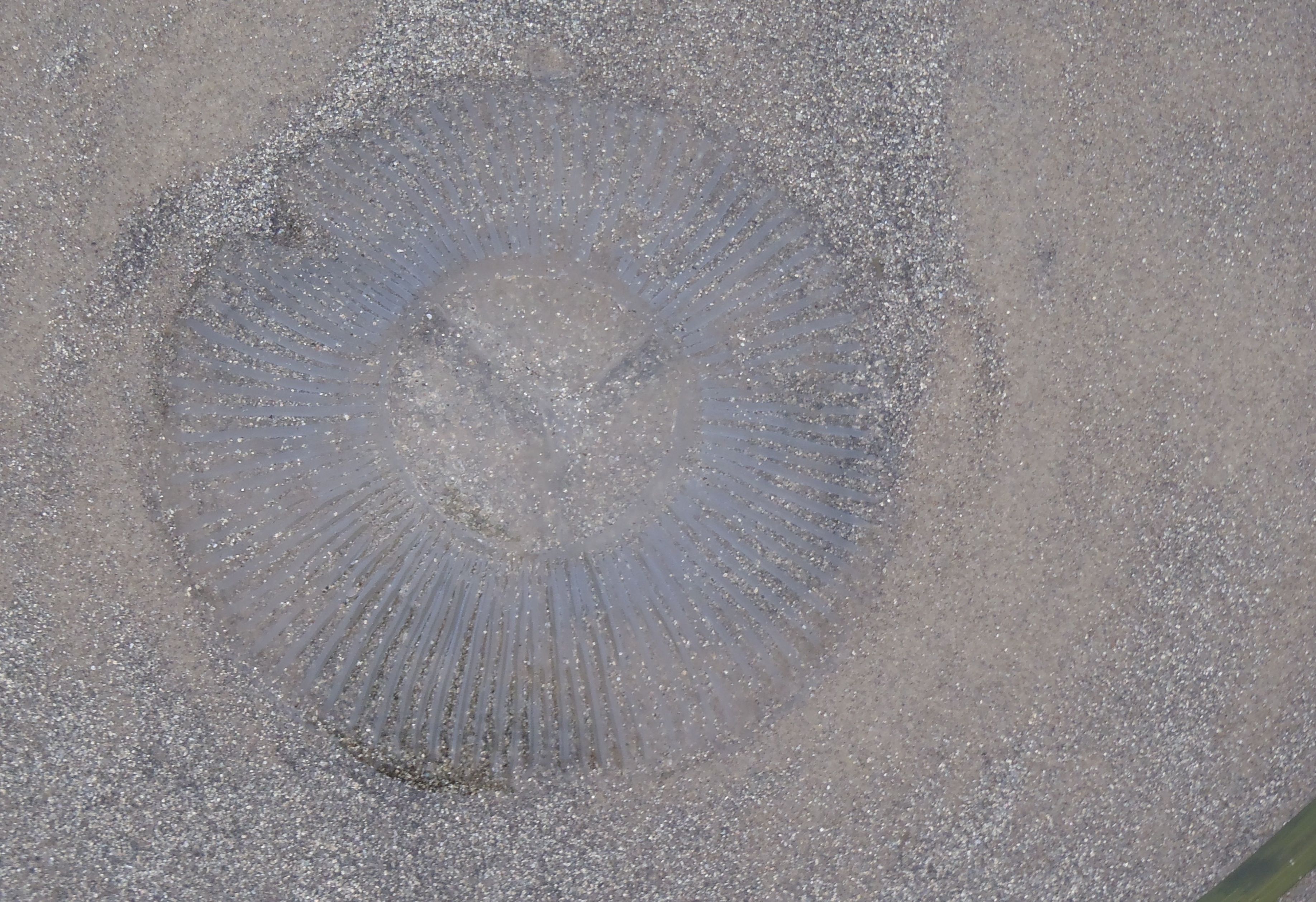
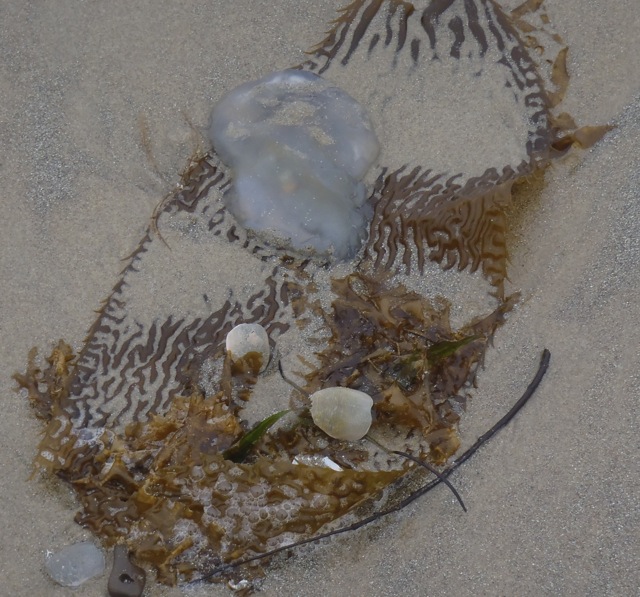
Aequorea jelly blob by CM ParsonsThis striated jelly blob was new to me and I’ve seen only a few. It’s a crystal jelly, or water jelly (Aequorea spp.). The crystal jelly along our coast grows to about 3 or 4 inches (8 to 10 cm). The striations you see are radial canals, which distribute nutrients from its meals — other soft-bodied animals, mostly jellies. Its sting tends to be mild to people. Researchers working with crystal jellies isolated its light-producing gene, which has led to major glowing-green-in-the-dark, or green fluorescent protein (GFP), research. The GFP work was awarded a Nobel Prize in Chemistry in 2008. Jellies do have value, not only in their environment and as entertainment, but also in helping us understand how life works.

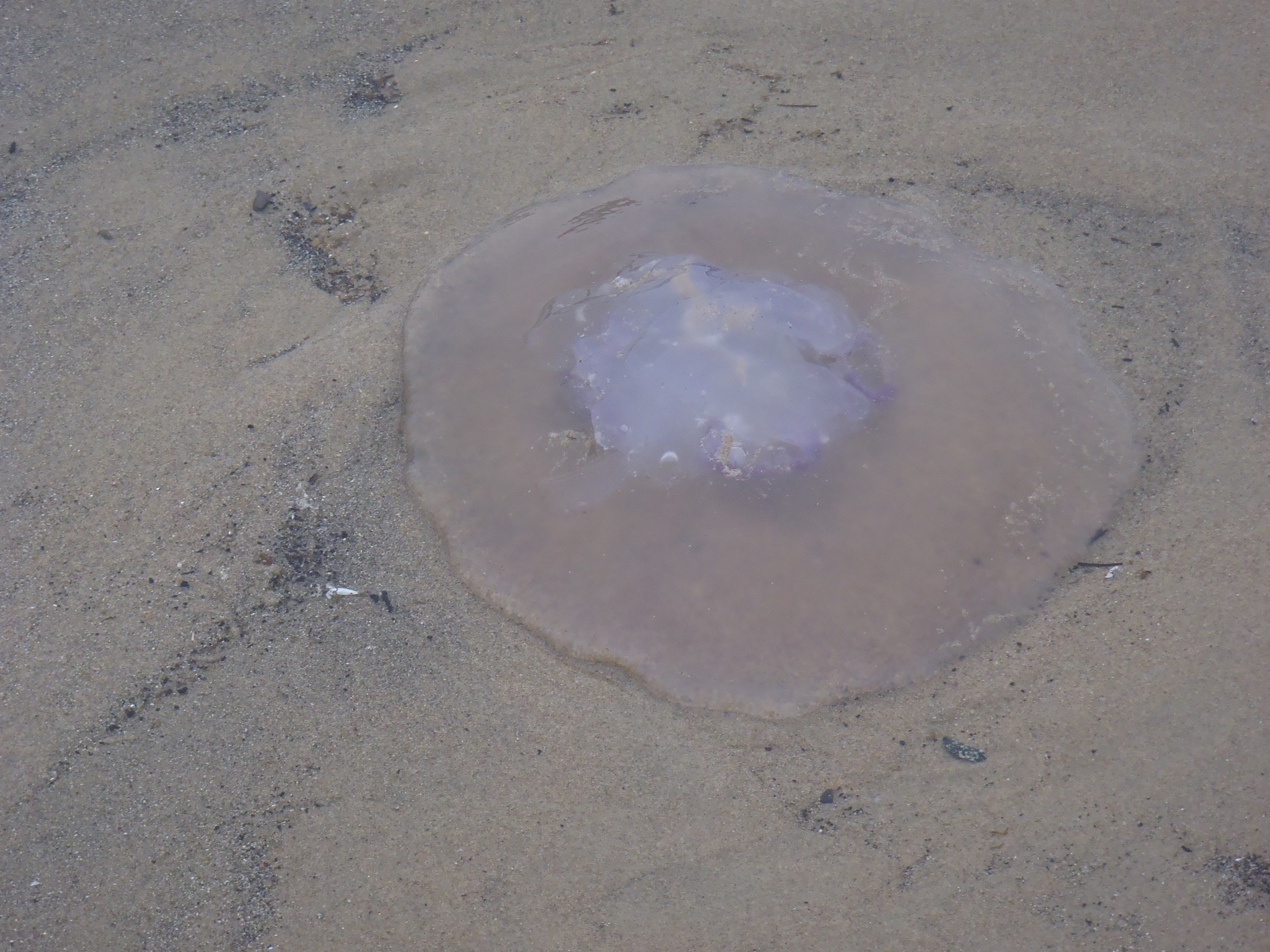
I’m not sure which species this blob is — either a moon jelly (Aurelia sp.) or a purple-striped jelly (Chrysaora colorata), but it has too much purple for the former and not enough for the later (unless it’s a young one). Other distinguishing features aren’t obvious. Purple Jelly by CM ParsonsMoon jellies are a common sight when I kayak. The translucent bell contains whitish oral arms and stomach pouches (except when full of food) and purplish gonads. It can grow to 16 inches (40.5 cm), but the ones I see in the water are usually smaller than 12 inches (30.5 cm). Instead of the long tentacles typical of other jellies, the moon jelly has many fine ones on the bell’s edge and mucus is the weapon it uses to collect tiny zooplankton. These jellies are not powerful stingers, but might irritate your skin if handled. The purple-striped jelly, as the name implies, has purple stripes and some spots. It grows to about 32 inches (81 cm) across with tentacles more than 10 feet (3 m) long. This jelly can deliver a painful sting if handled, so hands off. Like the sea nettle, it eats a variety of zooplankton (drifting animals) such as fish eggs, larvae and other jellies.

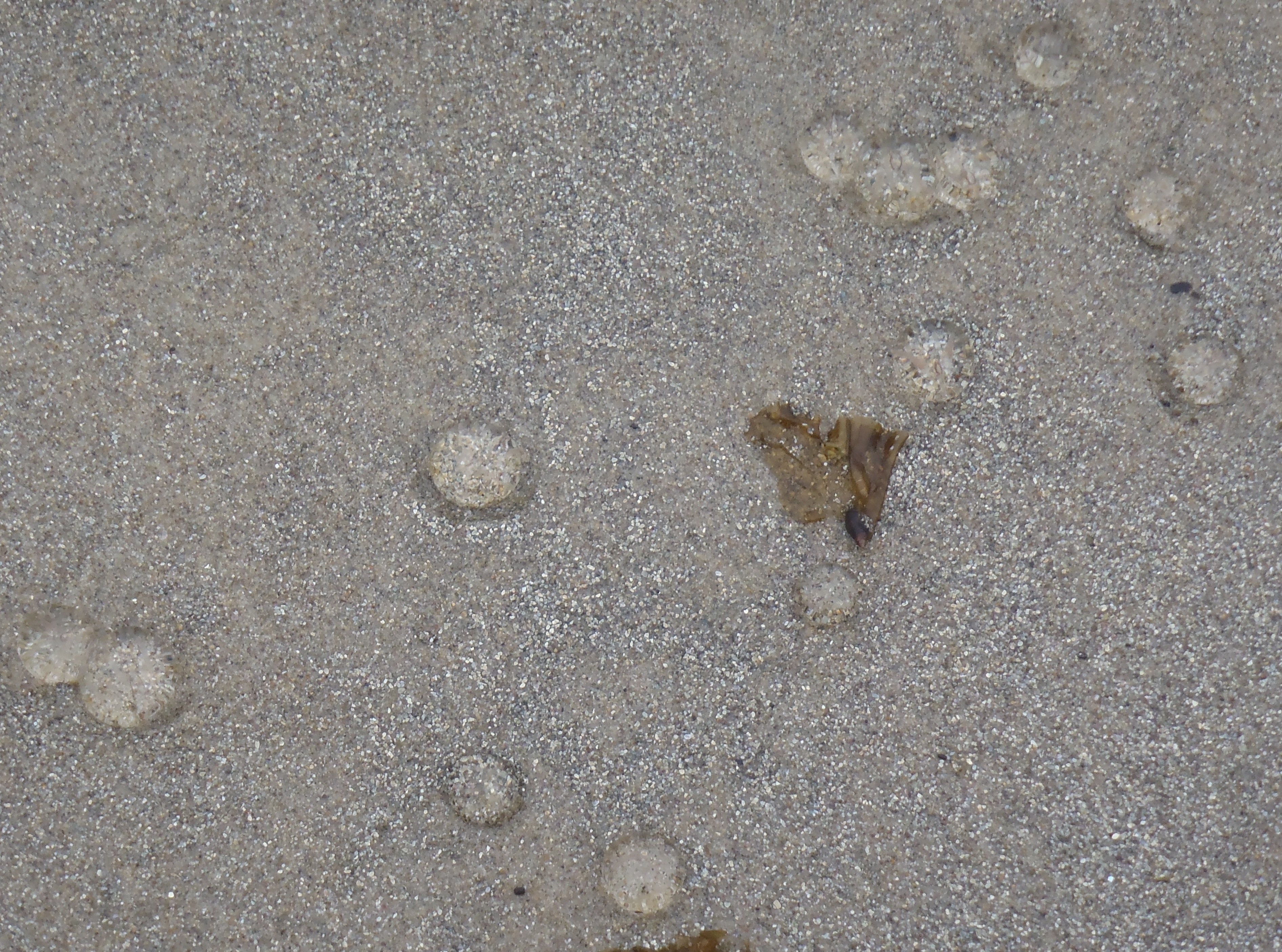
Gooseberry blobs by CM ParsonsThese perfectly round little jelly blobs littered my local beach in early June and I couldn’t figure out what they were. At first I thought they were eggs of some kind. They were about the size of a dime. Most were clear; a few had a little something inside. I emailed local jelly expert, David Wrobel, who has a great website, The JelliesZone (my primary source for gelatinous bay life, although any errors in this post are mine, not his). Gooseberry blobs by CM ParsonsHe emailed back that these were most likely sea gooseberries (Pleurobrachia bachei). Although lovely as dots on the beach, the blobs are nothing like the live animals. A sea gooseberry  is a type of comb jelly — jellies with running lights. Trailing off the spherical body are two long tentacles with sticky cells (not stinging) for catching little fishes and other drifting prey. Each individual is both male and female (hermaphroditic) and prolific.

During my walks I see these species abandoned on the sand by tides and surf. I love the discoveries, but am saddened by the sights because I know how lovely they are in their watery realm. I hope this’ll give you a better appreciation for the beach blobs you may find on the beach this summer.

For a kayaking view of Monterey Bay jellies, visit my Bestiary.

Note: Don’t handle any sea creature unless you know what it is, what you’re doing and what the regulations are. If you’re stung by a jelly, call 911 and use this WebMD first aid link.

Note 2: After I posted this, rare black jellies were encountered by swimmers off Southern California beaches. Here’s the news with photos.

Note 3: For more jelly blobs on Monterey Bay beaches, see my posts Sea butterflies or Latest jelly mystery.

~~~~~~~~~~~~~~
Sources
The Jellies Zone:
Aequorea spp., Crystal Jellies
Aurelia
 sp., Moon Jellies
Chrysaora colorataPurple-striped Jelly
Chrysaora fuscescensSea Nettle
Pleurobrachia bachei, Sea Gooseberry
Morris, R., Abbott, D. & Haderlie, E. (1980). Intertidal Invertebrates of California. Stanford, CA: Stanford University Press.
Sept, J. D. (2002). The Beachcomber’s Guide to Seashore Life of California. Madeira Park, BC Canada: Harbour Publishing.
Wrobel, D. & Mills, C. (1998). Pacific Coast Pelagic Invertebrates: A guide to the common gelatinous animals. Monterey, CA: Sea Challengers and Monterey Bay Aquarium.
Resources
Campbell, E. (1992). A Guide to the World of Jellyfish. Monterey, CA: Monterey Bay Aquarium.
George, T. C. (2000). Jellies: The life of jellyfish. Brookfield, CT: The Millbrook Press.
Jelly Biologist website
Niesen, T. M. (1994). Beachcomber’s Guide to California Marine Life. Houston: Gulf Publishing Company.
SAJellyWatch website

Feeding time

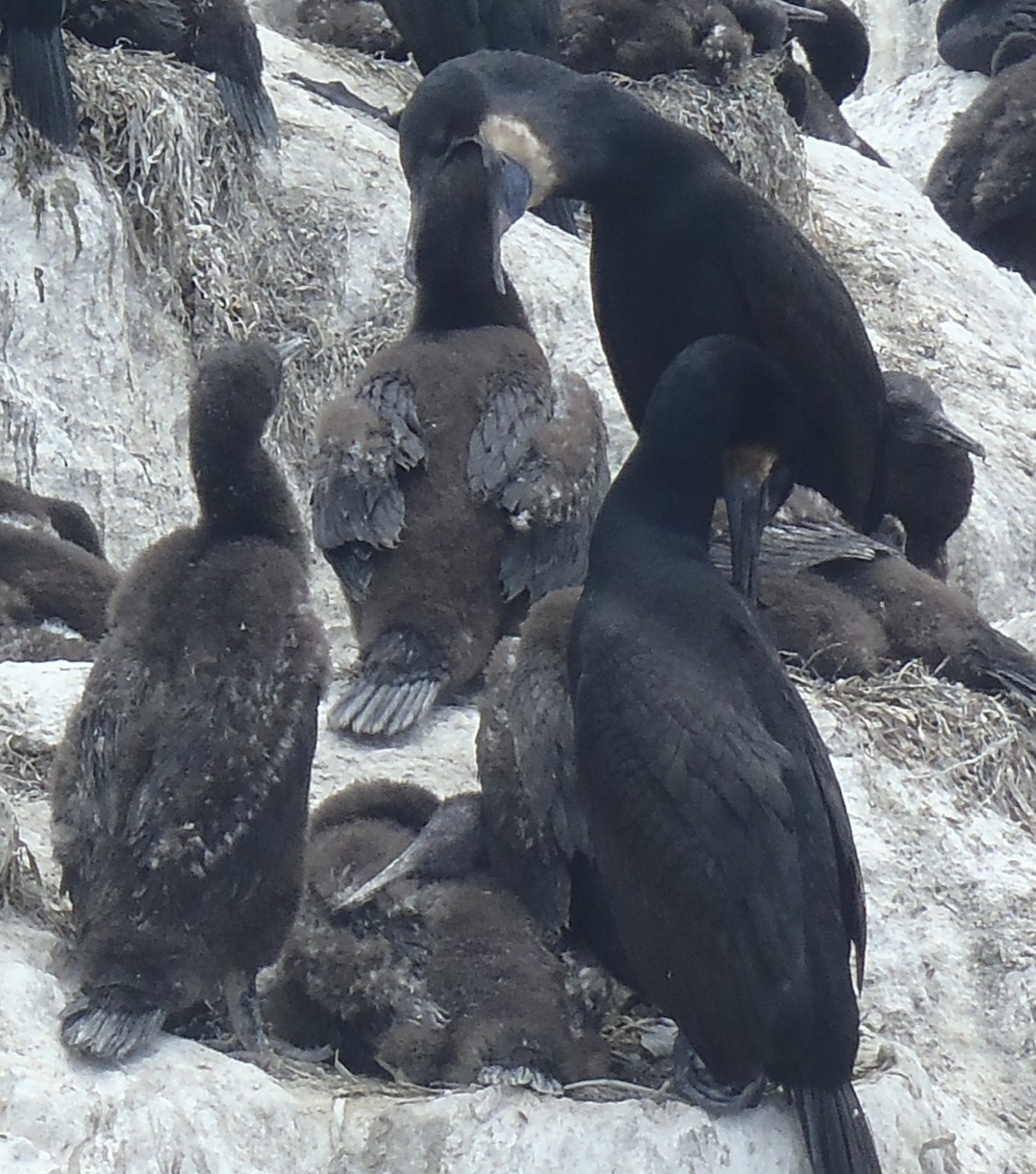
Cormorant Feeding by CM ParsonsImagine feeding your child this way — yikes!

Cormorant hatchlings are growing fast and parents are very busy 24/7 keeping their hungry offspring fed.

Great show this week along the Monterey Harbor breakwater.

Not all beach blobs are jellies

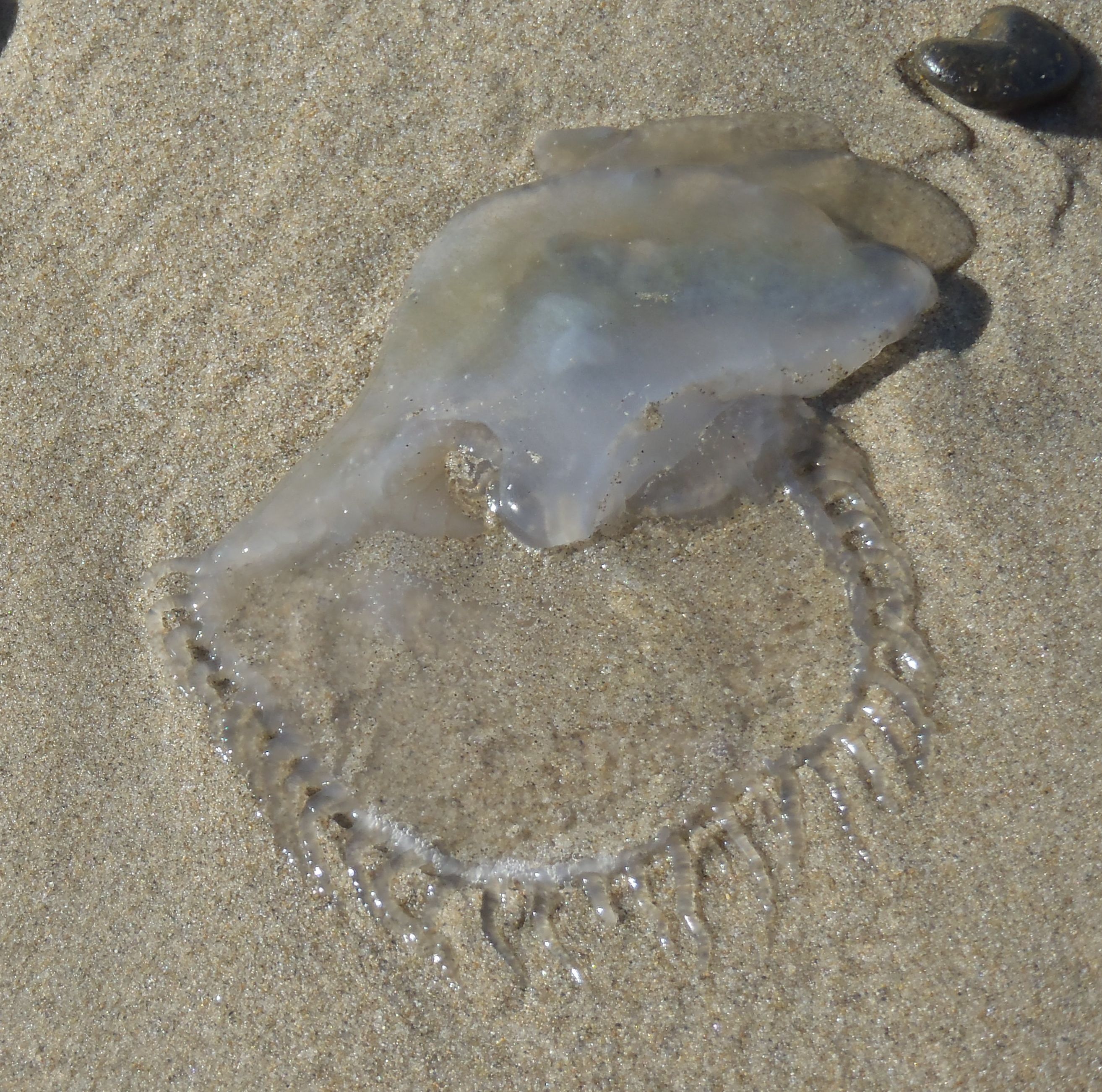
MelibeBlob4 by CM ParsonsMy local beach the past few weeks has been littered with jelly blobs of various sizes from tennis balls to tennis shoes. While I was looking closely at one, a man walking by told me they were just jellyfish. They looked like they could be, but they weren’t.

Upon careful inspection you see these blobs are certainly gelatinous like jellyfish, but they don’t have long tentacles (oh, you say, must have washed away). There’s no round bell (not all jellies are round you respond). The body is long with flaps of flesh (just the way it landed you offer). On some there’s MelibeBlob3 by CM Parsonsa hoodie with fringe (ahh, there are the tentacles you defend). Melibe2 by CM Parsons

In the transparent body of some, I’ve seen little orange dots and fine opaque threads.

These blobs aren’t very attractive and I understand why most people ignore them thinking they’re jellyfish. But they’re distinctive (not the typical blob on the beach) and in their living condition in bay waters just offshore, these animals are amazing in their beauty and grace.

Photo via Shutterstock

So what are they? Meet the hooded nudibranch, or sea slug, Melibe leonina. This animal hangs out, literally, on a narrow slug foot attached to brown kelp (Macrosystis sp.) and sometimes eelgrass (Zostera sp.). It can grow to 6 inches (15 cm) long. The “hoodie” is a giant mouth — an oral hood rimmed with small tentacles (cirri) that sweeps the water for zooplankton, mostly crustaceans. When it catches something, the hood closes and cirri lock in the prey.

Inside the clear body, the orangish dots and the fine threads (called diverticula) are parts of the digestive system. The paddlike flaps of “flesh” are called cerata and grow in two rows along the back. Cerata increase the surface area of an animal and aid with the exchange of gases (respiration). The Melibe can shed these, possibly to deter predators just like a lizard dropping its tail. It can continue to evade a predator by detaching from its post and swimming with slow undulating body strokes. Maybe it’s the swimming Melibe caught in a current that gets washed ashore.

YouTube has many Melibe videos, but I like this video which shows a vast number of Melibe feeding in a kelp forest. It’s a beautiful sight and the one I keep in mind when I happen upon these blobs on the beach.

Note: For  jelly blobs that are actually jellyfish, see More jelly blobs post.
For other beach blob posts, see Sea butterflies or Salps on the beach.

~~~~~~~~~~~~~~
Sources
Abbott, D. P. (1987). Observing Marine Invertebrates. Stanford, CA: Stanford University Press.
Behrens, D. W. (1991). Pacific Coast Nudibranchs. Monterey, CA: Sea Challengers.
Brusca, R. C. & Brusca, G. J. (1990). Invertebrates. Sunderland, MA: Sinauer Associates, Inc.
The Jellies Zone: Melibe
Morris, R., Abbott, D. & Haderlie, E. (1980). Intertidal Invertebrates of California. Stanford, CA: Stanford University Press.
Wrobel, D. & Mills, C. (1998). Pacific Coast Pelagic Invertebrates: A guide to the common gelatinous animals. Monterey, CA: Sea Challengers and Monterey Bay Aquarium.