
Tern dodges gull
On a recent beach walk I spotted pelicans, terns, gulls and sea lions feeding in the shallows just beyond the surfline. For a while I was entertained by a tern as it actively dodged a pursuing gull. The gull did a great job of keeping up with the tern’s aerobatic maneuvers. Was this a game of chase or something more nefarious?


Tidepool sea anemones
 Tidepool living has to be tough. Each day cycles through wet, cold and sheltered to dry, warm and exposed, then repeats. Last week I spent some time photographing and exploring tidepools during morning low tides. Amazing what’s there, and the closer you look, the more there is to see. In this photo the obvious species are sandcastle worm tubes surrounding mussels dotted with barnacles. I’m sure you’d find more if you looked closely — maybe algae, limpets, tunicates or hidden crabs. But that’s for another time.
For this post, I’m focusing on the shots I got of sea anemones in tidepools that still contained water (without water they close up or droop and wait for the tide to wash back in). I found three species during my morning ventures.
 The giant green anemone (Anthopleura xanthogrammica) is a wow green and stands out in the sand or a shallow pool. This species grows to 8 inches (20 cm) across. Sea anemones look like flowers but are animals closely related to jellies, complete with tentacles and stinging cells for capturing food. (These stinging cells are typically too light duty to harm people.)
 The sunburst anemone (Anthopleura sola) is not as brightly colored as the giant green, but is distinguished by lovely lines on a pale blue-green oral disc (the flat mouth side). This species grows to 6 inches (15 cm) across. Sea anemones keep their distance —they have special stinging clubs and will do battle with anemone neighbors to keep them away.

The third species in our area is smaller and more cozy than the other two. The aggregating anemone (Anthopleura elegantissima) grows to 2.5 inches (6 cm) and is found in groups (members of the group are clones). Clonal communities keep separate from one another — you can spot a demilitarized zone between them. At low tide aggregating anemones create a squishy carpet. In several places I had to be very careful not to step on them as I moved between the rocks.
If you get a chance, visit a tidepool at low tide to discover its wonders, but walk carefully and don’t disturb the residents. Tidepool life is vulnerable at low tide, especially to foot traffic and exposure. If you’re interested in more about Monterey Bay sea anemones, look at the Monterey Bay National Marine Sanctuary SIMoN Species Database or Hopkins’ Seanet Common Intertidal Organisms of Monterey Bay website.
Great Pacific Race 2014: Update 2018
 Update June 2018: For news about the 2018 race (happening now) and to track the five boats & teams, visit the Great Pacific Race.
In 7 days, 1 hour, 25 minutes, 59 seconds (as of this writing) — that is, on June 7 at 10 a.m. — 13 rowing boats will launch from Monterey for a 2,400-mile (3862-km) race across the Pacific to Hawaii. The Great Pacific Race, advertised as the “biggest, baddest human endurance challenge on the planet,” has chosen Monterey Bay as its starting point this year. What’s exciting for me is that the boats are currently in a staging/prep area in front of The Wharf Marketplace, one of my favorite local-products market.
If you like boats at all, you should go take a look. They vary in size (for 1-person, 2-person and 4-person crews) and design. Some appear somewhat low-tech and others amazingly high-tech. The crews include men and women from around the world ranging in age from 20+ to 65. (Crew bios hang near each boat.) The trip will take 30 to 90 days depending on crew, boat and conditions.  (I overhead a group at lunch at the marketplace who assumed the boats were solar-powered, but couldn’t figure out why there were no propellers.) Several of the racers are rowing for ocean conservation (and need your help), in particular to highlight the issue of plastic pollution. It’s amazing what people can do when they put their minds (and bodies) to it! You can find many more details about the race website.
And, if you’re not busy on Saturday, June 7 (2014) at 10 a.m., watch the race start (weather permitting) and cheer on the rowers at McAbee Beach along Cannery Row. They say they’d love spectators from the shore and water (kayakers, paddleboarders, sailors – that’s you). Only 7 days, 50 minutes, 44 seconds to go.
Cormorants are expecting
See my new post on the fence blocking the view of the cormorants at Breakwater blues.
 It’s time! The Brandt’s cormorants nesting on the Monterey Harbor breakwater are expecting. This was my morning sighting and first photo of the pale eggs under a female. She stood up briefly after the male dropped off new nesting material.
The cormorants have taken over the upper breakwater. Now’s a great time to watch them display, build and replenish nests, and sit and wait for their hatchlings. Visit if you can.
Caspian tern aerobatics
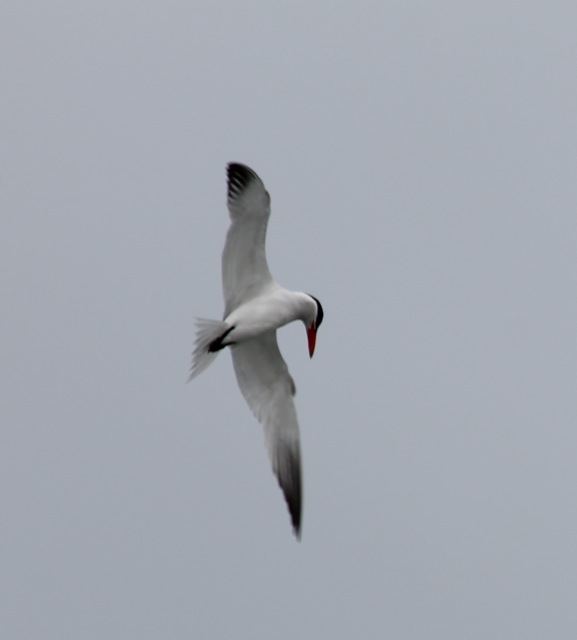
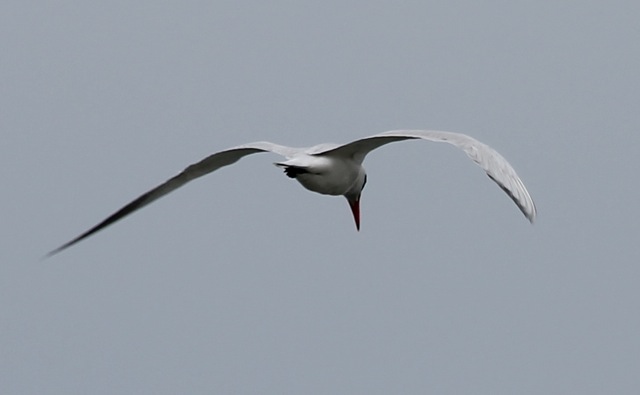
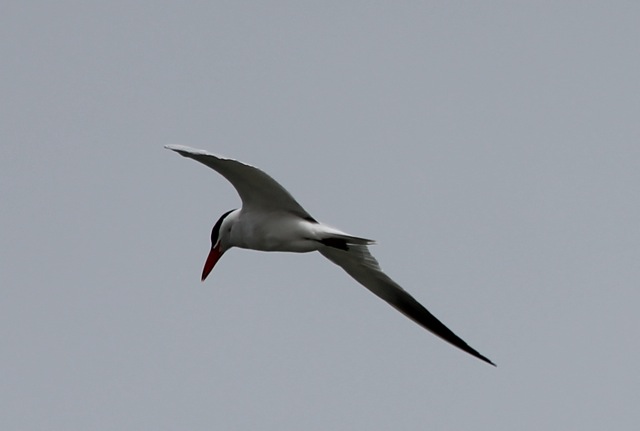
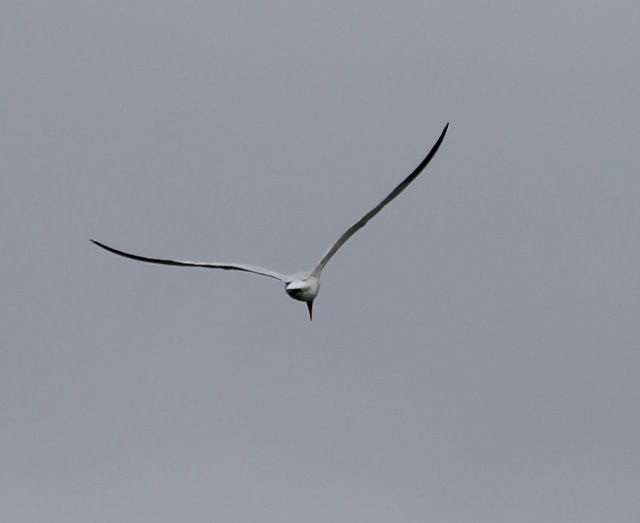
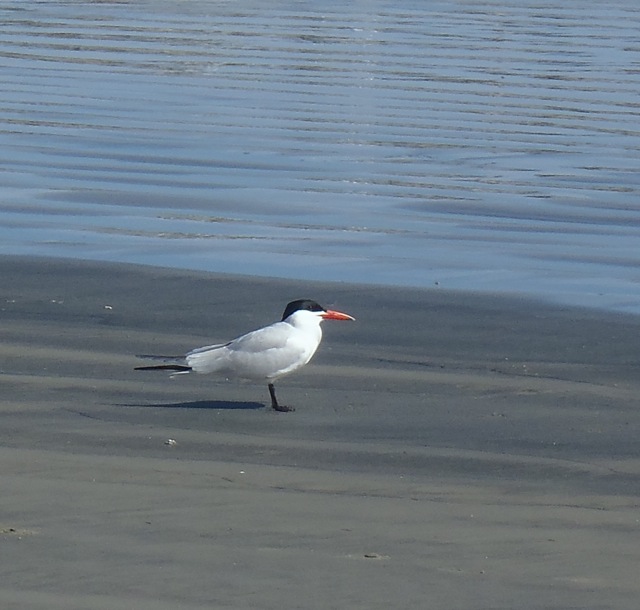 A Caspian tern (Sterna caspia) has been gracing Del Monte Beach for the past week or two. I typically see them around Monterey Bay this time of year. This is a stately bird, about the size of a gull, with a beautiful black cap, black legs and heavy orange bill. So far I’ve seen only the single bird and she/he has spent most of the time standing on the shore, taking flight only when people and dogs approach.
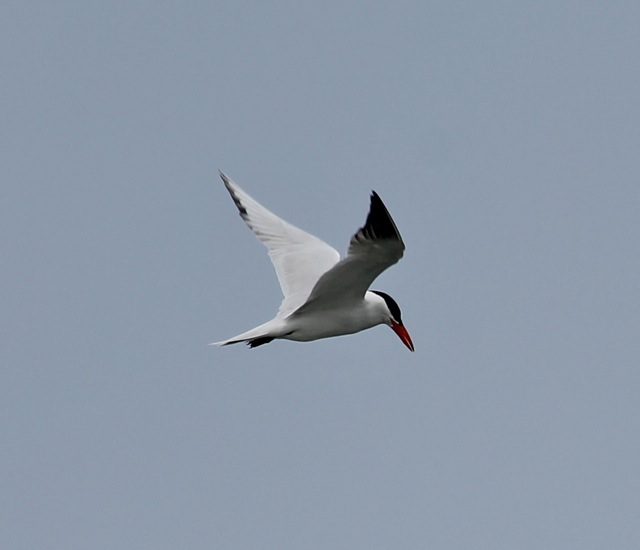
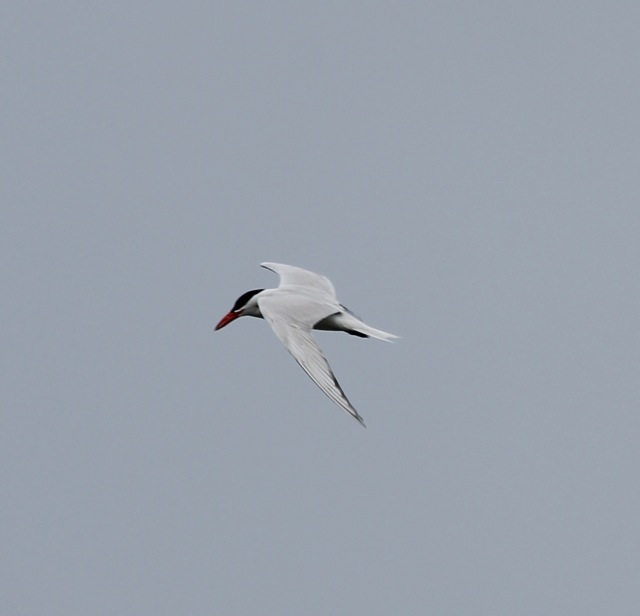
Today was different. When I stepped onto the sand, the tern was already in the air. For nearly a half-hour, I watched its aerobatic maneuvers as it scanned the sea surface for fish (we’ve had shoals of anchovies in the bay lately). The tern’s performance was grand and graceful, a display of aerial mastery that I had to share with you. During your next beach walk, keep an eye on the sky (as well as on the water).


 WordCraft.NatureFocus