
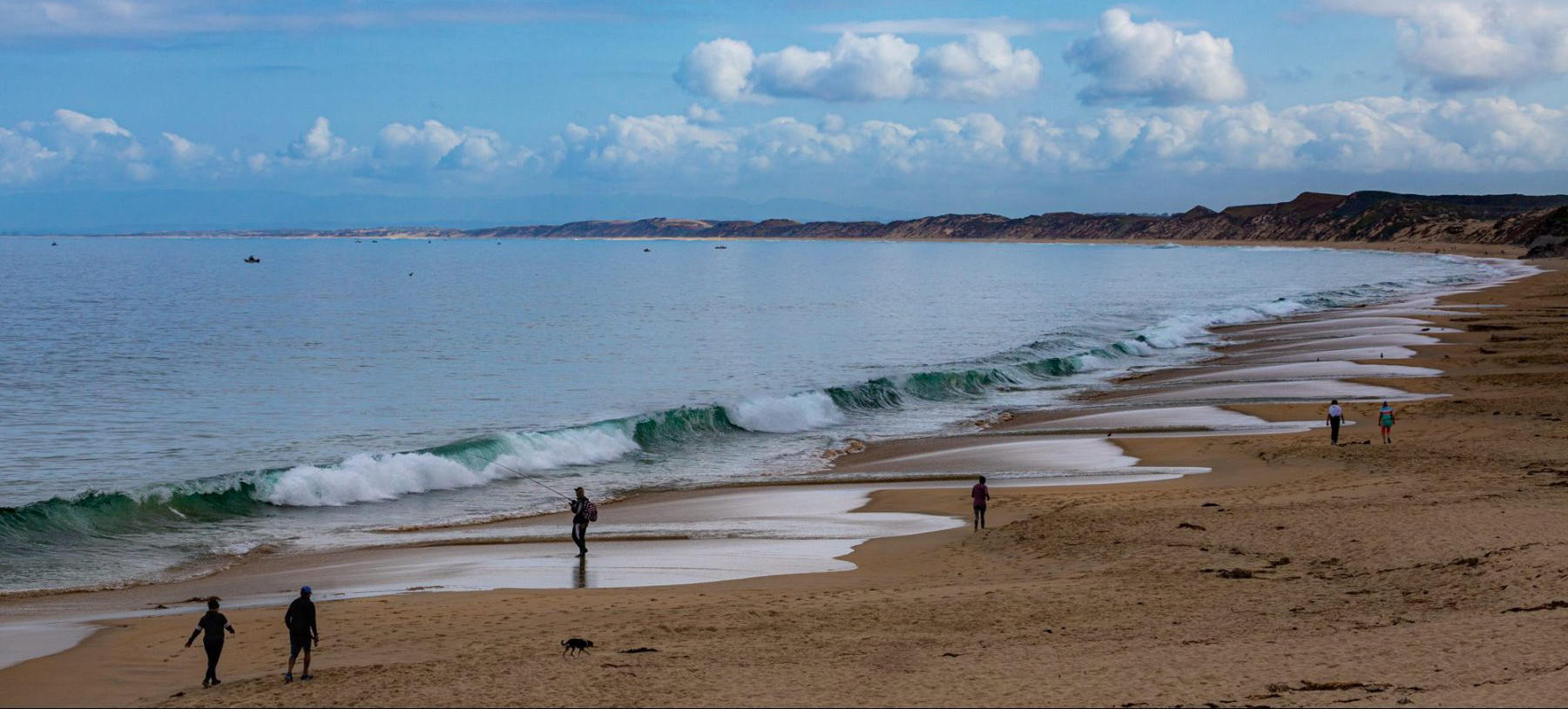
Monterey Bay August morning
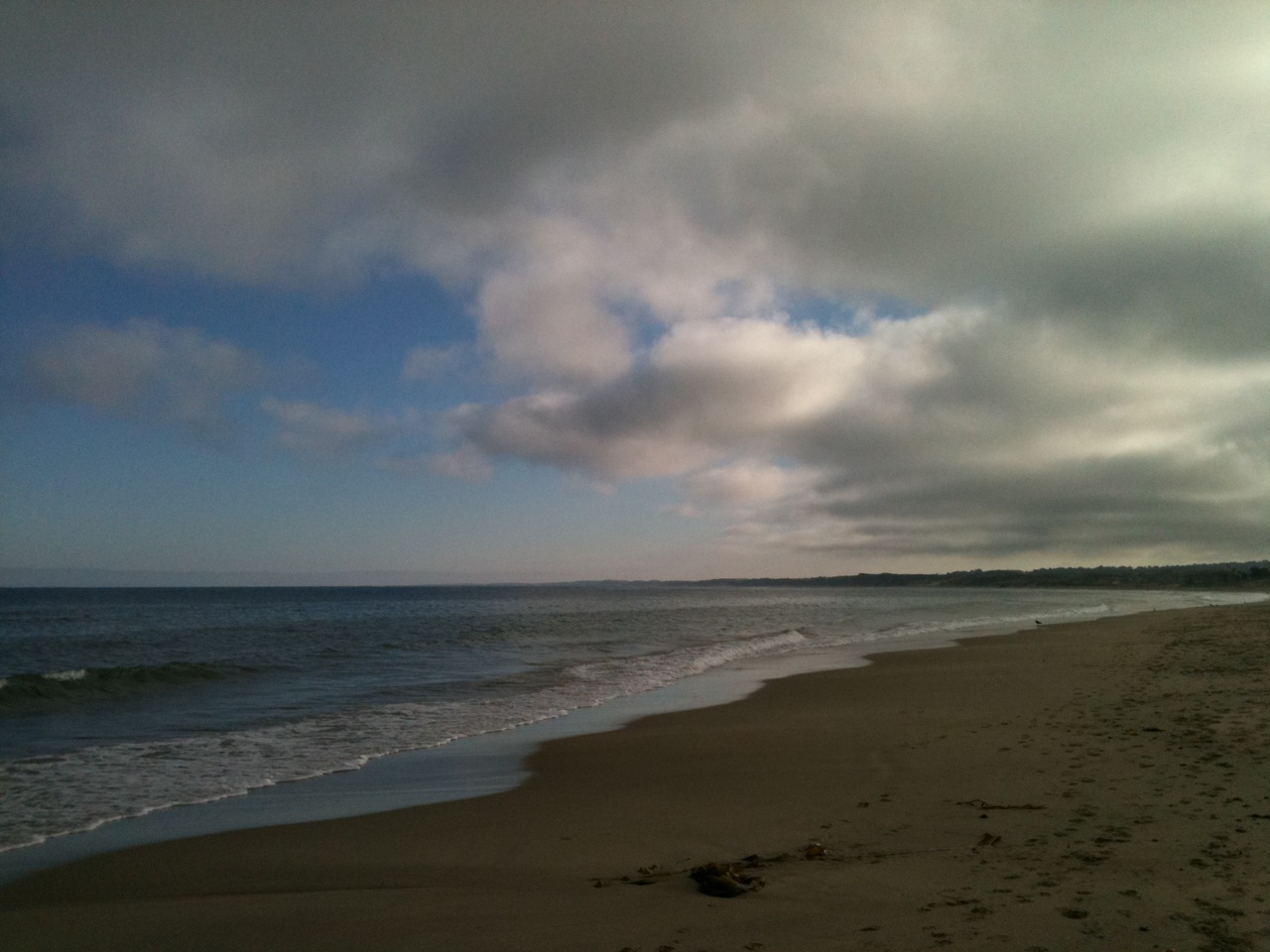 Fog this morning
gave way
to lovely cumulus —
an odd little August
dry weather front.
Could use some rain!
Pacific sea nettles have arrived…
What a picture! Sea nettles may be tough on the sea lions, but it’s great kayaking over these swarms. Thanks JellyBiologist! Chris


Along with this awesome sea lion photobomb pic, a jellywatch.org user reports over 100 sea nettles in Monterey, California on Friday, saying:
Sea nettles are back in the Monterey marina in large numbers. Usually there are all sizes from tiny to large, but this time they are mostly large
Be careful swimming folks, these guys can pack a sting. Pee also won’t likely help much, try lidocaine to neutralizing stinging cells and for pain relief.
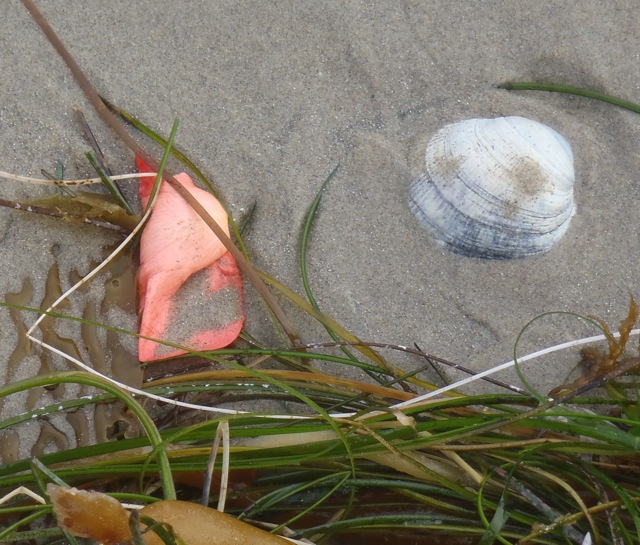
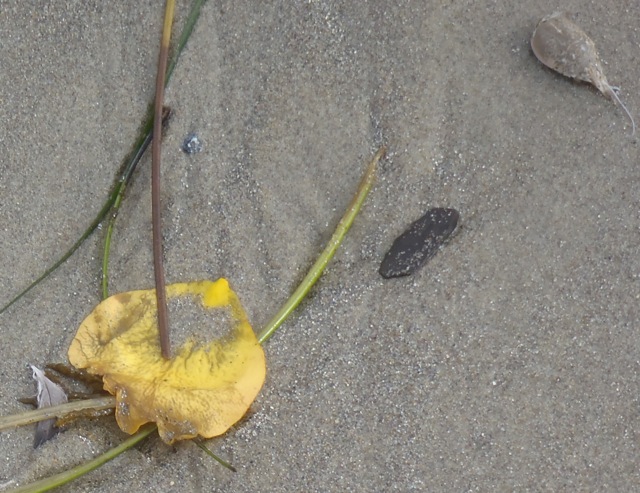
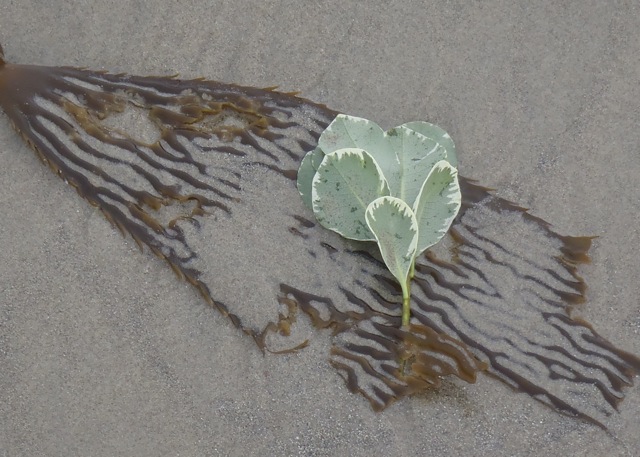
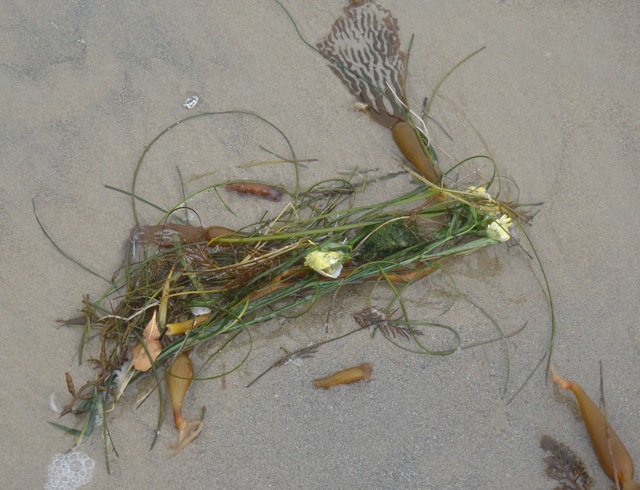
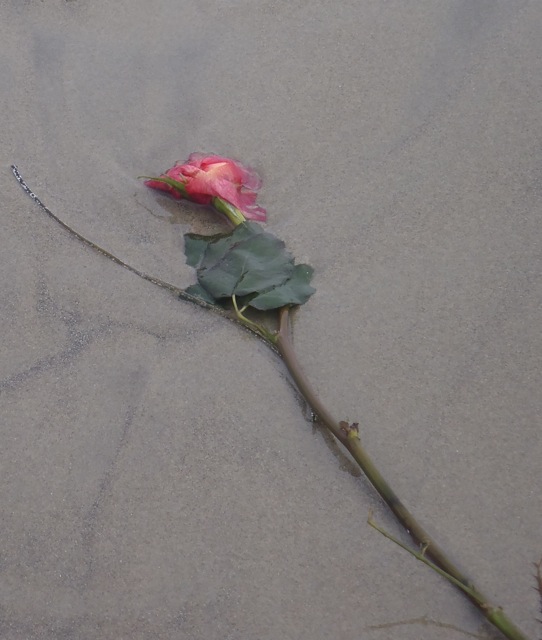
Beached sea flowers
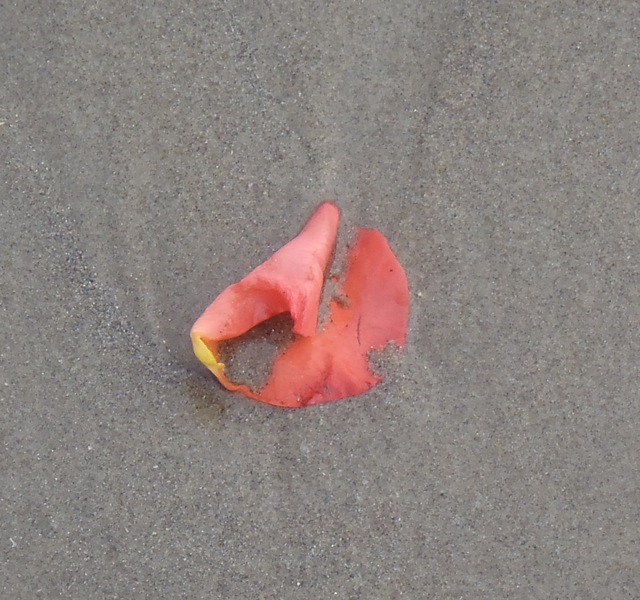 Monday’s tideline was littered with flowers.
They had been washed and tossed in the sea.
Left on the sand, they were foreign and captivating.
What silent stories rode ashore with them?
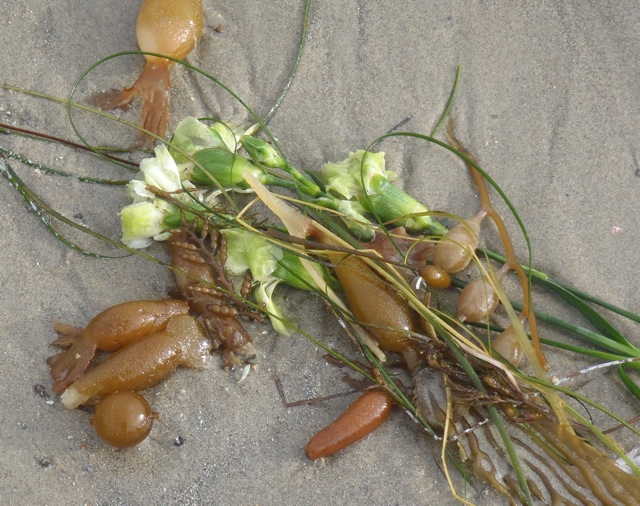

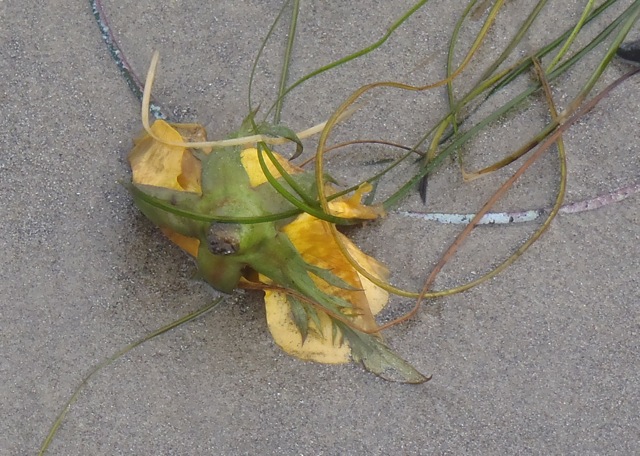

Shark on the beach
I usually find something new on my beach walks, but this morning was a big one — a thresher shark. 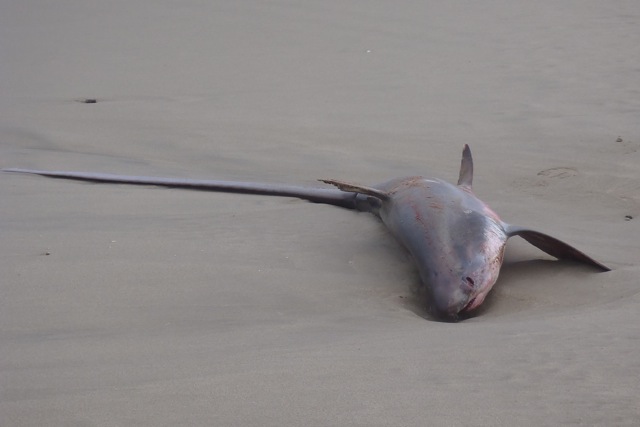 It was in pretty good shape for being dead and beached. My guess is that it washed ashore with the high tide around sunset last night. It didn’t have obvious wounds and there’s wasn’t much damage from gulls or vultures, yet. But it was fairly bloody (warning for later pictures).
Thresher sharks are beautiful swimmers and easy to identify. This shark group has a very distinctive tail (caudal fin) with the upper lobe about as long as the entire shark. The long caudal fin is for tail-slapping schooling fishes. This stuns or kills the fish, which the shark then eats. In addition to feeding on fishes, threshers also eat squid, of which there are swarms in the bay right now. 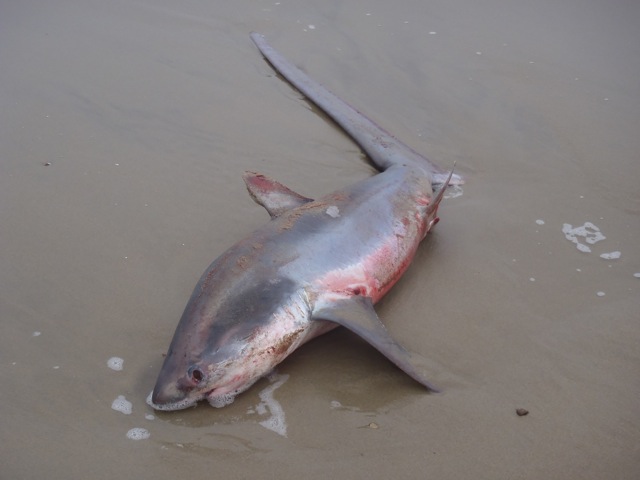 The beached shark was likely a common thresher (Alopias vulpinus) and about 9 feet (nearly 3 m) long from snout to tail tip. They can grow to 20 feet (6 m).
There’s a fishery for thresher shark meat. Those caught off our coast are considered a “good alternative” on the Monterey Bay Aquarium’s Seafood Watch list. According to NOAA’s FishWatch, not much is known about the current population in the eastern Pacific, but based on their analysis, the species isn’t overexploited. Worldwide, the three species are considered vulnerable on IUCN’s Red List.
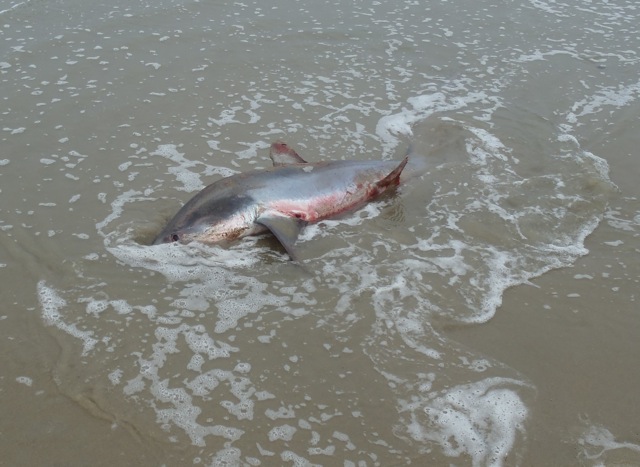 As I watched, the tide was rising and it looked as if the body would be washed away by morning’s end. The shark was a great treat for me after so many weeks of tideline crab carapaces and snail shells.
For more about thresher sharks in Monterey Bay, visit the Pelagic Shark Research Foundation. For details on their status worldwide, visit The IUCN Red List of Threatened Species.
What kind of seashell is this?
 When I first saw this, that question popped into my head — What kind of seashell is this? I spotted the colorful object in the sand during a low-tide May-day walk. I knew it was a living thing because I recognized the candy-cane-striped acorn barnacles (Megabalanas californicus). Barnacles, as you may know, are crustaceans (related to crabs and shrimps, not snails). Each is housed in a shell and lives with its head glued to the base. Its feet pop out of the opening and kick to collect plankton drifting in the water around it. It can close the shell to prevent drying when it’s out of the water (you can see most of the openings are shut). But barnacles live attached, and these prefer rocks and pilings (not sand). So, what were these barnacles attached to?
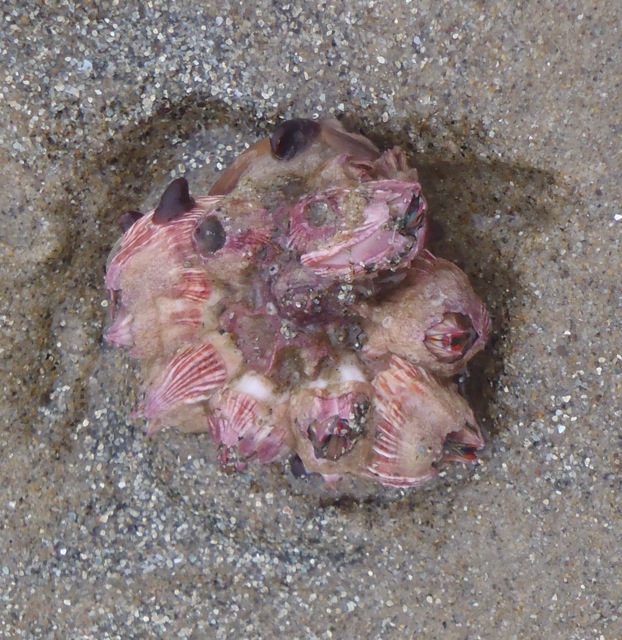 I excavated around the cluster to get a better look. On the barnacles were hooked slipper snails or slipper limpets (Garnotia adunca). These animals ride on the shells of sea snails. Like the barnacles, they’re suspension feeders. They use their gills to strain plankton and organic particles from the water around them. Slipper limpets are usually stacked on top of one another (that’s how I’ve seen them). The large bottom snail is a female and the smaller ones are males. These snails are hermaphrodites, that is, they have both male and female organs, and protandric, that is, they start as males and later become females. (Deep Sea News has an interesting post on this lifestyle.) But there were no slipper limpet stacks on my barnacle cluster, and I didn’t have an answer: What were the barnacles attached to?
 I gently flipped over the cluster to see if I could find the carrier. Obviously more slipper limpets, plus a pearly white shell and a light brown operculum. An operculum is a plate, or door, that a snail has to close and seal its shell when it retracts its body. In this case the door was ajar and part of the snail showing. The acorn barnacles were attached to a living marine mollusc. Great… but what kind? Identifying the covered snail by its operculum and shell opening was a challenge beyond my skills. With the help of my writing partner and go-to marine biologist, Kit Muhs (who studied at Moss Landing Marine Labs), we identified the snail as Chlorostoma montereyi, commonly called the Monterey turban snail or Monterey tegula (the scientific name was Tegula montereyi). You can find pictures of the shell without the clutter at SeaNet or SIMoN. (And, if you think we got the ID wrong, let me know.)
Look again at the photo. Do you see a gray bulge on the right side of the shell. It’s yet another marine animal! But we’re not sure what — a tunicate, salp, anemone? Anyone know? Can you find any other organisms?
This is a crowded shell. Obviously, beachfront space is at a premium. Given the size of the barnacles and the wear on the top of the shell, this commensal group must have thrived for a while. (I’m amazed that the snail was able to live carrying all that baggage. Think of how hard it must have been to move around to graze on algae.) I gently tossed the cluster back into the water. I doubt its survival. Reefs off that sandy beach are in deeper water. But I’m glad I found it — it’s a seashell like none I’ve ever seen before.
Note: This is my opportunity to publicly recognize my longtime writing partner, Kit Muhs, for her wonderful science mind and great writing talents. Word Craft has been a success because of her contributions. Thanks, Kit! Hope you’re enjoying Hawaii.


 WordCraft.NatureFocus