WordCraft.NatureFocus

Bay-to-Beach Life Blog

Elephant seal portraits 1: Males

ElephantSealM1 by CMaParsonsWinter brings elephant seals to the California coast — massive bellicose males and weary pregnant-plump females that deliver baggy newborns. Their annual ritual along remote beaches and among sand dunes starting in December includes battling, birthing, mating and, by April, molting.

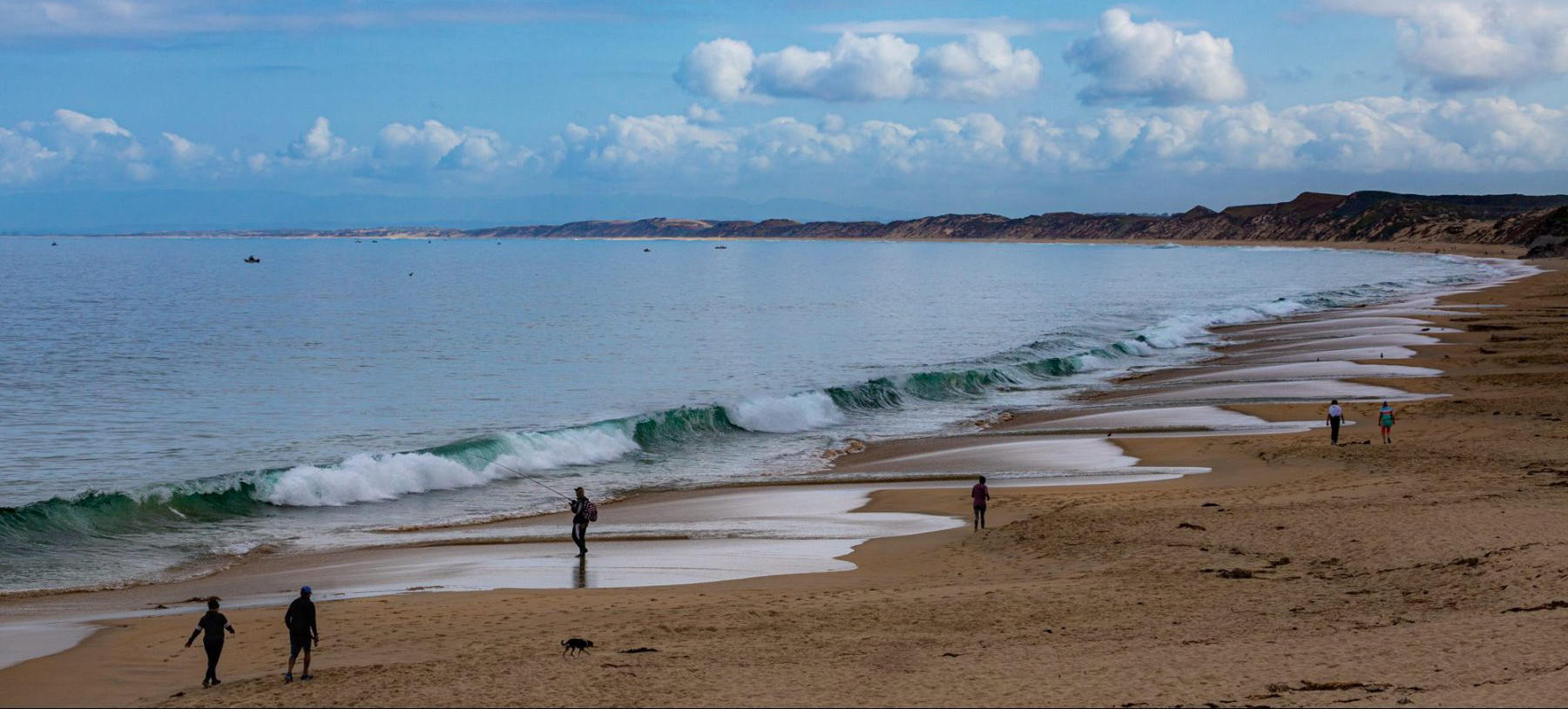
We see a few individuals in Monterey Bay (Hopkins Marine Station Beach and recently Del Monte Beach), but don’t have a large colony. The closest is at Año Nuevo State Park about 60 miles (97 km) north of Monterey. For many people, viewing elephant seals while they’re visiting is a winter tradition. It’s quite a sight and these portraits of males are from my January trip to Año Nuevo.

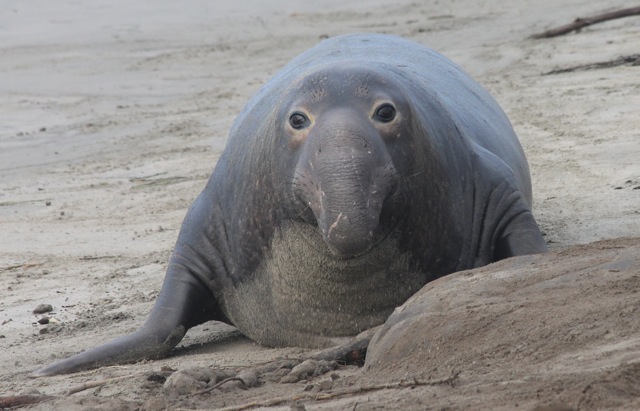
ElephantSealM5 by CMaParsonsMales in the colony are the most spectacular and diverse (sorry gals). Their noses, in particular, indicate their development from age 2 to 8 as they grow into the pendulous, inflatable proboscis that’s characteristic of a mature male. (They also make for great portraits.) A fully formed proboscis may overhang the mouth by 8 inches (20 cm) and helps a male intimidate other males (along with his size, posturing and Harley-Davidson motor sounds).
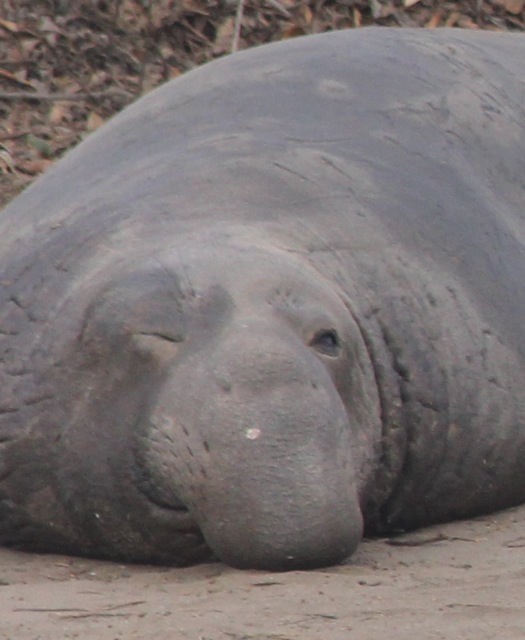
ElephantSealM3 by CMaParsonsAn adult male can grow to 13 feet (4 m) and weigh more than 5,000 pounds (2300 kg) — he’s a huge animal. While at the rookery, a dominant or alpha bull sleeps, defends his harem from other males and mates with the females that have settled near him. Beta bulls cruise the edges of harems for opportunities to mate with females before being run off by the dominant male.
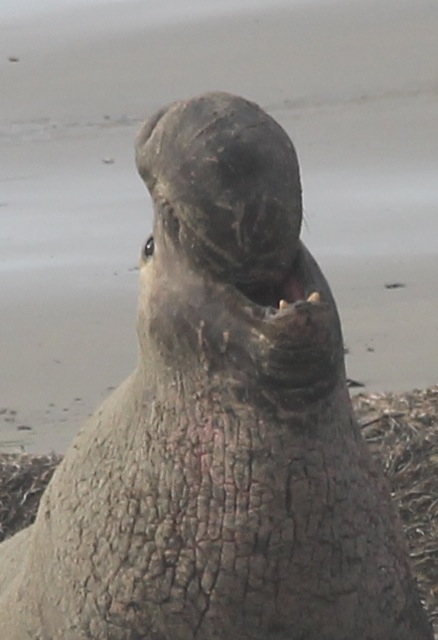
ElephantSealM4 by CMaParsonsWhen a beachmaster feels challenged by an interloper, he’ll rear up, throw back his head and bellow his warning. If he can’t scare off the other male, they may engage in a spectacular duel of chest thumping, neck wrestling and biting with long canine teeth. (Younger males fight for position in the hierarchy as well.) ElephantSealsM7 by CMaParsons

A dominance battle might be bloody, but elephant seals are well-padded and injuries are usually minor. Most battles occur before or as females arrive to give birth. Winning males build and maintain harems and do most of the mating.

Note: For more about the colony, visit my portraits of females and pups or consult the references below. 
ElephantSealM2 by CMaParsonsThe northern elephant seal (Mirounga angustirostris) was thought to be extinct in the late 1880s, hunted for the oil rendered from their copious blubber. The thousands that we see today were spawned by a small colony on Guadalupe Island off Baja Mexico in the early 1900s.
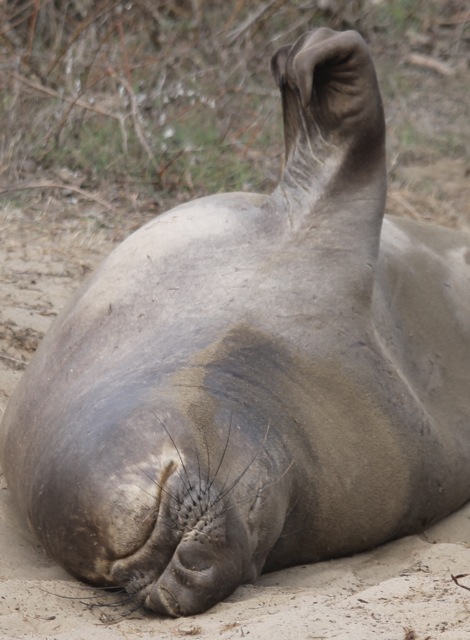
ElephantSealM22 by CMaParsonsToday, the population from Mexico to Alaska is estimated to be about 175,000 individuals (although no one is really sure). That number may look good, but the population is vulnerable. Because they are all descendants of a few, their genetic variability is low, which makes the species less adaptable and more vulnerable to disease or environmental changes.

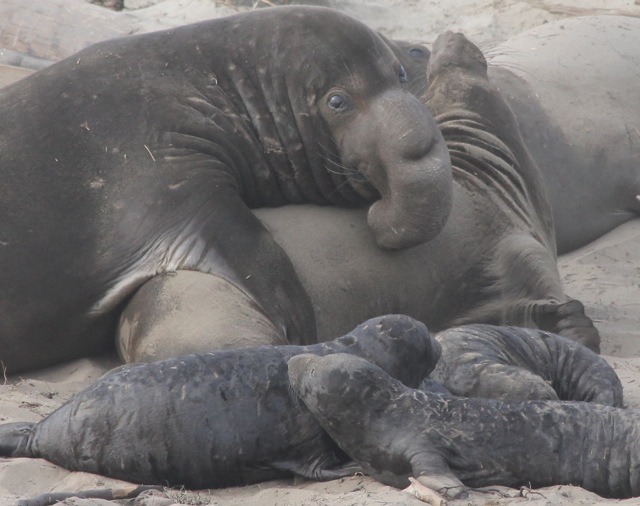
If you want to see for yourself, here’s a starter list of California spots (from south to north) where you can view elephant seals while they’re ashore. It’s notable that most sites are state or federal parks and protected areas, which we need to continue to support.ElephantSealGroup by CMaParsons
Channel Islands National Park & Marine Sanctuary
Piedras Blancas rookery and Friends of the Elephant Seal
Año Nuevo State Park
Farallon Islands (a National Marine Sanctuary and National Wildlife Refuge)
Point Reyes National Seashore
~~~~~~~~~~~~~~
Sources & Resources
Adams, C. & Adams, P. (1999). Elephant Seals (rev ed.). San Luis Obispo, CA: Central Coast Press.
Animal Diversity Web (ADW): Mirounga angustirostris – northern elephant seal
NOAA SIMoN (Sanctuary Integrated Monitoring Network) Special Status Species: Northern elephant seal

Salps on the sand

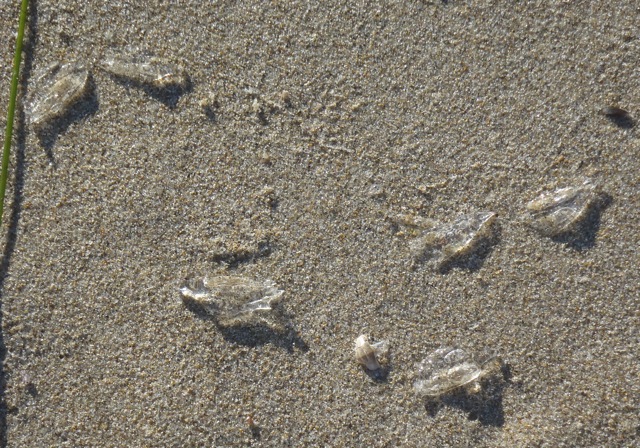
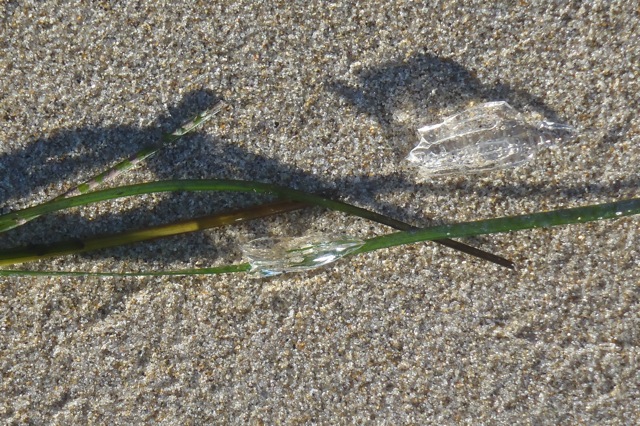
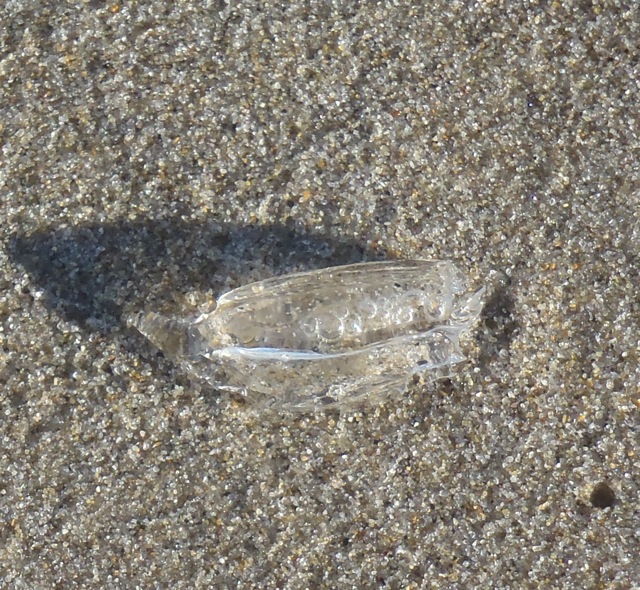
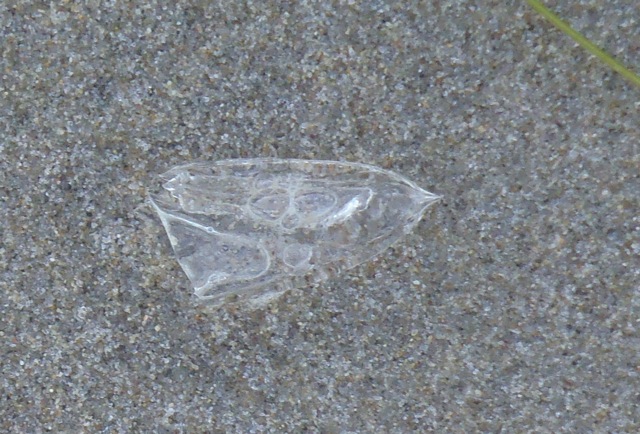
Salp3 by CMAParsonsHow do you explain a salp? Especially when you find one or more stranded on a sandy beach and don’t know what it is? To start with, a salp is a tunicate (I’m sure that doesn’t mean much to most). Let’s try this. It’s a gelatinous sea animal that looks like a tiny, water-filled, plastic bag. (It feels more like plastic than jelly.) Salp1 by CMAParsonsSalps are open water (pelagic) sea creatures that swim and feed at the same time — by contracting and pumping water through the body. As the water flows inside, the salp collects bits of living material, especially phytoplankton, for food. Salps can be singular, but also form long lovely chains, or colonies sometimes with many thousands of individuals (see chains in the MBARI photo or YouTube video). They’re most prominent in the waters around Antarctica, but are found in Monterey Bay, too. They’re lovely in the water, but I also found them attractive littering the sand. Salp4 by CMAParsonsOne of the most intriguing things about this simple-looking animal is its complex life cycle. The generations alternate from asexual single individuals producing clones to sexual colonies which include young females that age and grow into males. Offspring of the colony take up the single asexual life, hence closing the life-cycle loop. Salp2 by CMAParsons Even though salps appear jellylike, they’re not related to jellies (jellyfish) at all. This brings me back to the earlier reference to tunicates. During early larval development, salps and their tunicate relatives have a rodlike notochord, or very primitive backbone structure. (It’s not present in adulthood.) This structure also appears during the development of vertebrates (animals with backbones). That makes salps and other tunicates more closely related to you and me than to jellies. Salp5 by CMAParsonsWhen I first saw these on the beach, I didn’t know what they were. They didn’t look like their living selves. (My thanks to George Matsumoto of MBARI for identifying them, and any errors in this post are mine.) The photos of these inch-long (2.5 cm) individuals and small groups were taken during a warm Sunday morning walk along Del Monte Beach (Monterey) in December. The salps may have been dumped by a current as they fed near the surface nearshore or rolled ashore on a set of large swells. However they ended up on the beach, they offered me a glimpse of the open-water world beyond the waves.   Note: Salps are not dying in record numbers and littering the seafloor due to Fukushima radiation, as has been reported on the Internet. For more about the true story, see the MBARI article or Deep Sea News post.

Also check out this article with beautiful images and video of salps’ feeding in Oceanus Magazine: Salps Catch the Ocean’s Tiniest Organisms.

~~~~~~~~~~~~~~~
Sources & Resources
Condon, R.H., Graham, W.M., Duarte, C.M. et al. (2012, Feb.). Questioning the rise of gelatinous zooplankton in the world’s oceans. BioScience(62) 2. [pdf link]
Monterey Bay Aquarium Research Institute (MBARI) website.
Science Daily (2006, July 2): Jellyfish-like creatures may play major role in fate of carbon dioxide in the ocean.
The JelliesZone: Pelagic Tunicates

12 months of harbor views

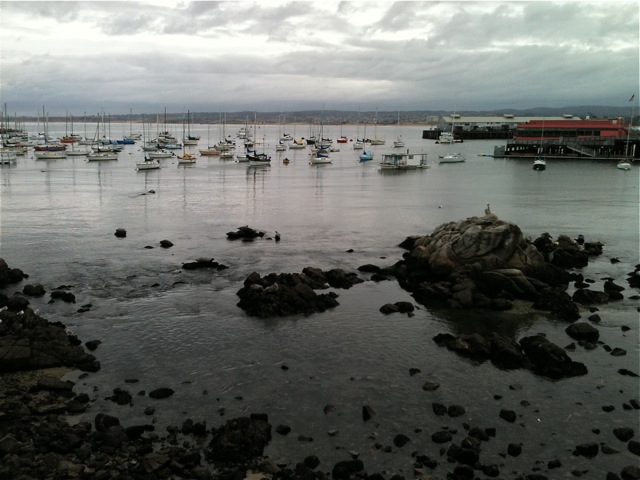
Monterey Bay isn’t really a bay — it’s a crescent-shaped indent along the central California coastline and there are no natural harbors. The bay’s harbors — Santa Cruz, Moss Landing and Monterey — have all been constructed, configured and re-configured by human efforts. That makes each of them unique places to live, work and play.

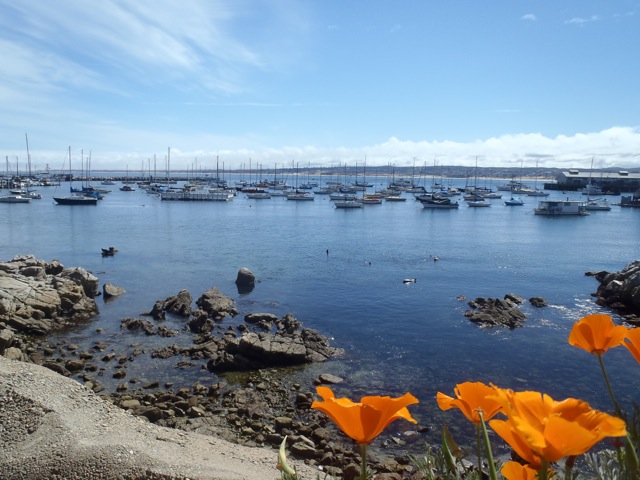
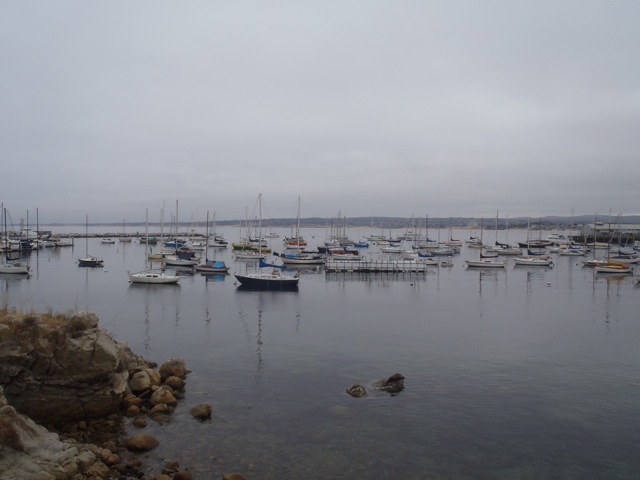
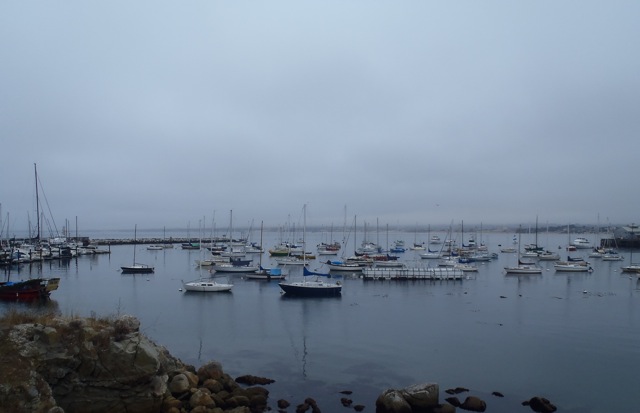
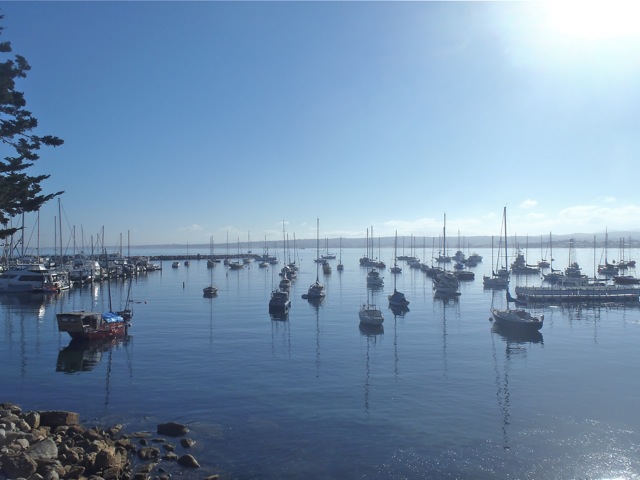
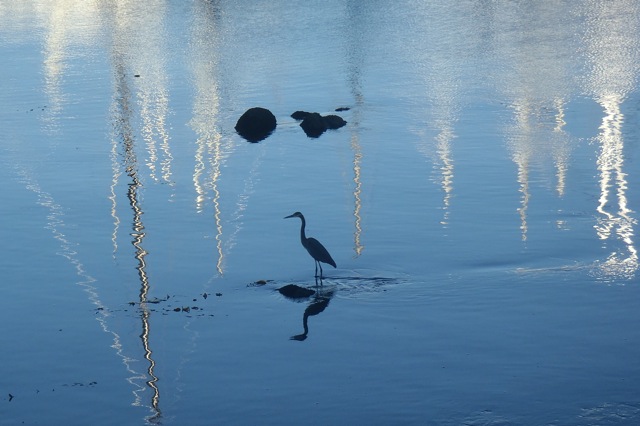
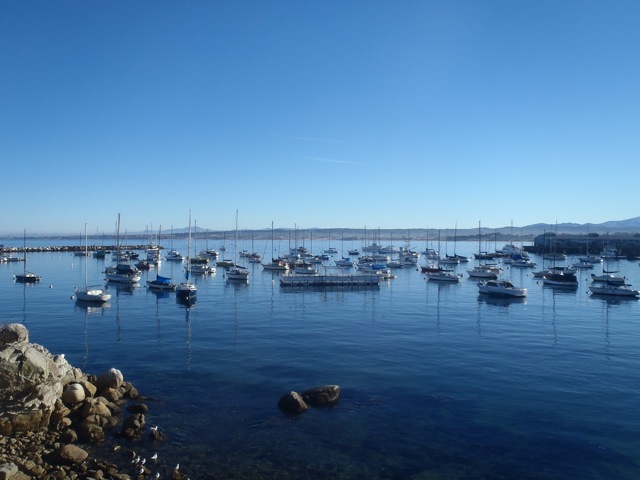
Along Monterey Harbor (and other sections of the bay) is the Monterey Bay Coastal Recreational Trail (for bicyclists and pedestrians). The “rec trail,” as locals call it, offers great access to the water and varied views of the bay. Sea otters, harbor seals, gulls and shorebirds are ever present. I walk the trail regularly and in 2013 took photos each time I passed the northwest side of the Monterey Harbor (between the Coast Guard Pier and Fisherman’s Wharf #1). Here are 12 months of nearly never-changing harbor views.

Harbor-Jan2013 by CMAParsons

January

You’re sure to notice our summer fog, but you won’t see many stormy skies. Unfortunately, California is headed for the driest year on record. Monterey’s usual rainfall averages about 16 inches (41 cm) annually. This year we’ve had 3.8 inches (9.6 cm). We’ve already had an unusual December fire in Big Sur and are concerned about what the new year will bring.

February

February

March

March

April

April

May

May

Sunny June

June Sunshine

June Gloom

June Gloom

July

July

August

August

September

September

October

October

November Sunset

November Sunset

December

December

Warm holiday wishes!

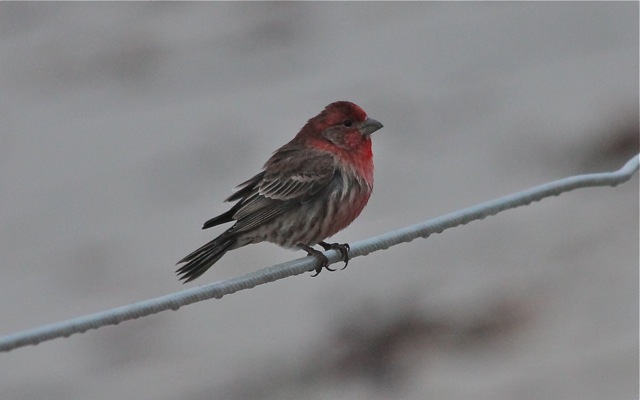
Holiday Finch by CMAParsons
Merry Christmas

May holiday time with loved ones be merry and may the new year be good to you.

Happy New Year

Winged winter guests

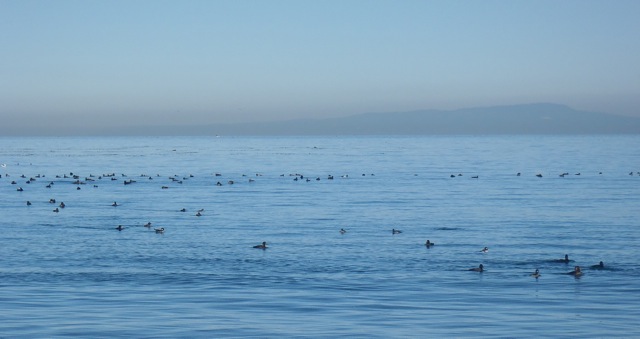
Winter Ducks by CM ParsonsMonterey Bay’s mild winter weather attracts a variety of migrants and visitors from the north and south. Our winter wonderland provides for great coastal birding. These are winter guests spotted one morning last week from Monterey Waterfront Park and Del Monte Beach
(an extension of Monterey State Beach).

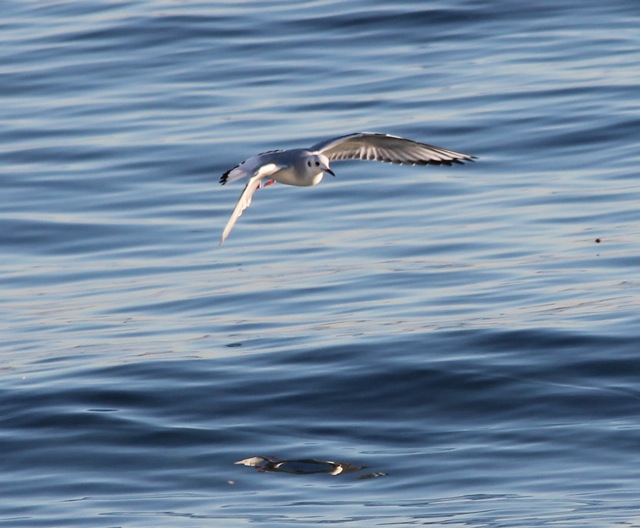
Bonaparte's Gull at Beach by CM ParsonsBonaparte’s gulls are more like terns than gulls — they’re small for a gull, delicate and acrobatic in flight. They’re also easy to photograph as the glide, dip and dive for fish along the shore’s shallows and lagoons. These gulls are not in breeding plumage this time of year (no black head), but you can tell young ones (in the photo) from adults. The immature birds have black all along the wing tips and black along the backside of the wings. Bonaparte’s will winter here until their summer breeding grounds across Alaska and northern Canada warm up.

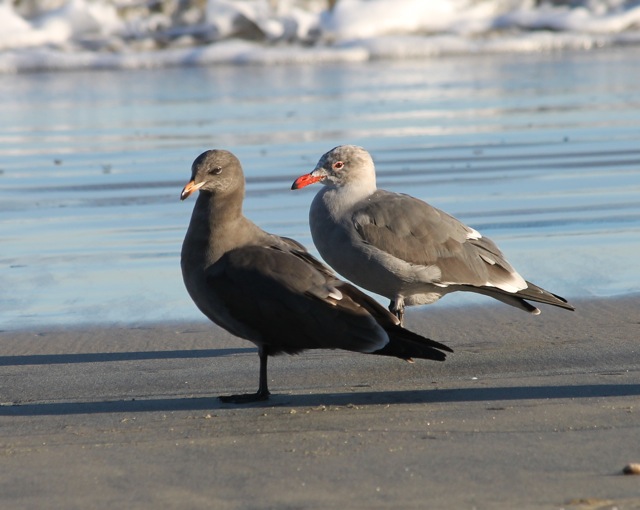
Adult Heermann's Gull by CM ParsonsAn autumn and winter visitor is the Heermann’s gull, a very distinctive slate gray gull with a red bill. This time of year we see an age range from first year through adult. (Most of the larger gulls take 3 to 4 years to mature. The coloration differs each year, which makes them a challenge to identify — a single species has several color phases before developing adult plumage. In addition, breeding plumage can be different from non-breeding. For more on identifying gulls, see my post Do you know your gulls?Juvenile Heermann's Gulls by CM ParsonsThe single gull (in the photo above) is an adult Heermann’s in breeding plumage. The duo (photo to the right) includes two Heermann’s: a second-year bird (the closer) and a third-year bird (the farther). Soon these gulls (at least the adults) will be heading south to breeding grounds in Baja and Mexico.

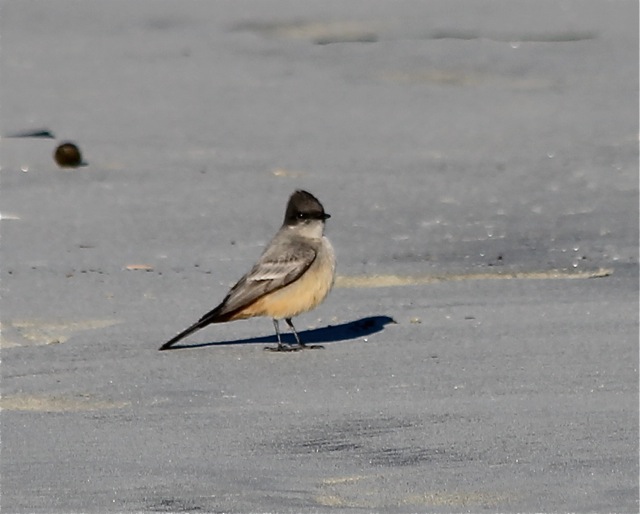
Black Phoebe on Kelp by CM ParsonsAlong the beach among the gulls were two phoebes: a black phoebe and a Say’s phoebe. The black phoebe (left photo) is fairly common along the coast year-round. I often see them bouncing from fence post to post or kelp pile to pile in search of insect meals. Kelp flies are in abundance and might be what they seek. Say's Phoebe by CM ParsonsI haven’t seen the Say’s phoebe before. It’s my understanding that they prefer more open and drier environments than our coast (although it’s been extremely dry here this winter and our sandy beaches certainly are open). This species is probably moving through, heading to warmer southern California and Mexico. The two phoebes are closely related, but didn’t look much like one another. However, their behaviors were similar. The Say’s flitted among the kelp wrack and along the shoreline seeking insects. They were fun to watch.

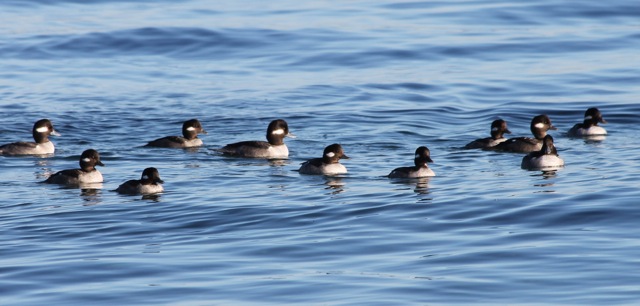
Female buffleheads by CM ParsonsOn the waters just beyond the surf (which was minimal) were a variety of diving ducks, some familiar and some new to me. One of the most familiar was the bufflehead. The bright white patch on the side of the head of the female and back of the head of the male makes them easy to identify. There were large groups of females heading somewhere important. I didn’t see many males. These birds will fly east and north in the spring.

Red-breasted Mergansers2 by CM ParsonsAnother visitor that I find easy to identify is the merganser. The slender bill is distinctive, as is the shaggy feather-do. These red-breasted mergansers are migrants and it’s always a treat to see them because their stay sometimes is short. This duo was very busy diving and popping back up with little fish while they skirted along the edges of the other diving duck groups.

CommonGoldeneye2 by CM ParsonsA bird new to me (I don’t know ducks very well yet) was the common goldeneye. Once I figured out the signs — white dot at the base of the bill and a chocolaty head — they were easier to spot. However, photos were tough because the birds were between me and the sun and they were very busy preening and diving. I got a lot of shots of tail feathers. As with many of the other birds, these are wintering here (and across much of the U.S.) until spring/summer when they return to Canada and Alaska.

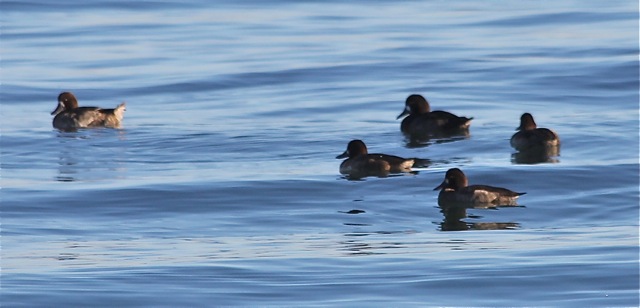
Greater Scaup Group by CM ParsonsA second new species for me was the greater scaup, also a wintering visitor from the north. This group had the sun at their backs and so were challenging to identify and photograph. (And, honestly, after a while, so many ducks on blue water all started to look alike.) The scaup had white around the base of the bill and looked more duckish than others.

Peregrine Falcon by CM ParsonsIn addition to all of these, there were four other species of gull, three species of grebe, many surf scoters and a seemingly out-of-place ringed-necked duck. Joining in on our day’s birdwatching was a resident peregrine falcon.

It was a great day visiting with winter guests.

My thanks to my weekly birding group and
our patient, eagle-eyed mentor, Brian Weed.