Nature is calling
 Join the David Suzuki Foundation 30×30 Challenge by spending 30 minutes a day in nature for 30 days in May. Enjoy yourself, get healthier and become more familiar with your local environment.
Nothing says living like nature.

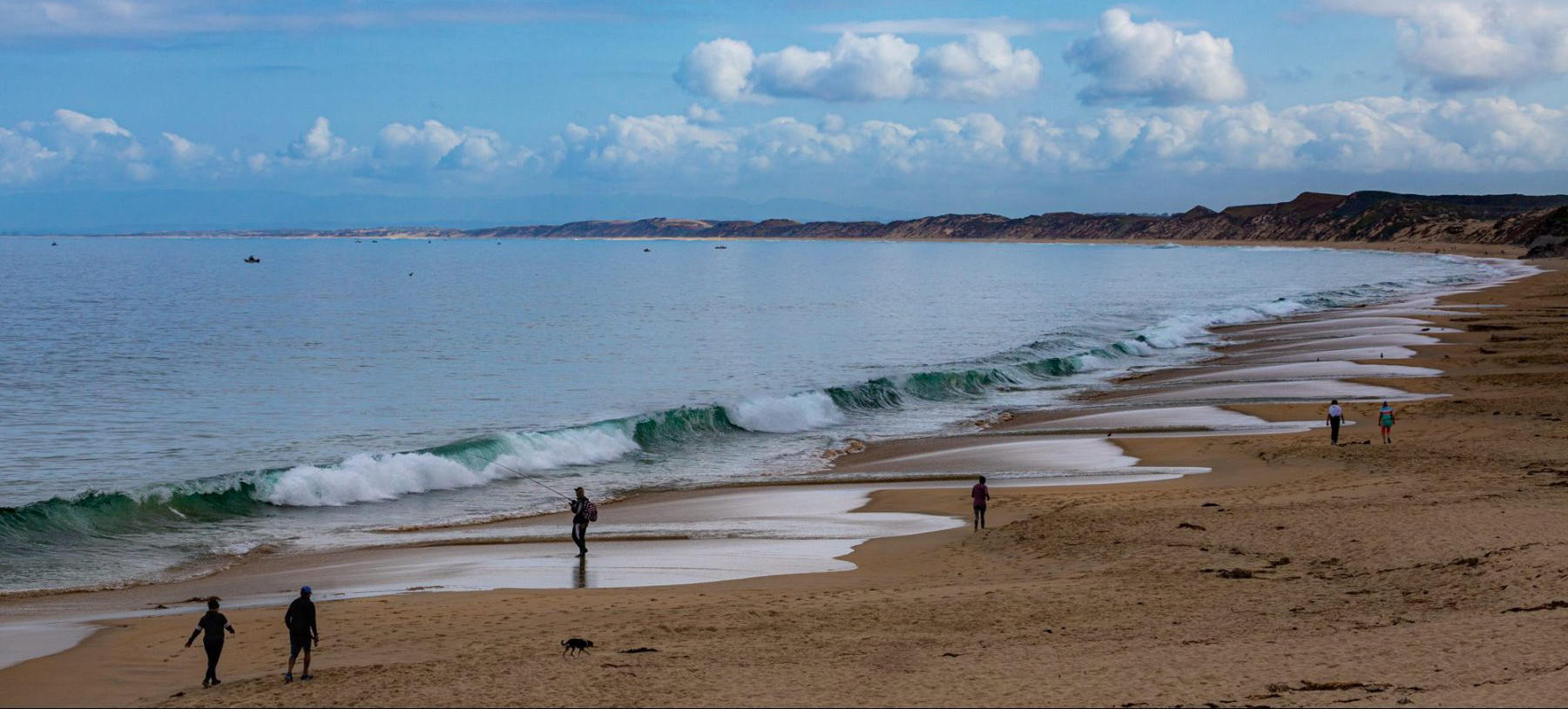
Join the David Suzuki Foundation 30×30 Challenge by spending 30 minutes a day in nature for 30 days in May. Enjoy yourself, get healthier and become more familiar with your local environment.
Nothing says living like nature.
 It looks like another bad spring for sea lions, especially in Southern California, although we’re also seeing some signs along the Central California coast. This spring thousands of sea lions, mostly youngsters, that are weak and undernourished are showing up on California beaches. Rescue centers are overwhelmed. According to NOAA, for the month of January 2015, California sea lion strandings are over five times the average rate when compared to previous records.
The cause for this year’s strandings is unknown at this time, but during a similar 2013 event, the cause was attributed to the lack of available prey, mostly fishes.
Here’s information from a previous blog post if you want to report a sick, weak or dying stranded sea lion, or want to support the organizations who are collecting and caring for these animals. We only hope we don’t see a repeat of the mortalities of 2013-2014.
For NOAA’s answers to questions about this year’s sea lion strandings, download their FAQ document.
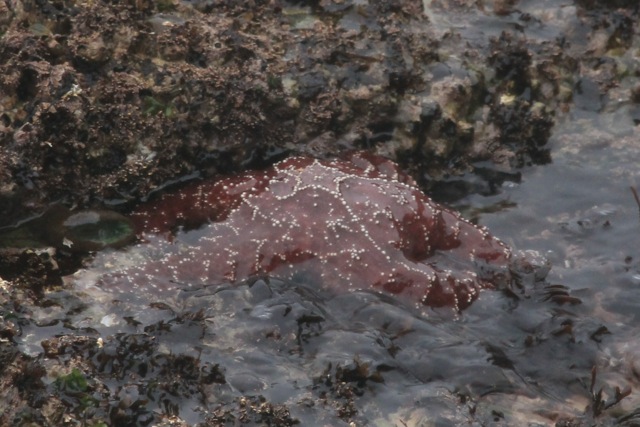
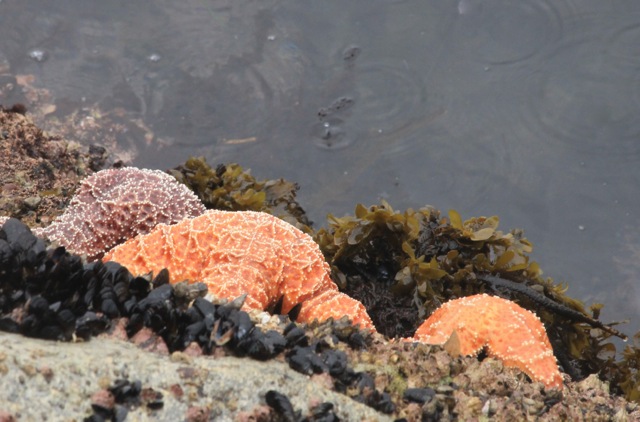
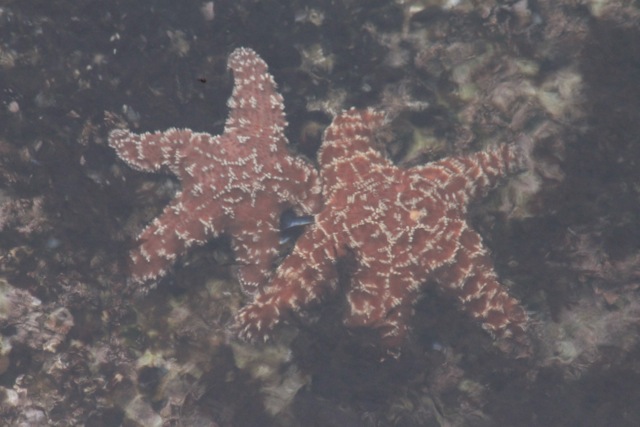 I never thought I’d be thrilled to see a few sea stars (starfish). But after nearly two years of bad news regarding sea star wasting syndrome (they literally melt into oblivion), there’s some good news.
First, scientists know the cause — it’s a virus. Knowing the source is a great start! But it’s a virus that’s been around for a while and has never before wreaked such havoc — killing sea stars all along the North American west coast. So, there are still a lot of questions that need answering: Why so deadly now? Are there contributing factors? How has this changed the shoreline community (sea stars are major predators)? Will the virus strike again in the same way, and if so, when?
The other good news is our sea stars are coming back. Along the Monterey Coast Guard Breakwater today, I saw at least a dozen individuals feeding on the mats of mussels that have thrived since the local stars disappeared. I’m so thrilled to see them back.
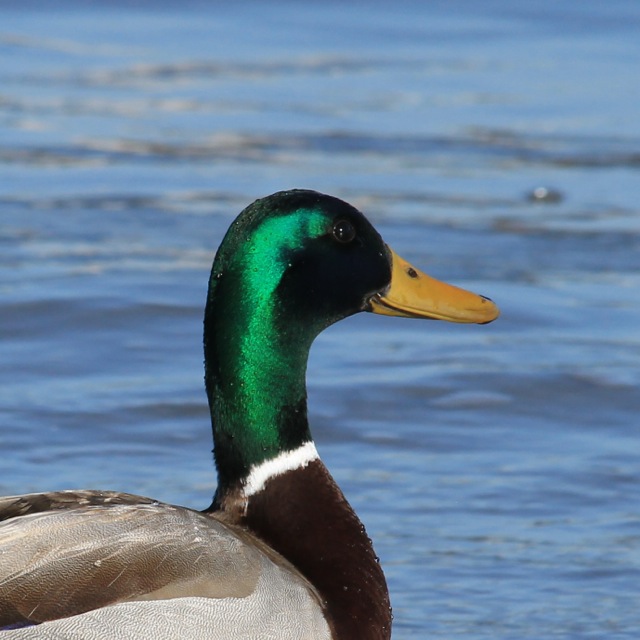 I love when I download a set of shots from camera to computer and find surprises — pictures I didn’t know I had. It’s what keeps me going as I delete hundreds of bad shots.
This set of three shots is a perfect example.
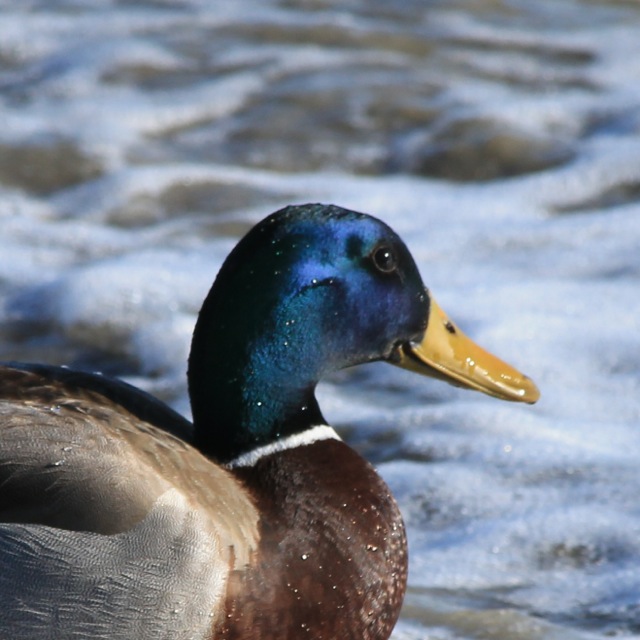 Just to practice I photographed this male mallard as he walked by me up the beach toward the sun. Mallard shots are easy to get so I wasn’t expecting anything special. To my surprise and delight, I got a stunning example of the structural color of feathers.
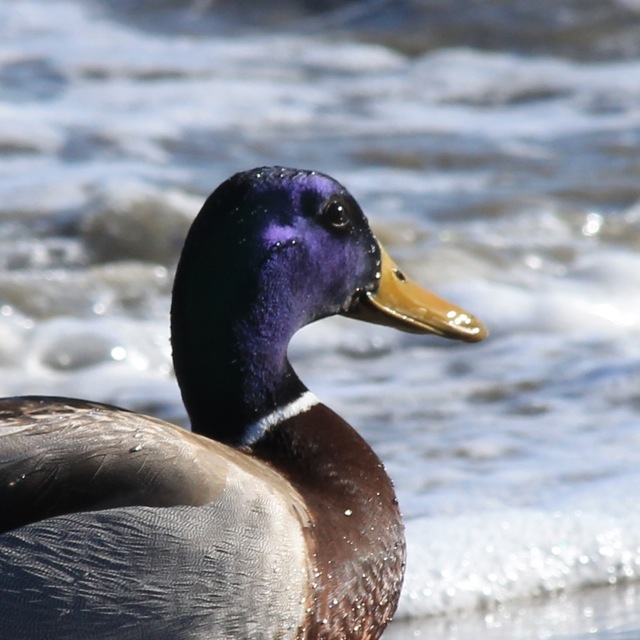 There’s no true color here. It’s the structure and layout of the feathers and their reflection of light that create what looks like three different bird heads. But this is the same bird all within a minute’s stroll. No photo or color adjustments on my part.
Nature is amazing!
 Now is the time of year that I start visiting the Coast Guard breakwater in Monterey Harbor to watch the sea lions and cormorants battle for dominance of the rocks. The Brandt’s cormorants typically win and nest on the breakwater until their young fledge in the summer. It’s always been a great urban spot for wildlife watching.
  Unfortunately, I won’t be seeing much this year because a new fence has been installed (it’s in addition to the old one), and there’s no longer access to the premier wildlife viewing end of the breakwater. I don’t know if the fence is temporary or permanent. It may be related to repair work the Coast Guard wants to do to the dock. Or, the fishing that occurs close to that end. Maybe it’s due to harassment of the wildlife. It would be a shame if the carelessness of a few people has ruined respectful enjoyment by the rest of us. I need to ask around about this new addition. (Update: I learned from the Coast Guard that the fence is permanent and is to keep anglers from fishing too close to the birds and sea lions.)
 So for now, no one can see what’s happening on the breakwater rocks unless they’re in a boat. Since this discovery, I have the blues, and I’m sure visitors and anglers who frequent the breakwater do too. It’s so sad to lose such a great spot for watching the annual cycle of life.


 WordCraft.NatureFocus