
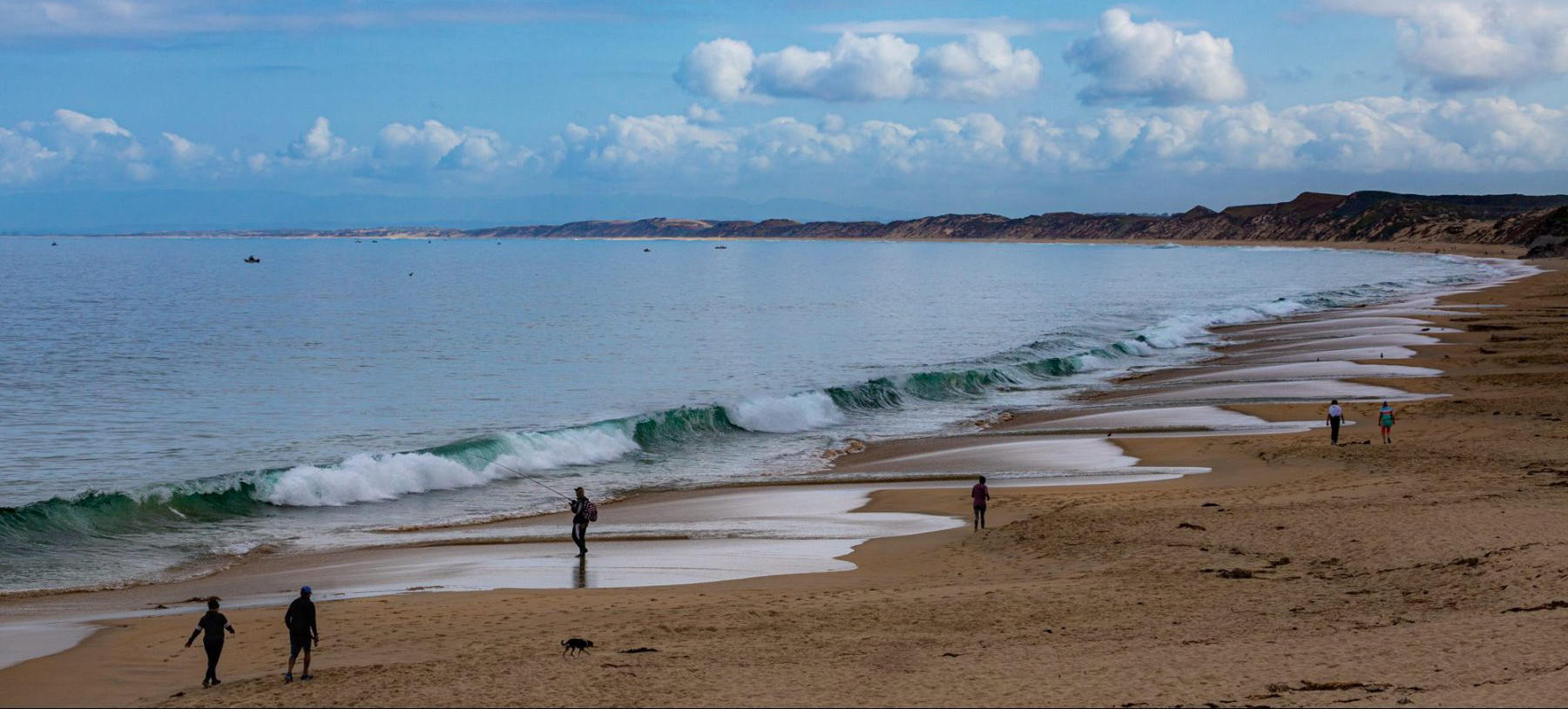
Point Lobos birding +
Point Lobos (Point Lobos State Natural Reserve) is a great place to visit any time of the year — the views are amazing and the wildlife always plenty. Yet this time of year is truly amazing for watching breeding birds and marine mammals with pups. To celebrate today’s World Oceans Day, I spent the morning at Point Lobos with my birding class led by Brian Weed, and here are some of our sightings.
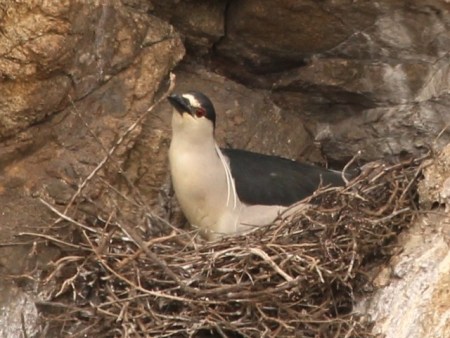
Black-crowned night heron
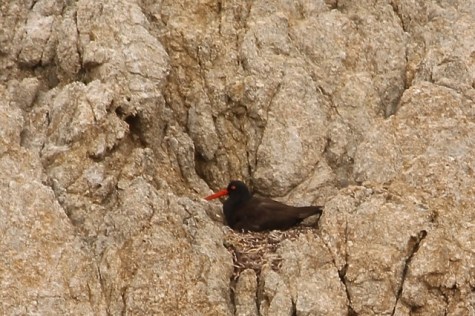
Black oystercatcher

Brandt’s cormorants
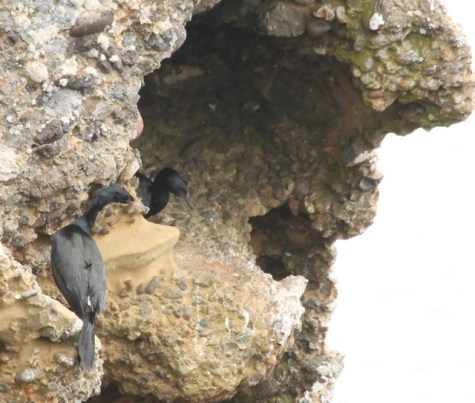
Pelagic cormorants

California thrasher
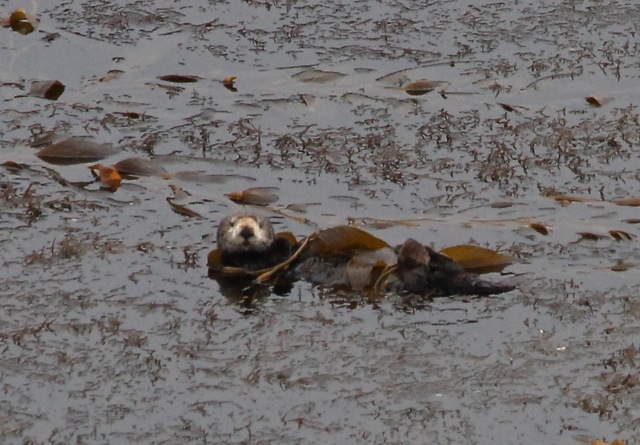
Sea otter
Fog
I wrote about our local June gloom — thick marine layer (fog) — in a June 2013 post. Since that post explains the why behind the cloudy days, for this post I’ll just show you this year’s gloom. Fortunately, the clouds aren’t lasting all day each day on the coast, but we still wake to gray.
Enjoy the soft, cool, changing light.


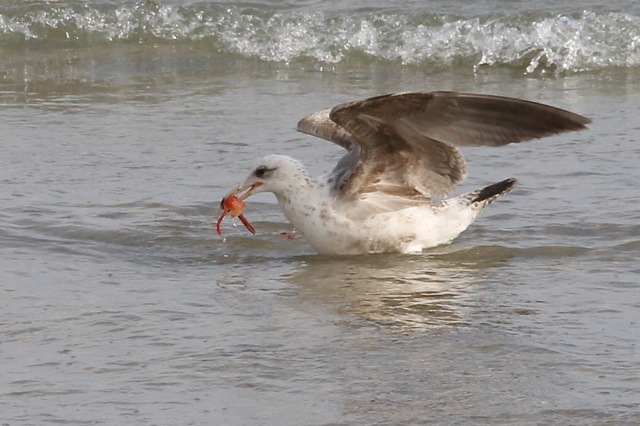
 Twice in my three decades living on the Monterey Peninsula I’ve witnessed two invasions by pelagic red crabs, also called tuna crabs, or langostino by some. These are spectacular and rare occurrences along our coast, although we’ve had a couple this year, the most recent last week. The first local invasion that I could find mention of was in 1895 (Boyd 1967).
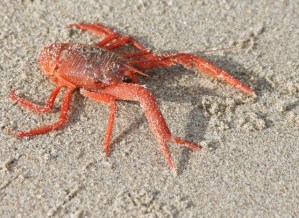 A pelagic red crab (Pleuroncodes planipes) looks like a small lobster — it’s even called a squat lobster — about 5 inches (13 cm) long. They’re part of the “micronecton,” that is, small swimming marine organisms that live in the water column. Adults tend to live closer to the bottom and feed on plankton near the surface. However, they’re swimming abilities are limited and they’re easily caught up in tides and currents. As a result, they sometimes end up in the wrong place (for a pelagic crab), like our Monterey Bay beaches.
 This year, as with the last invasion I observed in the early 1980s, was an El Niño year, a natural recurring event (every 7 years or so) when waters off Peru and Ecuador become unusually warm, changing Pacific water flow and weather worldwide. The sight of red crabs indicates warm subtropical waters moving northward off the west coast of the U.S. These crabs are most typically found off Baja California and in the Gulf of California, although they are seen off Chile and up to Washington state.
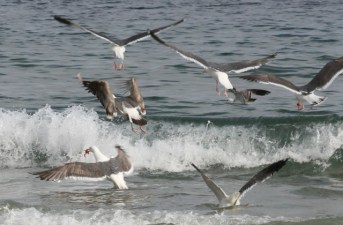
The brightly colored crabs not only attract the attention of people, but that of shorebirds, especially gulls. They were gorging themselves on the bounty in the shallow water, jumping the waves and trying to avoid one another. The crabs are probably a welcome, easy, tasty meal. Many gulls looked too full to move.
While researching this post, I found a Yummly page with red crab recipes. If gulls, tuna and whales can enjoy them, why not people? Although, the Scripps Institution of Oceanography recommends not eating red crabs because of possible toxins (of which significant amounts were found in shellfish this year causing a long delay to the opening of the Dungeness crab season). If not edible, the display is certainly a shoreline spectacle.
References & Sources
Boyd, C.M. (1987). The Benthic and Pelagic Habitats of the Red Crab, Pleuroncodes planipes. Pacific Science XXI (3): 394-403.
National Marine Sanctuaries. Pelagic Red Crabs.
Scripps Institution of Oceanography UCSD. Red Crabs Invade San Diego Shores.
Song sparrow
Everywhere I walk this time of year I hear, and often see, song sparrows singing. They have a distinctive and melodious song. So I’m sharing with you my collection of these songsters.


While reading up on song sparrows, I learned that the males are the singers and the females do most of the nest-making. He sings, she builds. Then they both care for the young. Listen while you walk and you may hear him, too.
Western kingbird
The Western Kingbird (Tyrannus verticalis) was a new bird for me, spotted on the last day of last week’s Half Moon Bay Coastside Trail walk. It’s a multi-pastel-colored bird (a type of flycatcher) that’s a little smaller than a robin.
According to Alvaro Jaramillo’s Field Guide to the Birds of California, this bird is a migrant here for the spring through summer breeding season. The Sibley Field Guide to Birds of Western North America says this kingbird is seen singly or in small family groups. We watched three to five together in the coastal scrub. It’s a beautiful visitor. I was happy to make its acquaintance.


 WordCraft.NatureFocus