
Hide-and-seek
Walking my neighborhood is always a treasure hunting experience — if I’m mindful and look carefully, there’s much to find. This time of year the warblers are migrating through and the trees and vines are alive with small flitting birds. Here are just a few from this week.
I watched this Townsend’s warbler for about 10 minutes as it dodged in and out and among the pine needles. It looked like a youngster playing hide-and-seek (never hiding very well). It took a while of watching to get the final shot I wanted.


This Lucy’s warbler is not normally here. It’s a small warbler and more common in drier desert regions to our east. It’s been hard to spot. We all know where it hangs out, but don’t often see it no matter how patient we are. Who knows why it’s here, but it’s a treat.
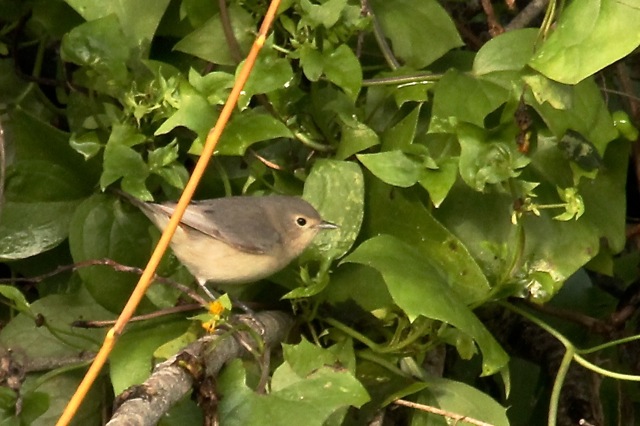
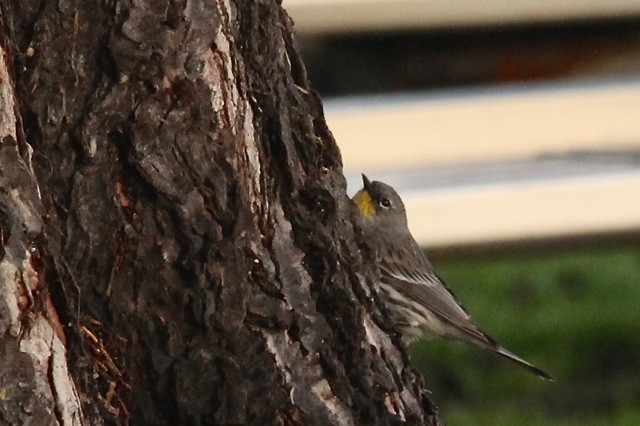
This yellow-rumped warbler is a visitor like the Townsend’s warbler, but it’s larger and appears everywhere right now. I probably have more photos of yellow-rumped warblers than any others. This one seems to be hiding, but that’s unusual. They’re usually flipping off and onto branches making a twipping-like sound. They’re easy to seek.
Curious Happy New Year
Happy New Year to all of the curious observers, teachers and scientists working to wow and inform us. Thanks for 2016.
Looking forward to your visual, verbal and written insights about our wondrous world next year. Wishing you well in 2017.
Chris


Holiday bird: Cedar Waxwing
The cedar waxwing is my December holiday bird.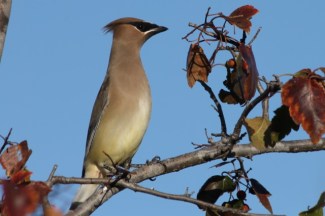
Although many birds visit our area or migrate through in December, cedar waxwings are stand outs for me. The overall look is well-heeled as if ready for a fine event. Yet it’s not quite real — a bit too well coiffed for a bird. (According to Cornell Lab of Ornithology, the name is from waxy secretions from the wing tips, possibly alluring to mates.)
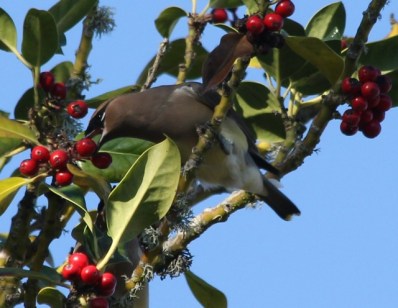
When a flock drops into a berried tree (they’re true frugivores), each bird delicately picks one berry at a time as would be expected of a well-mannered guest. They’d certainly be welcome at any holiday garden party.
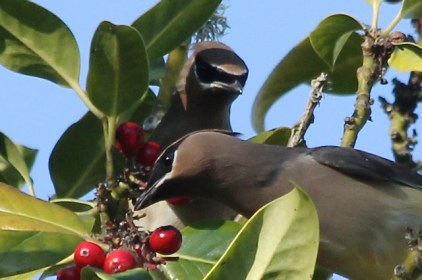
This time of year they’re a wonderful sight — today I was fortunate enough to find a small flock gracing a tree near my office.
Dungeness crabs

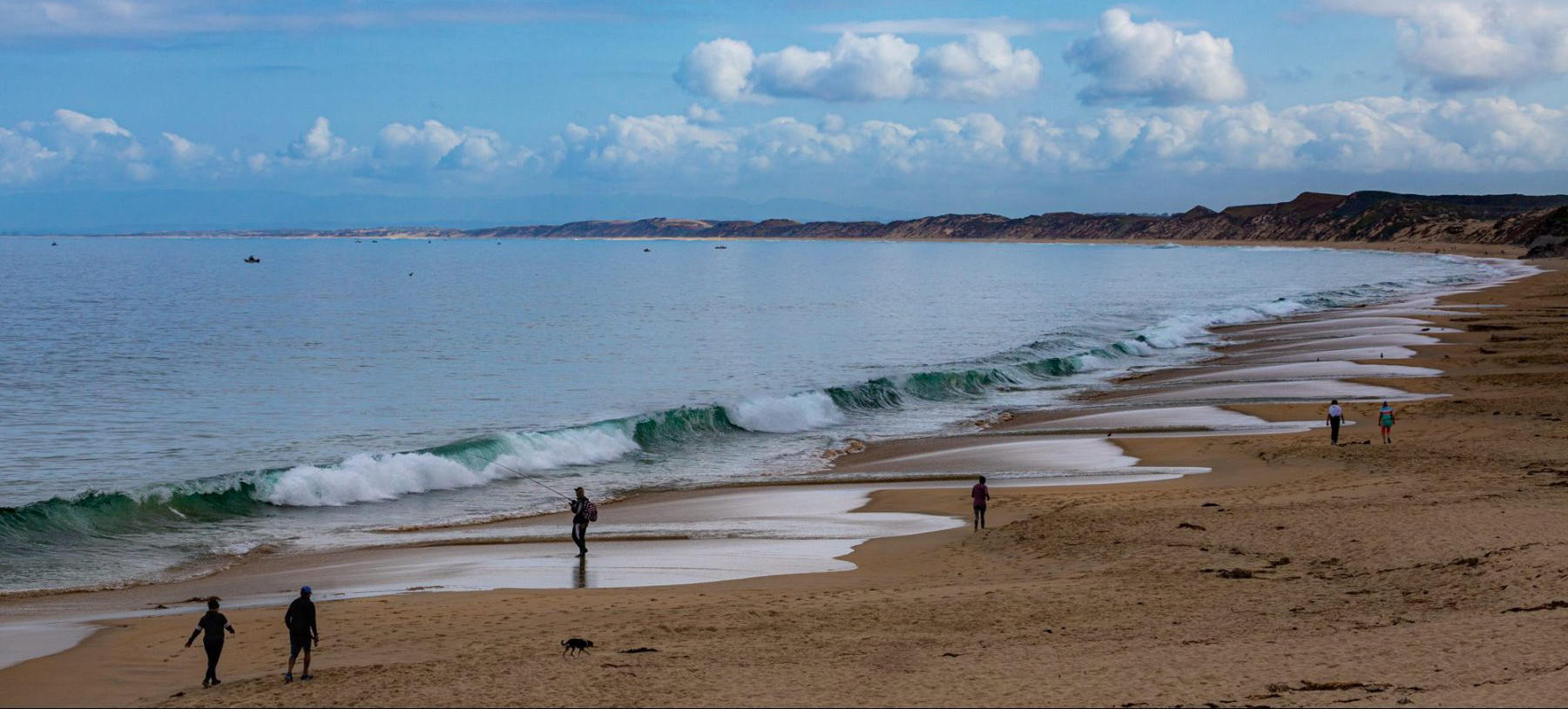
During the summer of 2013 I got to know Dungeness crabs very well. (Also see my 2013 post.) For three months, small crabs (about an inch or two across) and crab molts (old shells discarded so the crab can grow) littered the beach I walk regularly. Some days there were a few and some days they were everywhere.
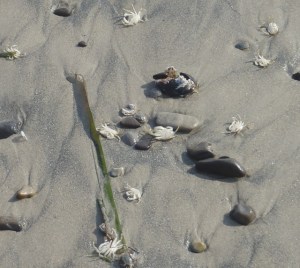
I started tossing them back into the water, but given the numbers, gave up. I found that when I rolled them off their backs and dug a little trench behind them, they would back into a hiding spot in the sand.

This was fun for me and probably better for them than being hurled into surf (I hoped).
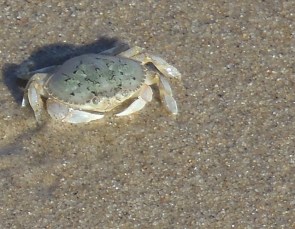
I haven’t seen young Dungeness crabs along this stretch of beach since that summer. Populations of crab larvae naturally fluctuate with sea surface temperature, correlated to the Pacific Decadal Oscillation. Dungeness crabs prefer cooler waters and the lack of beached crabs recently could be related to a warm-water El Niño and the blob off our coast. Another explanation for the excess crabs on this particular beach that year could have been beach nourishment. [During the winter of 2012 – 2013, approximately 7,500 m³ of Monterey Harbor dredge material was used to nourish this critical south Monterey Bay erosion area, according to a Currents 2013 poster by A. Snyder et al.] Who knows for sure?
Why talk about 2013 now? Dungeness crab seasons open this month, and it takes the crabs about 3 years to grow enough to be part of the fishery. The crabs I saw in 2013 are now being harvested.
Last week (November 5), the recreational Dungeness crab season opened along the California coast. It was accompanied by a health warning to fishers catching crabs north of Point Reyes (Marin County) to not eat the viscera (guts) due to elevated levels of domoic acid (a natural toxin produced by single-celled algae). Domoic acid is a powerful neurotoxin and poisoning effects range from nausea to death in birds and mammals, including humans and possibly dogs eating sand crabs at the beach.
This week (November 15), the commercial season will open from Point Reyes (Marin County) south. However, according to California Department of Fish & Wildlife (CDFW), the CDFW Director is moving on state health agencies’ advice to close the commercial fishery between Point Reyes and the Sonoma/Mendocino county line (see CDFW website for related rock crab info). This is also due to domoic acid. (Most of last season was closed for the same reason.)
Update (as of Nov. 24) on open and closed areas from CDFW: https://wordpress.com/read/feeds/357812/posts/1234769465

The good news is that the Dungeness crab fishery is considered sustainable according to CDFW’s 2011 status report. So as coastal waters cool this year during a La Niña, I hope little “dungies” will return this summer to my beach.
Warblers on the move
During my Half Moon Bay birding walk last week, we saw several warblers on the move (always): some fall visitors, some spring visitors, and a few elusive residents. My thanks to local guides Slow Adventure and Alvaro’s Adventures for a great week.
Townsend’s Warblers winter along our coast and then fly north for summer breeding.
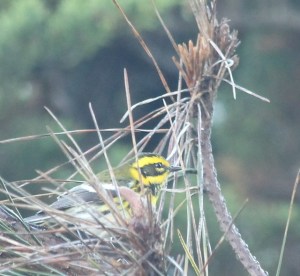
Yellow Warblers are here during the summer and then migrate to the south for winter.
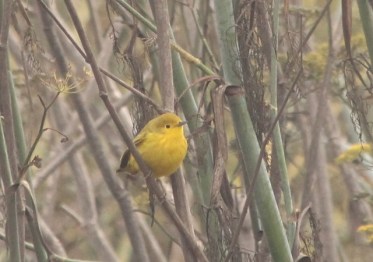
Orange-crowned Warblers are here year-round. They move south during the winter and then north and inland for the summer.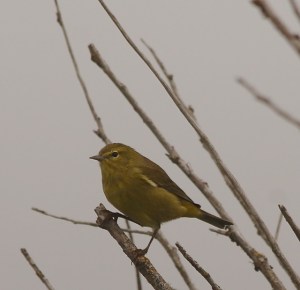
Common Yellowthroats are supposedly here year-round, but during the spring walk I saw my first one (below). We mostly heard them during the fall walk and I didn’t get a photo.

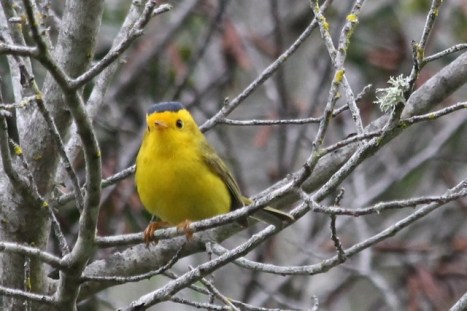
Wilson’s Warblers migrate through between northern breeding and southern wintering. (This photo is from the spring walk, but we saw them briefly on this fall’s walk.)


 WordCraft.NatureFocus